
Your living room sets the tone for your entire home, and thoughtful Living Room Decor turns an ordinary space into a place your family actually wants to spend time in. Whether you rent a small apartment or own a spacious house, the right decor choices make a noticeable difference. Moreover, you don’t need a massive budget to achieve a polished look. In this guide, you’ll find practical, real-world tips that cover color, furniture, lighting, layout, and everything in between. If you enjoy exploring different interior themes, you may also like our guides on Home Decor Styles and Vintage Home Decor to discover timeless decorating ideas for every home.
Many homeowners feel overwhelmed when they start planning their living room, and that’s completely understandable. There are countless styles, colors, and layouts to consider, and social media often makes the process feel more complicated than it needs to be. However, once you break the project into manageable steps, the entire process becomes far less intimidating. This article walks you through every stage, from the first big decisions down to the smallest finishing touches, so you can move forward with confidence.
Additionally, this guide covers real budget constraints, small apartments, family-friendly needs, and the latest design trends, so you can find advice that actually applies to your situation rather than generic tips that only work for magazine perfect showrooms.
About This Guide
This guide was carefully researched and written by Rana Zahid, founder of Decore Info Hub. It combines practical home decorating experience with current interior design trends. It also follows trusted best practices to help readers create comfortable, stylish, and functional living rooms. Every recommendation is designed to be practical, budget-friendly, and suitable for real homes rather than showroom displays.
Why Living Room Decor Matters More Than You Think
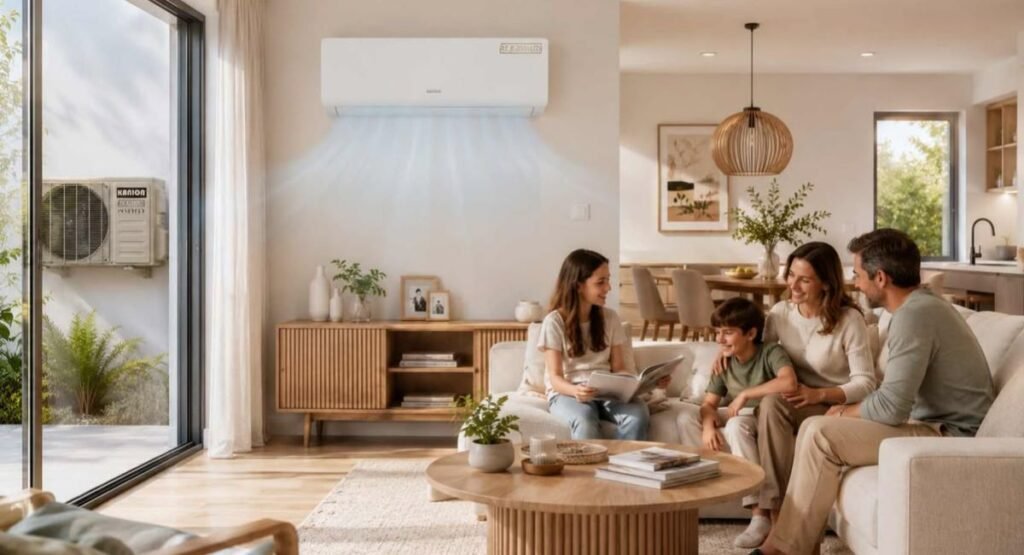
A living room does more than fill empty space with furniture. It shapes how your family relaxes, how guests perceive your home, and how comfortable you feel after a long day. Consequently, the decisions you make here affect your daily routine. They influence everything from your morning coffee to weekend movie nights.
Good decor also affects your mood in ways that many people underestimate. Bright, cluttered rooms often create low grade stress without anyone realizing why, while calm, well-organized spaces promote genuine relaxation. Additionally, a well decorated living room can increase your home’s resale value. Buyers often form their first impression within the first few seconds of entering a property.
Therefore, investing time and effort into this particular room pays off in more ways than one, both emotionally and financially.
Functionality Is Just as Important as Style
Beyond aesthetics, functionality plays a huge role too. A beautiful room that doesn’t work for your actual lifestyle quickly becomes frustrating rather than enjoyable. For example, a glass coffee table looks beautiful in photos. However, it may not suit a home with toddlers or large dogs. Always balance style with practicality from the beginning. This creates a living room that is both attractive and functional.
Your Living Room Reflects Your Personality
Finally, your living room decor reflects your personality to anyone who visits. It tells a story about your travels, your hobbies, and your taste, often before you say a single word. Consequently, taking the time to get it right is an investment in how your home feels, not just how it looks in photographs.
Choosing the Right Color Scheme
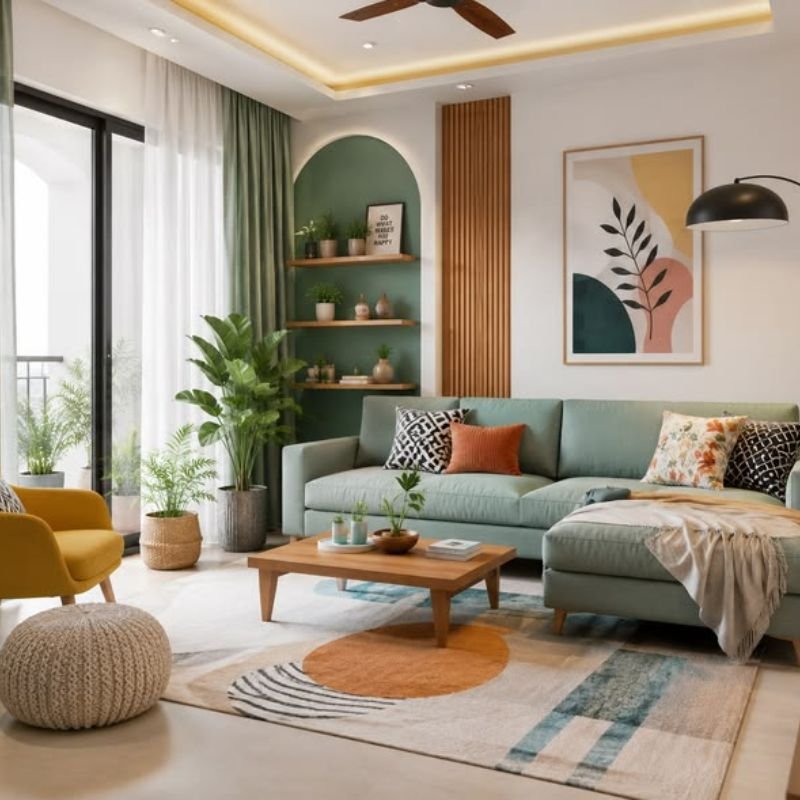
Color sets the emotional foundation of any room, so it deserves careful thought before you buy a single item. Warm tones like terracotta, mustard, and soft browns create a cozy, inviting atmosphere that works particularly well in colder climates. In contrast, cool tones such as sage green, dusty blue, and soft gray bring a calmer, more contemporary feel that suits warmer regions or minimalist homes.
When you’re unsure where to start, consider the 60-30-10 rule, a classic principle used by interior designers worldwide. Looking for more inspiration? Explore our Wall & Decor guide to complement your color palette. Use your dominant color for 60% of the room, typically on walls, large rugs, and major furniture. Then, apply a secondary color to 30% of the space through items like curtains, an accent chair, or a patterned rug. Finally, reserve 10% for accent colors in accessories such as pillows, art, and small decorative objects.
Neutral Colors and Bold Accents
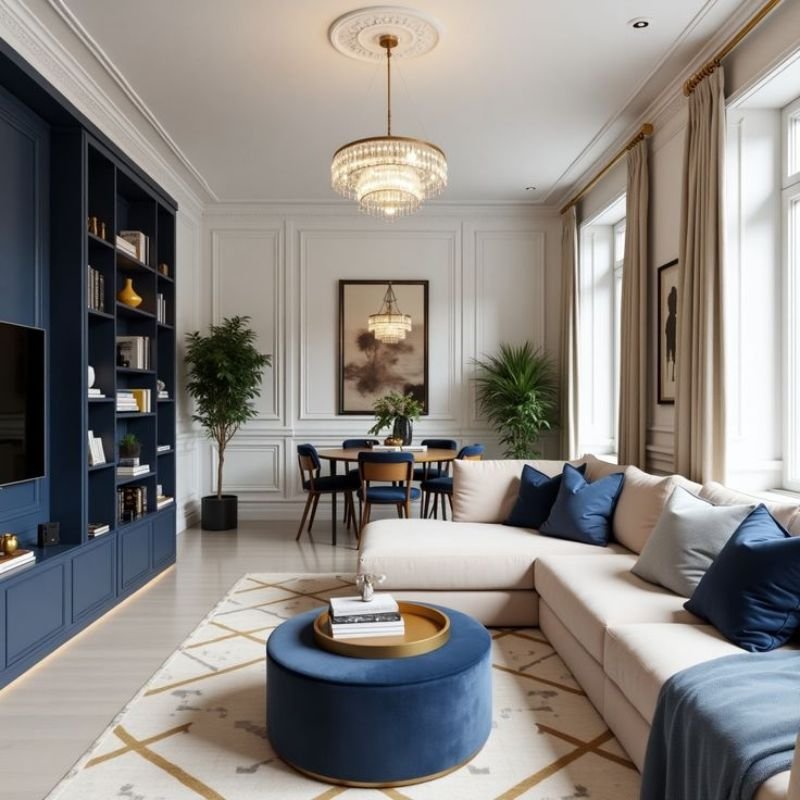
Neutral palettes remain a popular foundation because they age well and pair easily with changing trends over the years. However, don’t shy away from bold accent walls if you want more personality in your space. A deep navy or emerald green wall, for example, can transform a plain room into a dramatic focal point almost overnight. Furthermore, neutral bases make it easy to swap accessories seasonally without repainting anything, which saves both time and money in the long run.
Use Texture to Add Depth
Texture matters just as much as color, and many homeowners overlook this detail entirely. Combining a smooth leather sofa with a chunky knit throw, or pairing a glass coffee table with a woven jute rug, adds depth that flat color alone simply can’t achieve. As a result, your room feels layered and intentional rather than flat and generic, even if you stick to a fairly simple color palette overall.
If you’re decorating a north-facing room that receives less natural light, warmer colors typically compensate well for the cooler light quality. Meanwhile, south-facing rooms with abundant sunlight can handle cooler tones without feeling cold or sterile. Testing paint samples at different times of day, therefore, remains one of the smartest steps before committing to a final color.
Furniture Arrangement That Actually Works
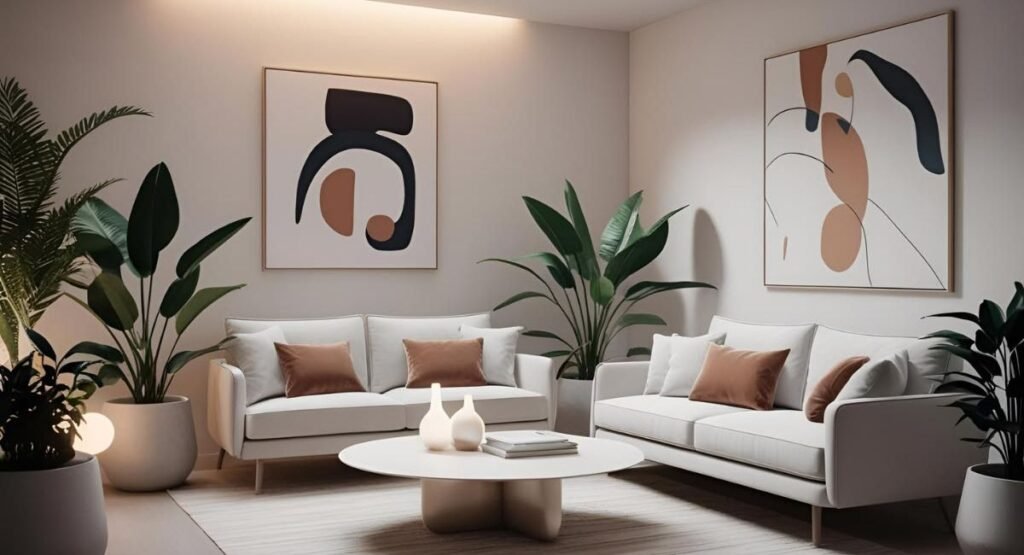
Furniture arrangement can make or break your living room, regardless of how much money you spend on individual pieces. First, identify your room’s focal point. This might be a fireplace, a large window with a view, or a television mounted on the wall. Then, arrange your seating to face or relate to that focal point naturally, rather than scattering furniture without any clear direction.
Leave enough walking space between furniture pieces, ideally around 30 inches, so people can move freely without bumping into tables or chairs. Complete your setup with our Coffee Table Decor guide. Additionally, avoid pushing every piece against the wall, since this common habit often makes a room feel less inviting and more like a waiting room. Instead, pull your sofa a few inches away from the wall to create a more intimate, conversation-friendly seating arrangement.
Layout Ideas for Small and Large Rooms
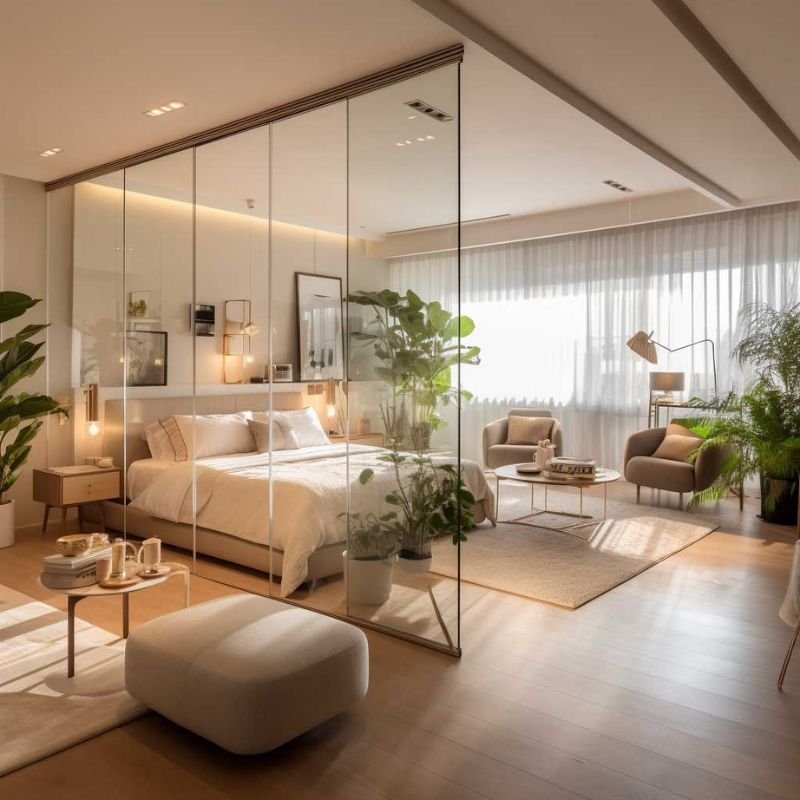
For smaller rooms, a sectional sofa placed in a corner can maximize seating while freeing up floor space elsewhere in the room. Meanwhile, larger rooms benefit from creating multiple distinct zones, such as a conversation area near the window and a separate reading nook by a bookshelf. This zoning technique works particularly well in open-concept homes where the living room flows directly into the dining or kitchen area without a clear wall to separate them.
Improve Traffic Flow
Don’t forget about traffic flow when planning your layout. If your front door opens directly into your seating area, angle your furniture so guests aren’t forced to squeeze past the coffee table every time they enter. Similarly, keep pathways to other rooms clear of obstacles like ottomans, floor lamps, or side tables that people might trip over in the evening.
Consider also how your furniture arrangement supports conversation. Chairs and sofas placed too far apart discourage natural interaction, while seating arranged in a rough circle or square encourages people to actually talk to one another. Therefore, before finalizing any layout, sit in each seat and imagine a real conversation happening in that configuration.
Lighting: The Often-Overlooked Element in Living Room Decor
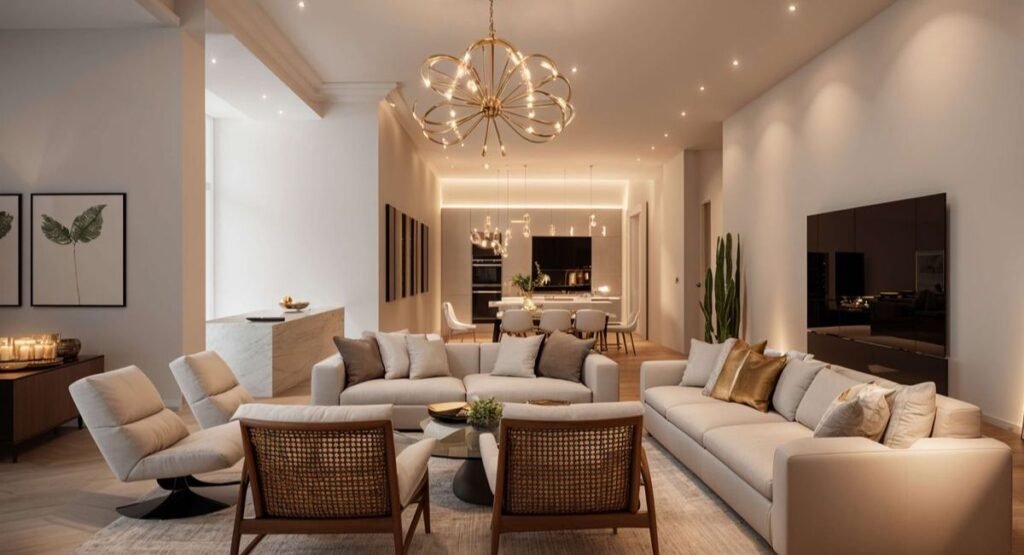
Lighting transforms your living space more dramatically than almost any other single change you can make, yet it remains one of the most frequently neglected elements. A room with poor lighting looks dull no matter how carefully you’ve chosen your furniture and colors. Therefore, plan your lighting in three distinct layers: ambient, task, and accent.
Ambient lighting provides overall illumination, typically from ceiling fixtures or recessed lights spread evenly across the room. Task lighting, such as a reading lamp beside your favorite armchair, supports specific activities like reading or working on a laptop. Accent lighting, including wall sconces or LED strips behind a television, adds drama and highlights architectural features or artwork that might otherwise go unnoticed.
Make the Most of Natural Light
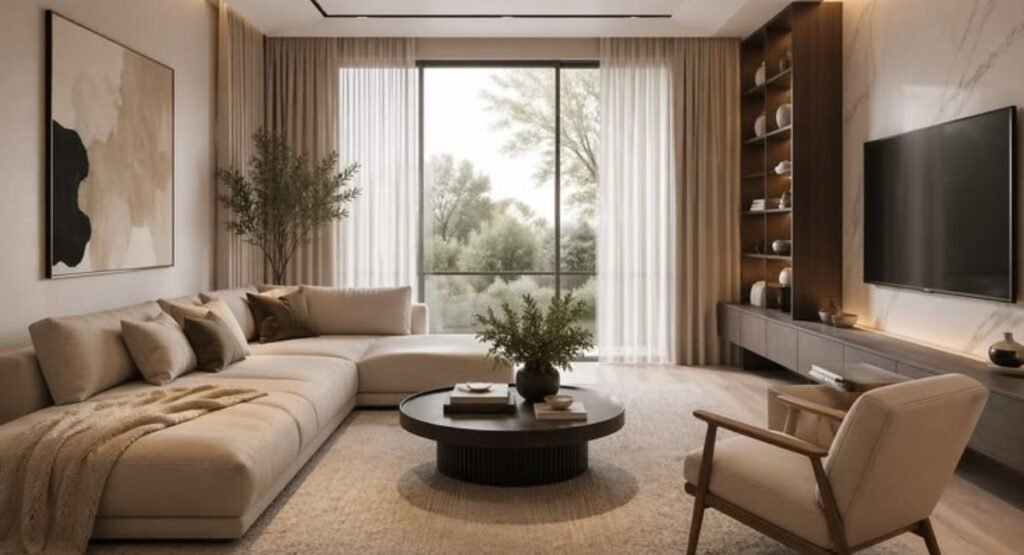
Natural light deserves special attention as well, since it changes the entire feel of a room throughout the day. Sheer curtains allow sunlight to filter through during daytime hours while still maintaining privacy from the street. In the evening, layer floor lamps and table lamps at different heights to avoid the flat, harsh look created by a single overhead light. Furthermore, dimmer switches let you adjust brightness depending on the occasion, whether you’re hosting a lively gathering or enjoying a quiet evening alone with a book.
Choose the Right Light Bulbs
Warm white bulbs, generally between 2700K and 3000K, create a cozy atmosphere that suits most living rooms and most lifestyles. Cooler bulbs, on the other hand, can feel clinical in a space meant primarily for relaxation. Consequently, most designers recommend sticking with warmer tones unless you’re going for a distinctly modern, minimalist aesthetic throughout the entire home.
Smart bulbs have also become increasingly affordable, and they allow you to adjust both color temperature and brightness with a simple voice command or phone app. As a result, one fixture can now serve multiple moods throughout the day, from bright and energizing in the morning to soft and warm in the evening. You can also explore our Floor Lamps guide for more lighting inspiration.
Decor Accents and Accessories
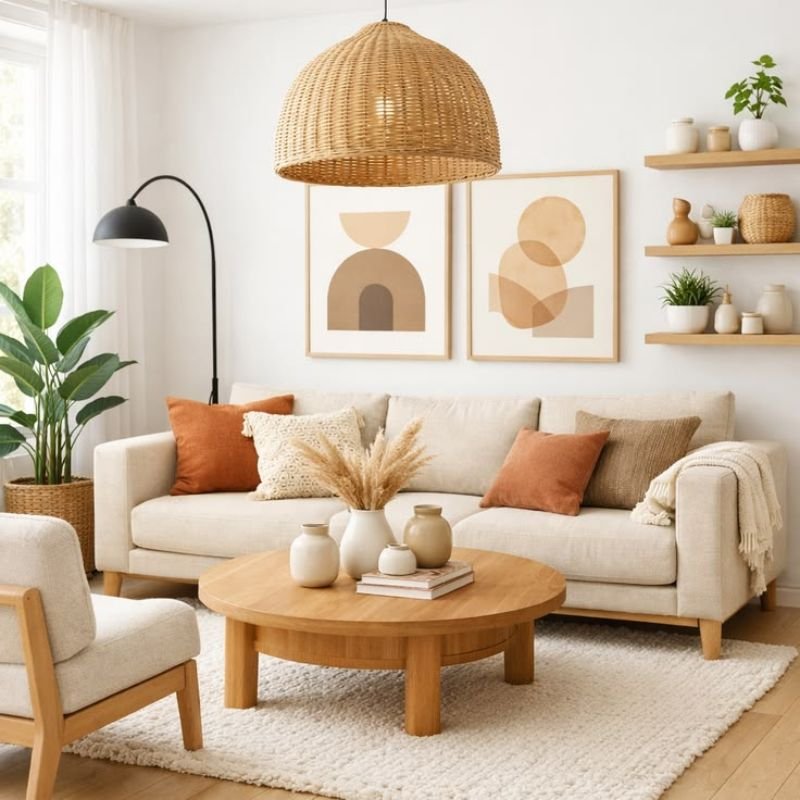
Once your color scheme, furniture, and lighting are in place, accessories bring the entire room together into a cohesive whole. Throw pillows, in particular, offer an affordable way to experiment with pattern and color without committing to anything permanent. Mix textures and sizes for visual interest, but avoid overcrowding your sofa with too many pillows, since this can make seating feel cramped and impractical.
Living Room Rugs can anchor a seating arrangement and add warmth underfoot, especially in rooms with hardwood or tile flooring. Ideally, choose a rug large enough that at least the front legs of your furniture sit on it, since a rug that’s too small can make the whole layout feel disjointed and awkward. Additionally, layering a smaller patterned rug over a larger neutral one adds texture without overwhelming the space visually.
Wall art and gallery walls personalize your living room in a way that mass-produced furniture simply cannot replicate. Mix framed photographs, prints, and mirrors for a curated, collected-over-time look rather than a matched showroom set. Meanwhile, mirrors also serve a practical purpose by bouncing natural light around the room and making it feel considerably larger than it actually is.
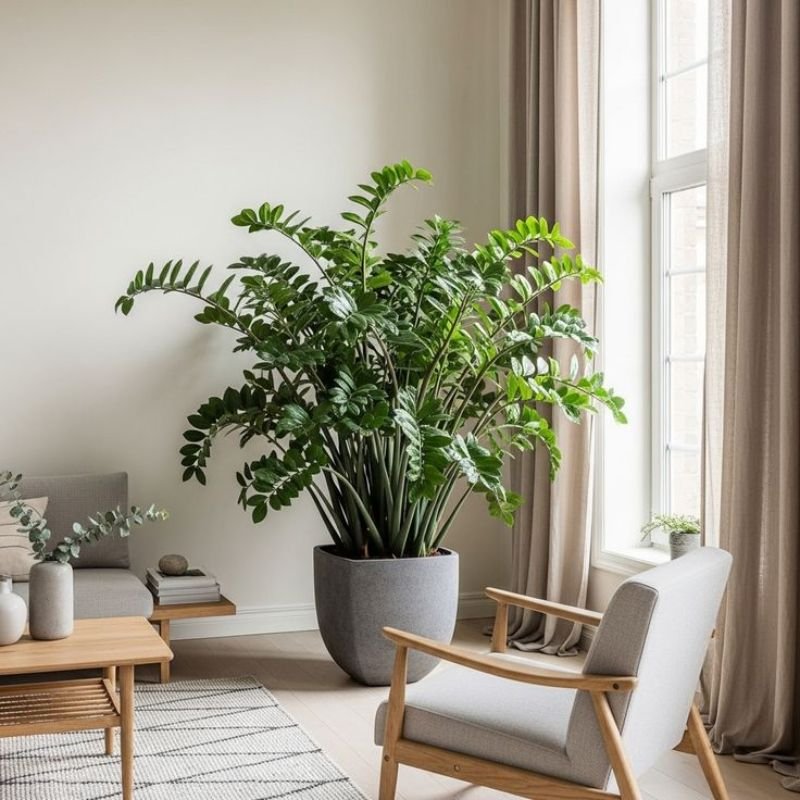
Plants bring life into any space, and even people without a green thumb can maintain low-maintenance varieties like snake plants, pothos, or ZZ plants. Beyond their visual appeal, plants bring a natural, refreshing element to the room and can make the space feel more inviting and connected to nature. Furthermore, grouping plants of varying heights near a window creates an instant focal point without spending much money.
Books, candles, and personal souvenirs from travel also deserve a place in your living room decor. These small, personal touches often generate more compliments from guests than expensive furniture, simply because they tell a genuine story about your life and interests.
Small Space Living Room Decor Ideas
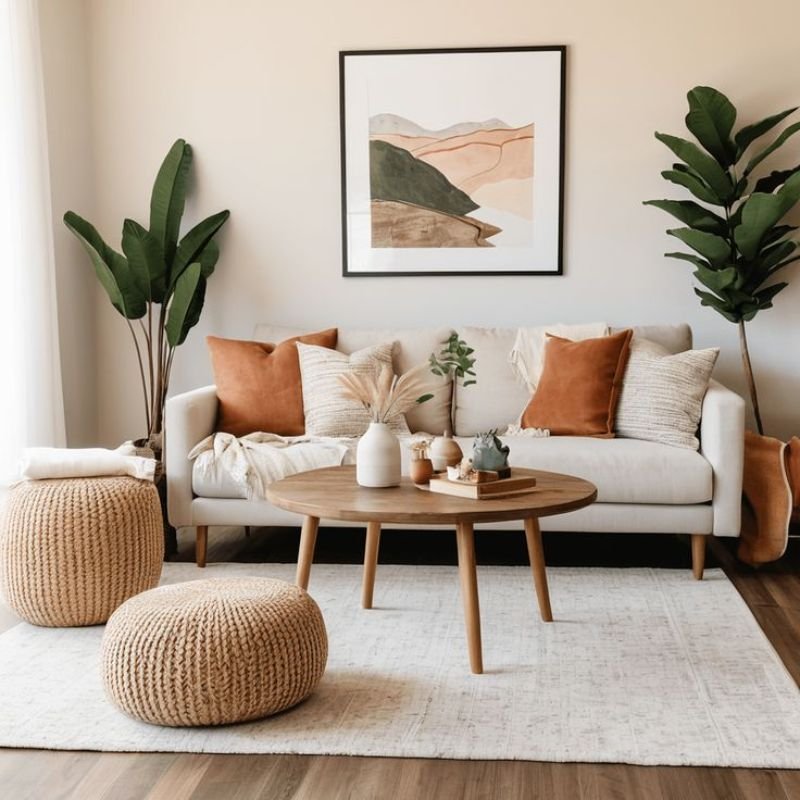
Small living rooms present unique challenges, but clever Living Room Decor choices can make even a compact space feel open and genuinely functional. Multi-purpose furniture works wonders here. A storage ottoman, for instance, doubles as a coffee table, extra seating, and hidden storage all at once, which is invaluable in a tight footprint. Need more ideas? Read our Small Living Room Design and Small Apartment Living Room Ideas guides.
Mirrors, as mentioned earlier, are particularly valuable in small rooms since they visually double the perceived square footage without any construction work. Similarly, choosing furniture with exposed legs rather than solid bases allows light to pass underneath, which makes the entire room feel airier and less crowded.
Vertical space often goes unused in small living rooms, yet it offers tremendous storage potential. Tall bookshelves or wall-mounted shelving draw the eye upward and provide storage without eating into your already limited floor space. Additionally, keeping your color palette light and consistent throughout the room prevents the visual clutter that can make a small space feel even tighter than it actually is.
Finally, resist the urge to fill every corner with furniture just because the space exists. Sometimes, less truly is more, and a little breathing room between pieces makes a small space feel intentional rather than cramped and chaotic. Folding or nesting furniture, such as stackable stools, also provides flexibility for guests without permanently occupying floor space.
Budget-Friendly Living Room Decor Tips
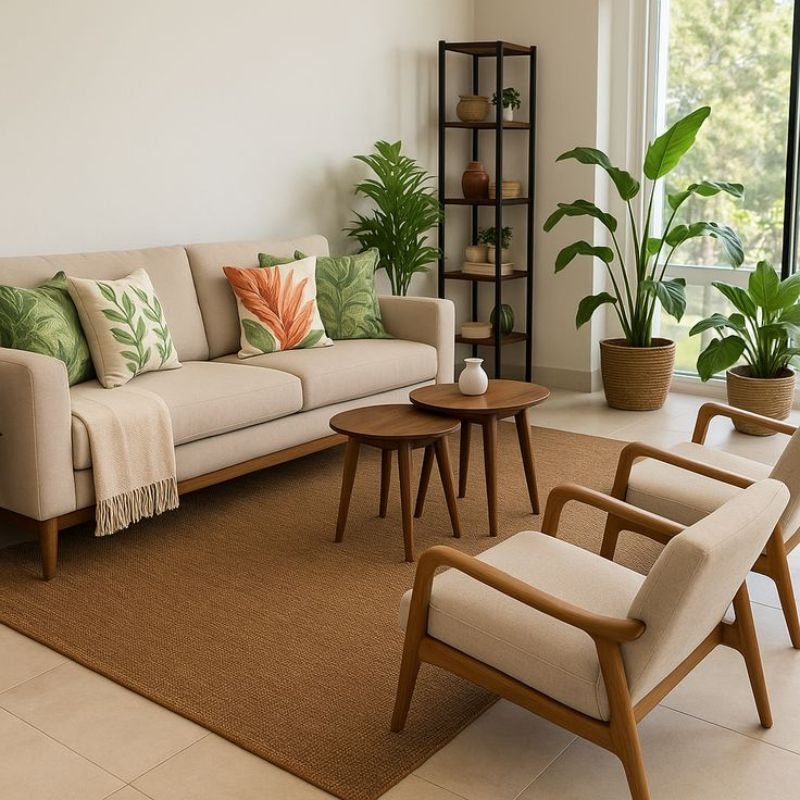
You don’t need a designer budget to achieve a beautiful result, and many of the most charming living rooms come together gradually over time. Secondhand and thrifted furniture, for example, often includes solid wood pieces built to last far longer than many modern mass-produced alternatives. A fresh coat of paint or new hardware can completely transform an outdated piece into something that looks intentional and current.
Rearranging your existing furniture costs nothing and can dramatically change how a room feels almost instantly. Before buying anything new, try a few different layouts to see whether your current pieces simply need repositioning rather than replacing entirely. Similarly, decluttering is free and instantly makes any room look more polished and considerably more intentional.
When you shop, focus on a few quality pieces first. Avoid spending your budget on too many small items. A high-quality sofa usually lasts longer than several inexpensive accent pieces. It also provides better comfort and value over time. Shop during seasonal sales or major holidays to save money on larger purchases. This strategy can help you buy quality furniture at lower prices.
DIY projects also stretch a limited budget considerably further than store-bought alternatives. Many DIY projects are easy to complete over a weekend. Paint an accent wall, reupholster a thrifted chair, or build a simple floating shelf. These projects add personality without costing a lot of money. Furthermore, many online tutorials make even complex-looking projects approachable for complete beginners.
You can also rent furniture or buy discounted floor models. These options work well if you are living in a temporary home or apartment. Both options provide flexibility while you figure out your long-term style preferences without a major financial commitment upfront.
Living Room Decor Trends Worth Knowing
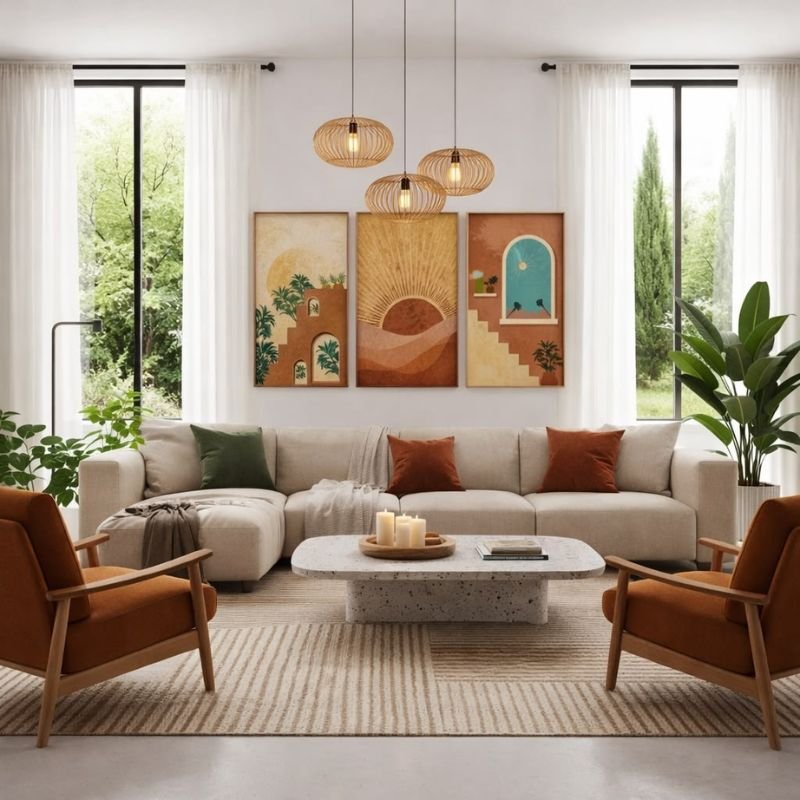
Living room decor trends change every year. However, a few timeless ideas are worth knowing before you start decorating.. Curved furniture, including rounded sofas and organic-shaped coffee tables, has grown increasingly popular as an alternative to sharp, rigid lines. This softer aesthetic pairs particularly well with warm, earthy color palettes and natural materials.
Natural and sustainable materials continue to grow in popularity. Many homeowners choose eco-friendly products for their homes. Furniture brands now emphasize sustainable sourcing. Buyers also pay more attention to a product’s origin.
Maximalism has also made a comeback after years of minimalist dominance across social media. Bold patterns, layered textures, and eclectic collections of art and objects create rooms full of genuine personality. However, minimalism is still popular. Many homeowners now combine it with a few bold statement pieces to create a simple but stylish living room.
Smart home integration is another growing trend worth watching closely. Voice-controlled lighting, smart thermostats, and hidden charging stations blend technology seamlessly into the decor without disrupting the room’s overall aesthetic. Similarly, multi-functional furniture with built-in charging ports has become a practical, sought-after feature in modern homes.
Finally, texture-forward design continues to dominate mood boards. Bouclé fabric, ribbed wood paneling, and hand-woven baskets add tactile interest that photographs beautifully while also feeling wonderful in person.
Living Room Decor for Different Home Styles
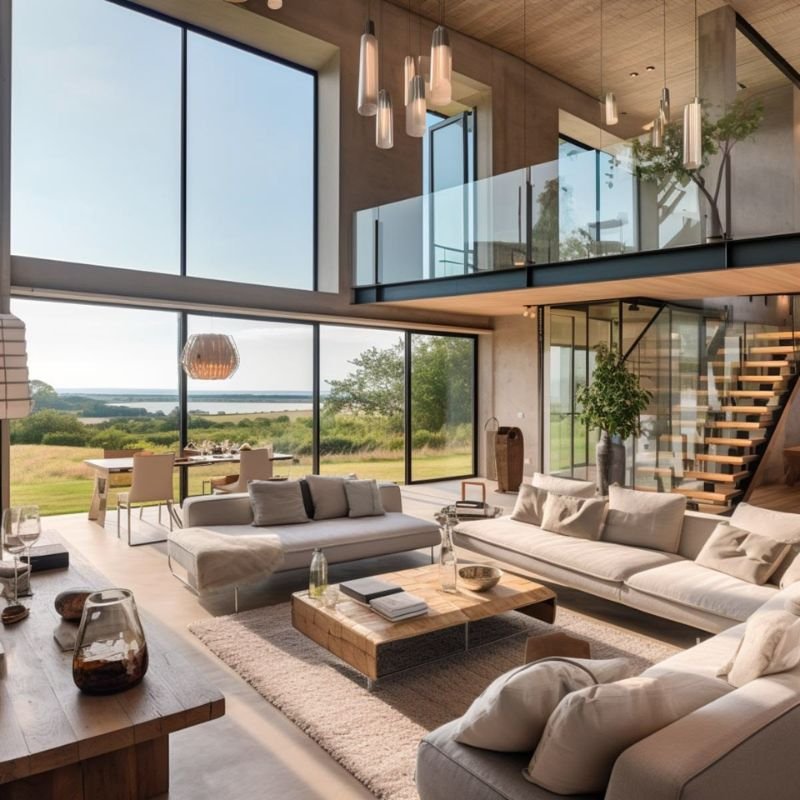
Every home has its own architectural style. Choose Living Room Decor that matches your home’s design. Modern apartments look best with clean lines, neutral colors, simple furniture, and a few bold accent pieces.
Traditional homes often feature crown molding and hardwood floors. They look best with rich colors, classic furniture, and layered fabrics like velvet or brocade. Farmhouse-style homes use natural wood tones and cozy textiles. Vintage-inspired accessories add warmth and character.
Coastal homes use light colors, natural fibers, and plenty of white space. These elements create a relaxed, beach-inspired feel. Industrial-style lofts often feature exposed brick or concrete. They also include metal accents, leather furniture, and bold lighting.
Regardless of your home’s underlying style, the key is consistency. Avoid mixing too many design styles. Use a common color or material to create a balanced and cohesive look.
Seasonal Updates to Your Living Room Decor
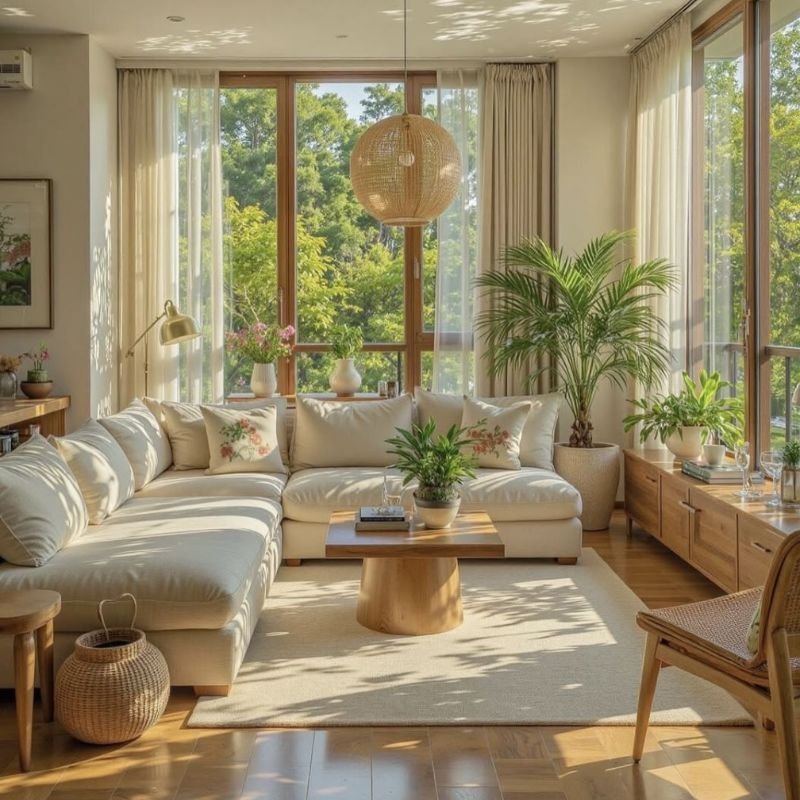
Refreshing your Living Room Decor with the seasons keeps your space feeling current without requiring a full renovation. In cooler months, replace lightweight linen pillow covers with chunky knit covers. Add a thick throw blanket to your sofa for extra warmth and texture.
During warmer months, lighter fabrics and brighter accent colors keep the room feeling fresh and airy. Fresh flowers, indoor plants, and lightweight cushions can instantly update the space without requiring a complete redesign.
Holiday decorating deserves a similar approach. Rather than covering every surface with seasonal items, choose a few meaningful pieces that complement your existing color scheme. This way, seasonal decor enhances your everyday design instead of clashing with it once the holiday ends.
Window Treatments That Complete the Look
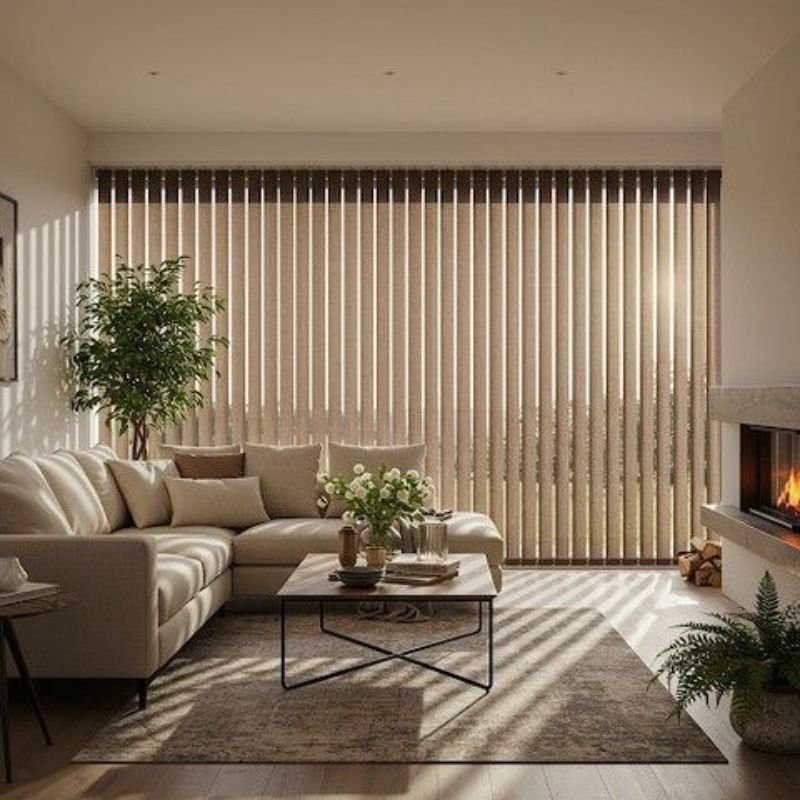
Living Room Curtains often get treated as an afterthought, yet they frame every other design choice in the room. Hang floor-length curtains as close to the ceiling as possible. This makes the ceiling look higher and the room feel more elegant. Short curtains often make a room look unfinished, even if the fabric is beautiful.
Fabric choice matters just as much as length. Heavier fabrics like velvet block light effectively and add insulation during colder months, which can also help reduce energy bills. Linen and cotton curtains let in soft natural light. They also provide privacy from outside.
Layering sheer curtains beneath heavier drapes gives you flexibility throughout the day. Keep the sheer curtains closed in the morning for privacy and soft natural light. Close the heavier drapes in the evening to create a warm and cozy atmosphere. Match your curtain color with your wall color. This creates a seamless look and makes the room feel larger.
For a modern look, choose woven wood shades or simple roller blinds. Add one decorative panel on each side to complete the design. This combination provides practical light control while still adding a soft, finished texture to the window area. The right window treatment completes your living room design. It brings together your color palette, lighting, and overall style.
Pulling Inspiration from Real Homes
Scrolling through design inspiration can help you clarify your taste, but it can also become overwhelming quickly. Instead of saving hundreds of random images, try building a focused folder of no more than fifteen photos that genuinely resonate with you. Then, look for patterns across those images, such as a recurring color, a favorite furniture shape, or a consistent mood.
Visiting furniture showrooms in person also helps enormously, since photos rarely capture true scale, fabric texture, or actual color accurately. Sitting on a sofa for several minutes, rather than a quick test sit, reveals far more about long-term comfort than any online review ever could. Similarly, bringing home fabric or paint swatches lets you observe how they interact with your specific lighting at different times of day.
Talking to friends or family who have recently completed a similar project can also save you from repeating common mistakes. They can point out which purchases held up well and which ones disappointed them after just a few months of everyday use.
Common Mistakes to Avoid
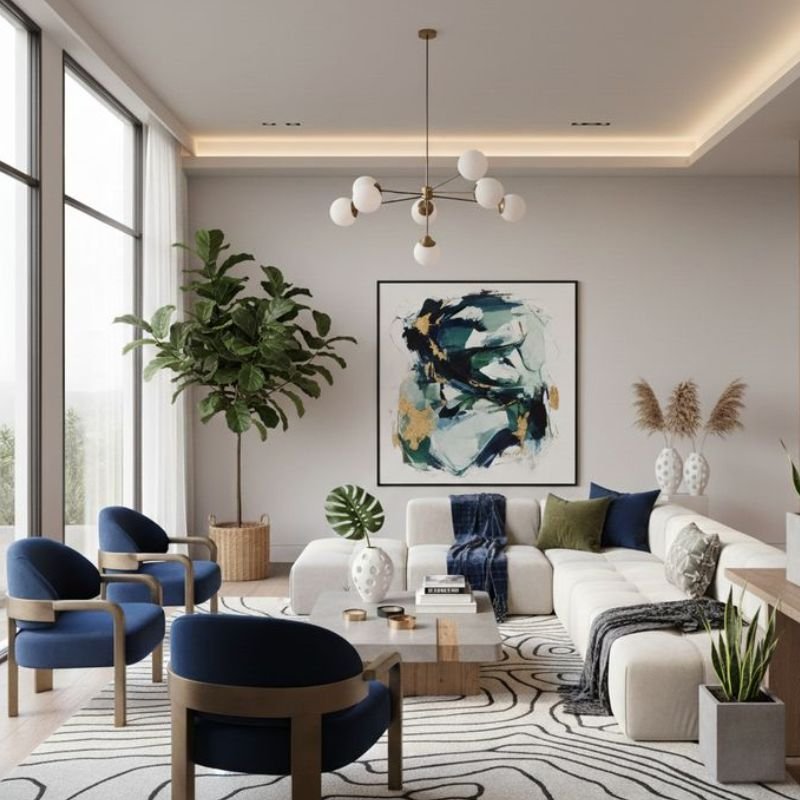
Even well-intentioned homeowners make a few predictable mistakes when tackling this kind of project. Choosing a rug that’s too small ranks among the most common errors, since it visually shrinks the entire seating area and makes furniture look like it’s floating. Similarly, hanging artwork too high above eye level throws off the proportions of the whole room.
Ignoring scale is another frequent misstep worth avoiding. Oversized furniture can overwhelm a small room, while tiny pieces can get lost in a large one and make the space feel empty. Therefore, always measure your space carefully before purchasing anything, and consider using painter’s tape on the floor to visualize furniture dimensions beforehand.
Matching every piece too perfectly can also backfire in surprising ways. A living room where every item comes from the same collection often looks sterile and impersonal, almost like a hotel lobby. Instead, mix pieces from different sources and eras for a more authentic, lived-in feel that reflects genuine personality.
Finally, neglecting lighting remains one of the most overlooked mistakes homeowners make. As discussed earlier, relying solely on a single overhead fixture leaves most rooms feeling flat and uninviting, no matter how carefully you’ve styled everything else. Overlooking cord management for lamps and electronics is another small but common oversight that undermines an otherwise polished room.
Conclusion
Creating beautiful Living Room Decor is not about spending a large amount of money. It is about making thoughtful choices that suit your space, lifestyle, and personal taste. By selecting the right furniture, using a balanced color palette, improving lighting, and adding meaningful decorative accessories, you can create a living room that is comfortable, stylish, and functional.
Remember that great living room decor develops over time. Start with the essentials, invest in quality pieces when your budget allows, and gradually add personal touches that reflect your personality. With careful planning and smart decorating decisions, your living room can become a welcoming space where family and friends enjoy spending time together for years to come.
Frequently Asked Questions
- What is the most important element of living room design?
Lighting typically has the biggest impact on how a living room looks and feels overall.
- How do I choose a color scheme for my living room?
Follow the 60-30-10 rule to balance a dominant color, secondary color, and accent color.
- What size rug works best for a living room?
Choose a rug large enough for at least the front legs of your main furniture to rest on it.
- How can I decorate a small living room affordably?
Use multi-purpose furniture and mirrors to maximize both function and perceived space.
- Are living room decor trends important when decorating?
Trends offer inspiration, but a timeless layout and quality furniture matter more long-term.
Disclaimer
The information provided in this guide is for educational and informational purposes only. Every home is unique, and decorating decisions depend on your available space, budget, personal preferences, and lifestyle. Always measure your room carefully before purchasing furniture or home decor products.
About the Author
Rana Zahid is the founder of Decore Info Hub, a website dedicated to home decor, furniture, and interior design. He researches current design trends and creates practical, easy-to-follow guides that help readers decorate their homes with confidence. His mission is to provide accurate, useful, and budget-friendly information for every homeowner.