
The living room is the heart of every home, and knowing its Spanish translation can be useful whether you’re learning the language, traveling, or exploring Spanish-inspired home decor. The most common translations are “la sala” and “el salón,” but their usage depends on the country and region.
In this complete guide, you’ll learn the correct Spanish words for living room, essential furniture vocabulary, useful everyday phrases, and the differences between Latin American and European Spanish. You’ll also discover popular Spanish living room design ideas that can inspire your own home. By the end of this guide, you’ll be able to talk confidently about your living room in Spanish while learning about the culture behind the language. If you’re interested in decorating your home, you can also explore different Interior Design Styles to find the perfect look for your living space.
Living Room in Spanish: Quick Answer
In most Latin American countries, people commonly use the term “la sala” to refer to the living room. In Spain, people often use “el salón” to describe the same room. Both expressions are correct, and the best choice depends on the country and local speaking habits.
What Is the Living Room in Spanish Called?
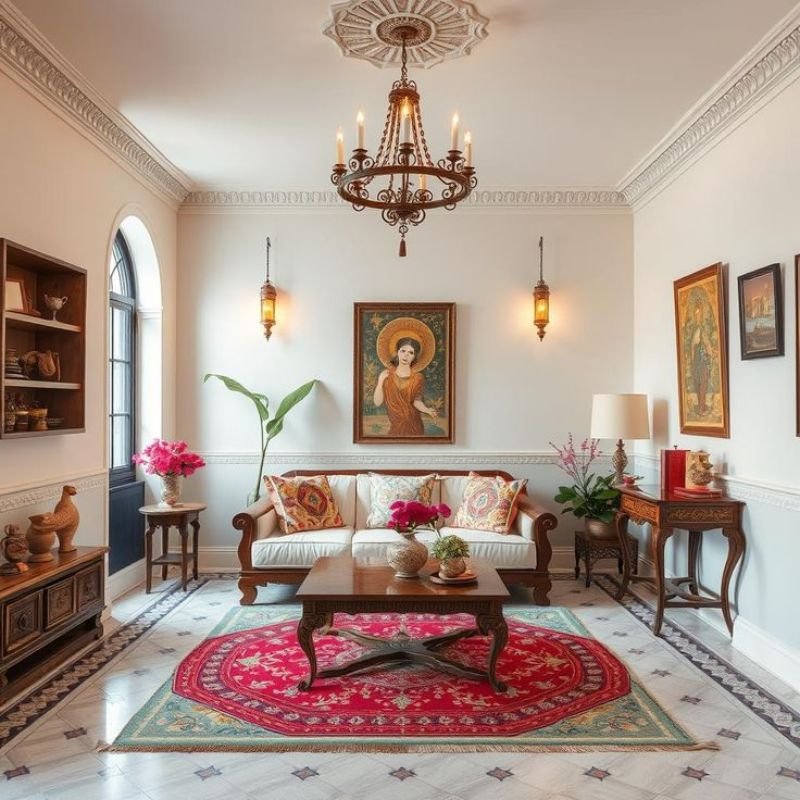
The most common translation of “living room in Spanish” is “la sala.” People across Latin America widely use this term in everyday conversation. However, in Spain and some other countries, people prefer the word “el salón.” Both words refer to the same space the main gathering room in a home where families relax, socialize, and entertain guests.
In addition, some regions use “la sala de estar,” which translates directly to “the sitting room.” This term sounds more formal and you can find it in written Spanish or in more traditional settings. Therefore, when someone asks how to say “living room” in Spanish, you can confidently explain that the correct term depends on the country and the context.
Moreover, knowing the right word for the right region shows cultural awareness. For example, if you travel to Mexico, “la sala” works perfectly. However, if you visit Madrid, “el salón” sounds more natural. So, always consider your audience when you use Spanish vocabulary.
How Do You Pronounce “La Sala”?
The phrase “la sala” is pronounced as lah SAH-lah. In Spanish, each vowel has a clear and consistent sound, making pronunciation easier than many English words. The stress falls on the first syllable of “sala.”
If you are learning Spanish, listen to native speakers and practice saying “la sala” aloud several times. Regular practice will improve both your pronunciation and your confidence in everyday conversations.
Living Room in Spanish: Quick Comparison
The table below shows the most common Spanish words used for “living room” in different regions.
| English | Latin America | Spain |
|---|---|---|
| Living Room | La Sala | El Salón |
| Sitting Room | Sala de Estar | Sala de Estar |
| Sofa | El Sofá | El Sofá |
| Coffee Table | La Mesa de Centro | La Mesa de Centro |
| Lamp | La Lámpara | La Lámpara |
Although all these terms are correct, “la sala” is the most common expression throughout Latin America, while “el salón” is preferred in Spain.
Living Room in Spanish: Regional Differences
Although “la sala” and “el salón” have the same meaning, their usage changes depending on the country.
| Region | Common Word |
|---|---|
| Mexico | La Sala |
| Argentina | La Sala |
| Colombia | La Sala |
| Peru | La Sala |
| Spain | El Salón |
Knowing these regional differences helps you communicate more naturally with native Spanish speakers.
Essential Living Room Vocabulary in Spanish
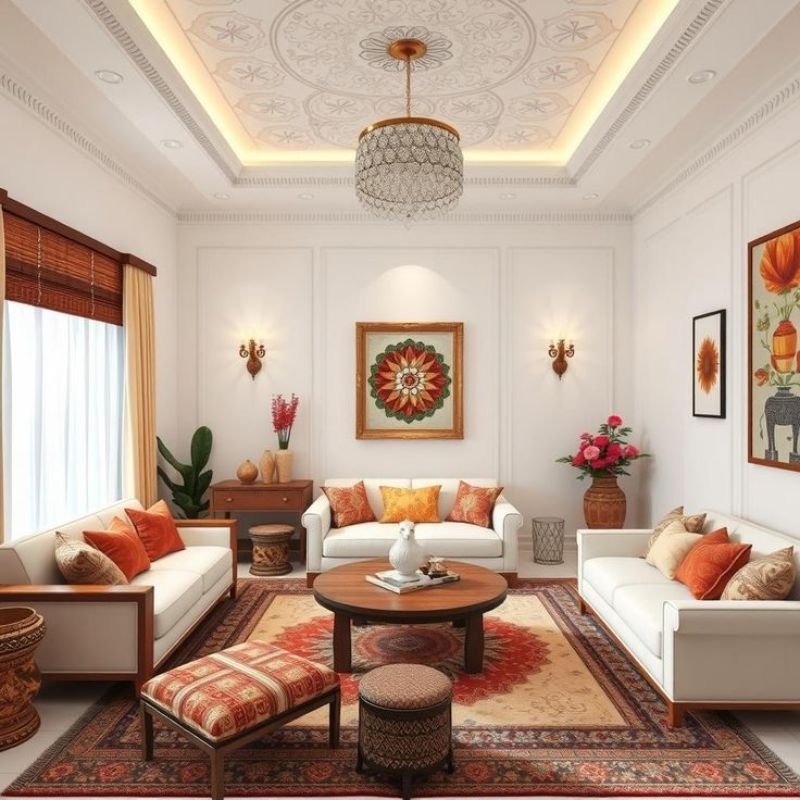
Learning furniture and home decor vocabulary makes it much easier to describe your living room in Spanish. Here are some of the most useful words. Once you know the vocabulary, you can use it while planning or decorating your own Living Room Decor.
| English | Spanish |
| Sofa | El Sofá |
| Armchair | El Sillón |
| Coffee Table | La Mesa de Centro |
| Side Table | La Mesa Auxiliar |
| Television | El Televisor |
| Lamp | La Lámpara |
| Rug | La Alfombra |
| Curtains | Las Cortinas |
| Wall | La Pared |
| Window | La Ventana |
| Bookshelf | La Estantería |
| Plant | La Planta |
These words are commonly used in everyday conversations, making them valuable for beginners and advanced learners alike.
How to Describe Your Living Room in Spanish
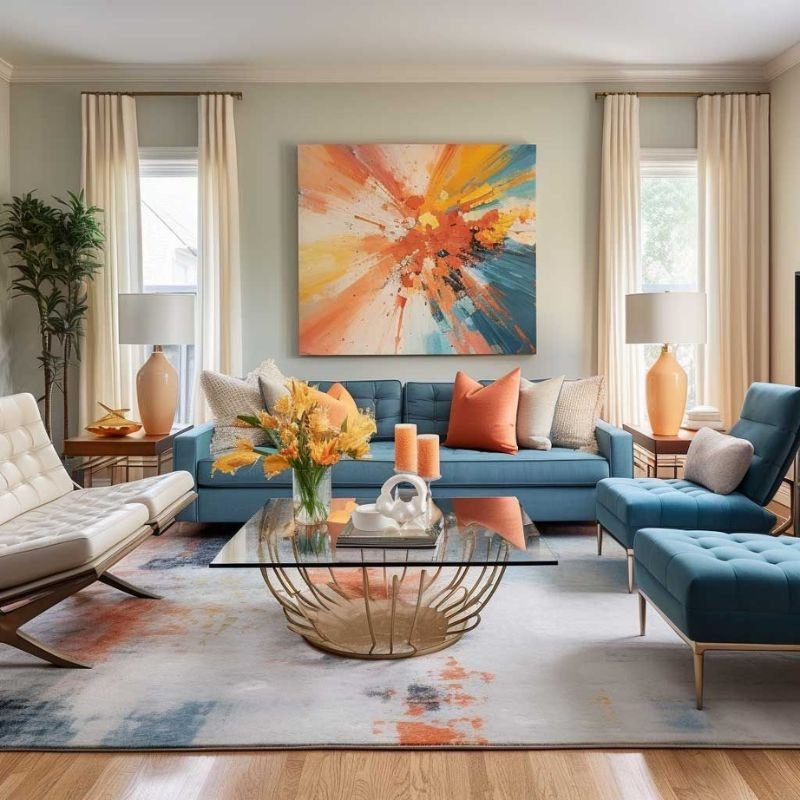
Now that you know the vocabulary, let’s look at how to describe the living room in Spanish using adjectives and simple sentences. First, adjectives in Spanish change form based on gender. For example, “cómodo” means comfortable for masculine nouns, and “cómoda” applies to feminine nouns. Therefore, you say “el sofá es cómodo” (the sofa is comfortable) or “la sala es cómoda” (the living room is comfortable).
Here are some useful adjectives for describing a sala: Amplio/a means spacious. Acogedor/a means cozy or welcoming. Moderno/a means modern, while clásico/a means classic. Moreover, luminoso/a means bright or full of light, and ordenado/a means tidy or organized.
For example, you can say: “Mi sala es amplia y luminosa” which means “My living room is spacious and bright.” In addition, you can say “El salón está muy bien decorado” which translates to “The living room is very well decorated.” As a result, you can hold real conversations about home spaces when you combine vocabulary with simple sentence structures.
Everyday Sentences Using “La Sala”
Practice these simple examples to become more comfortable using the vocabulary.
- Mi sala es muy amplia. (My living room is very spacious.)
- Hay un sofá nuevo en la sala. (There is a new sofa in the living room.)
- Mi familia mira televisión en la sala todas las noches. (My family watches television in the living room every night.)
- La sala tiene mucha luz natural. (The living room has plenty of natural light.)
- Decoramos la sala con plantas y cuadros. (We decorate the living room with plants and pictures.)
These examples show how native speakers naturally use “la sala” in daily conversations.
Spanish Living Room Design: Style Tips You Can Use
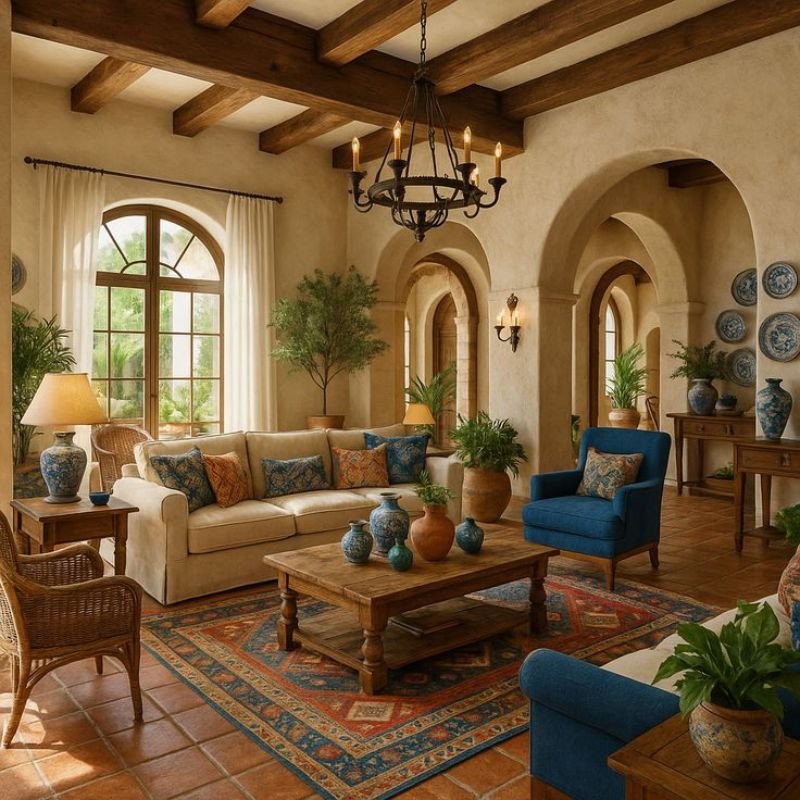
Beyond language, the living room in Spanish speaking cultures carries strong design traditions. First, Spanish and Latin American homes often feature warm color palettes. Colors like terracotta, deep yellow, olive green, and rich red appear frequently in traditional sala designs. These colors create a warm and inviting atmosphere that welcomes guests immediately.
Furthermore, handmade and artisan pieces play a big role in Spanish living room design. For example, hand painted tiles, woven rugs, and carved wooden furniture are all common. Moreover, people often display family photos and artwork on their walls to add a personal touch to their sala. You can also enhance your seating area with stylish Coffee Table Decor ideas that complement Spanish-style furniture.
In addition, open layouts are very popular. Many Spanish influenced homes connect the living room to the dining area, creating one large social space. This design encourages family gatherings and social connection, which are central values in Spanish speaking cultures. Therefore, if you want to bring a Spanish feel to your living room, start with warm colors, natural textures, and meaningful decorative pieces. Wall art is an important part of many Spanish-inspired interiors. Choosing the right Framed Wall Art can add warmth and personality to your living room.
Also, plants are a key part of sala decor. Spanish homeowners often place large leafy plants near windows or in corners to bring life and freshness into the space. Consequently, your living room will feel more vibrant and alive with just a few well placed plants. Natural materials and decorative accessories play a major role in modern Home Decor trends.
Common Mistakes When Saying “Living Room” in Spanish
Many Spanish learners confuse similar words. Avoid these common mistakes to speak more naturally.
Regional vocabulary changes across Spanish-speaking countries, so learning more than one term will help you communicate confidently.
Use “la sala” when speaking in most Latin American countries.
Choose “el salón” when talking with people from Spain.
Do not confuse “la habitación” with “la sala.” “La habitación” means bedroom, while “la sala” means living room.
Remember that “sala de estar” is another correct expression, but it is more common in formal writing and property descriptions.
FAQs
Q1: What is the most common way to say living room in Spanish?
A: The most common translation is “la sala,” though people in Spain often use “el salón” instead.
Q2: Is there a difference between “la sala” and “el salón”?
A: Both terms mean living room, but “la sala” is more common in Latin America while “el salón” is preferred in Spain.
Q3: How do you say sofa in Spanish?
A: You say “el sofá” in Spanish, and it is one of the most essential pieces of furniture in any sala.
Q4: Can I use “sala de estar” to mean living room in Spanish?
A: Yes, “sala de estar” is a correct and widely understood term for living room, especially in more formal or written Spanish.
Q5: What colors are popular in a Spanish style living room?
A: Warm tones like terracotta, olive green, deep yellow, and rich red are the most popular colors in a Spanish style sala.
Conclusion
Now you have a complete guide to understanding the living room in Spanish. From the basic translation to rich design vocabulary and cultural style tips, you are ready to talk about and even decorate your sala with confidence. Moreover, you now know the regional differences between “la sala” and “el salón,” so you can use the right word in the right place.
Therefore, start using these words today and bring the warmth of Spanish living room culture into your own space. Whether you are learning Spanish, traveling to a Spanish speaking country, or simply redecorating your home, this knowledge gives you a real advantage. In addition, keep exploring Spanish vocabulary because every new word you learn brings you one step closer to fluency.