
A console table is a simple way to add style, storage, and function to an otherwise unused wall or narrow space. These console table decor ideas can help you choose the right piece for an entryway, hallway, living room, or space behind the sofa. Whether you need an entryway console table, a slim piece behind the sofa, or a decorative table for a hallway, the right design can make a room feel more complete.
If you are updating your living room, you may also want to explore these Living Room TV Wall Ideas for more ways to create a balanced focal point.
In this guide, you will learn what a console table is, which styles work best in different rooms, how to choose the right size and material, and how to style your table without making the space feel cluttered.
What Is a Console Table?
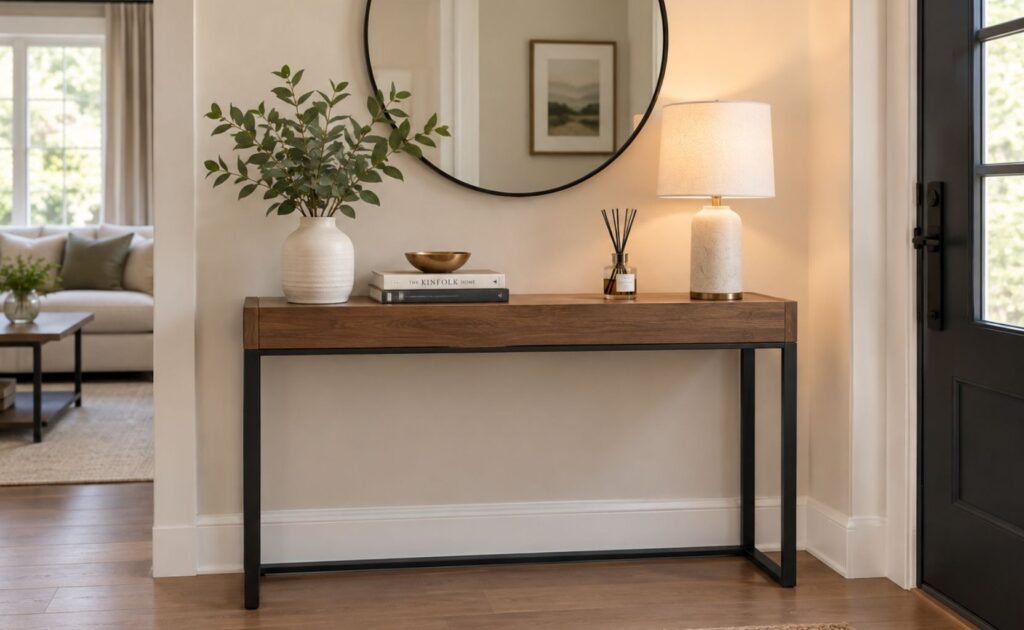
A console table is a narrow, usually rectangular table designed to sit against a wall, behind a sofa, or in another relatively compact area. Unlike a large cabinet or sideboard, a this furniture usually has a slimmer profile, making it useful where floor space is limited.
Console tables can be both decorative and practical. You can use one to display artwork, lamps, plants, books, and other accessories. In an entryway, it can also provide a convenient surface for everyday items such as keys and mail.
Because the table are available in many materials, finishes, and designs, they can work with modern, traditional, rustic, minimalist, and transitional interiors.
Why Use a Console Table?
A well-chosen console table can:
- Fill an empty wall without overwhelming the room
- Provide a surface for decorative accessories
- Add useful storage when drawers or shelves are included
- Create a visual transition between different areas
- Give an entryway or hallway a more finished appearance
- Add character without requiring a large piece of furniture
The key is choosing a design that fits both the available space and the way you intend to use it.
Types of Console Tables
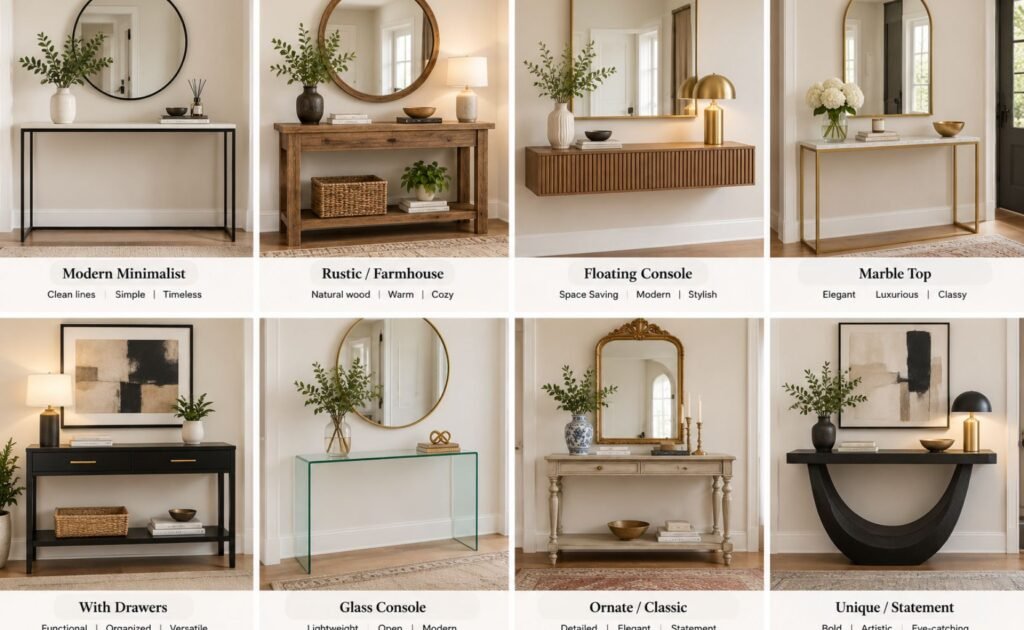
These console table decor ideas can help you find a design that fits your room, furniture, color palette, and storage needs. Console tables come in a variety of designs. Before choosing one, consider your home’s existing furniture, color palette, available space, and storage requirements.
1. Modern Console Table
A modern console table usually features clean lines, simple shapes, and minimal ornamentation. Common combinations include a wood top with metal legs, glass surfaces, or streamlined all-wood construction.
This style works particularly well in contemporary and minimalist interiors where the furniture should look refined without appearing heavy.
2. Entryway Console Table
An entryway the table is designed for hallways, foyers, and entrance areas. It can provide a practical landing spot for keys, mail, bags, and decorative accessories.
For additional inspiration, see our guide to Hallway Decor Ideas.
If your entrance is narrow, choose a slim design with enough clearance for comfortable walking. Drawers or a lower shelf can also provide useful storage without requiring a larger cabinet.
3. Rustic or Farmhouse Console Table
Rustic console tables often feature natural wood, visible grain, warm finishes, or a slightly weathered appearance. They work well with woven baskets, ceramic accessories, greenery, and other natural textures.
A rustic design can add warmth to a neutral room while creating a relaxed, lived-in atmosphere.
4. Mirrored Console Table
A mirrored console table can add a decorative and sophisticated touch to an entryway, bedroom, or living room. Reflective surfaces can also help bounce light around a room.
However, mirrored furniture generally requires more frequent cleaning because fingerprints and dust can be more noticeable.
5. Industrial Console Table
Industrial designs often combine wood with metal frames or hardware. Their simple construction can work well in modern loft-style spaces and interiors that use darker finishes and mixed materials.
If your room already contains several strong materials, keep the accessories on the console simple so the overall arrangement does not feel visually busy.
How to Choose the Right Console Table
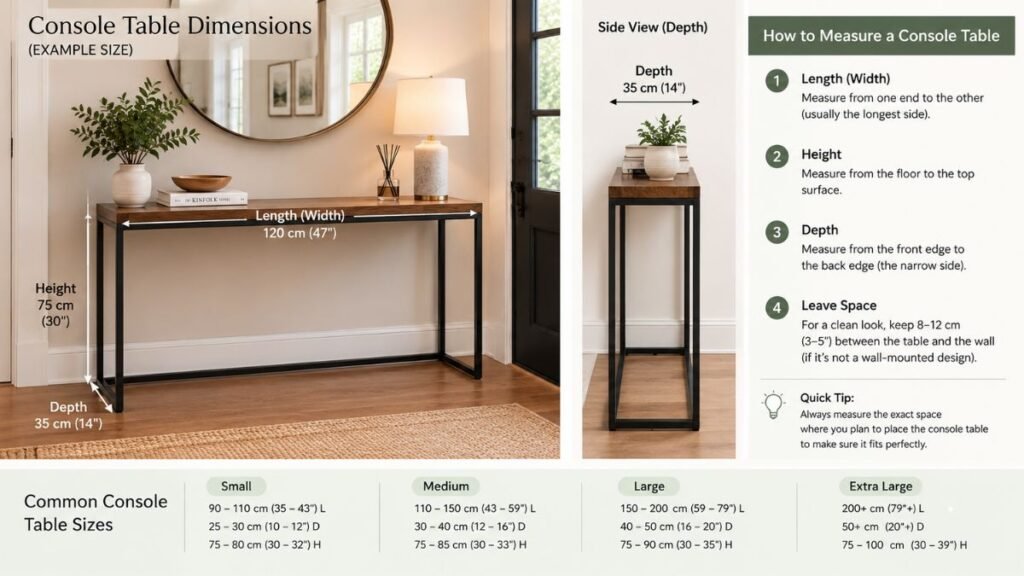
Choosing a console table should start with the space rather than the appearance of the furniture.
The most useful console table decor ideas start with practical measurements rather than appearance alone.
1. Measure the Available Space
Measure the width of the wall or area where you plan to place the table. Also consider the depth of the furniture and the walking space around it.
A narrow hallway needs a slimmer console than a spacious living room. Before buying, measure the area and compare those measurements with the table’s listed dimensions.
2. Choose the Right Height
Console tables are generally designed to sit at a comfortable standing or display height, but the ideal height depends on the location and purpose.
For example, a console behind a sofa should relate visually to the sofa height, while an entryway table should leave enough room for comfortable movement.
3. Consider the Material
The material affects both appearance and maintenance.
Wood: Adds warmth and works with many decorating styles.
Metal: Creates a clean, contemporary or industrial appearance.
Glass: Gives a lighter visual effect but may require more frequent cleaning.
Mixed materials: Combine different textures and can create a more distinctive focal point.
Choose a finish that works with your existing flooring, furniture, wall color, and other decorative elements.
4. Decide How Much Storage You Need
Think about what you will actually keep on or inside the console.
If the table is mainly decorative, an open design may be enough. If you want to organize keys, paperwork, accessories, or other everyday items, drawers or shelves may be more useful.
For more living-room storage inspiration, explore Living Room Storage Ideas.
5. Match the Style to Your Room
Your this piece does not have to match every piece of furniture exactly. Instead, look for connections through materials, colors, shapes, or finishes.
For example:
- Light wood works well with soft neutral interiors.
- Dark wood can create contrast in brighter rooms.
- Metal details complement contemporary furniture.
- Natural finishes suit rustic and relaxed spaces.
- Glass and mirrored surfaces can create a lighter decorative effect.
Quick Console Table Buying Checklist
Before choosing a console table, check:
- Width: Does it fit the available wall space?
- Depth: Will people still have enough walking space?
- Height: Does it work with the surrounding furniture?
- Material: Is it suitable for the room and intended use?
- Storage: Do you need drawers, shelves, or both?
- Style: Does it complement the existing decor?
- Stability: Can it safely support the items you plan to display?
Console Table Decor Ideas
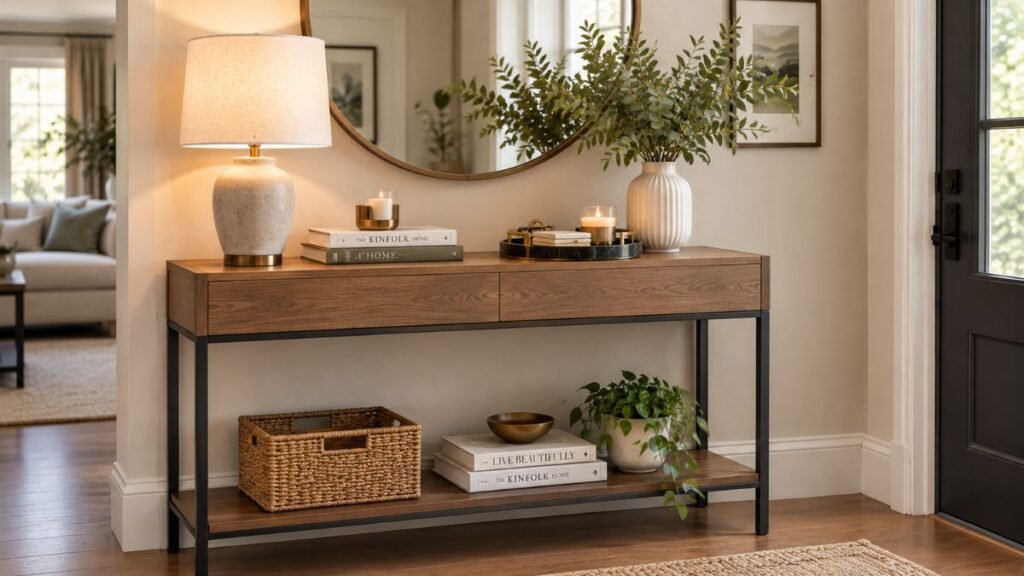
Once you have chosen the right table, the next step is styling it.
Good console table decor should look intentional without covering every inch of the surface. Start with one larger item and then add smaller accessories around it.
1. Add a Table Lamp
A table lamp can provide height while also adding useful ambient lighting. Place it toward one side of the console and balance it with another decorative object.
2. Hang Artwork or a Mirror Above It
The wall above a console table is an ideal place for artwork or a mirror.
A large piece can create a strong focal point, while a collection of smaller frames can produce a more layered look.
For more inspiration, explore our guide to Wall Decor for Living Room.
3. Use Different Heights
Avoid placing accessories at exactly the same height. Instead, combine tall, medium, and small objects.
For example, you could combine:
- A tall lamp or vase
- A medium-sized decorative object
- A small tray or bowl
- A few carefully selected books
Different heights create visual movement while keeping the arrangement easy to understand.
4. Use a Tray for Small Items
A decorative tray can group smaller objects together. This is particularly useful on an entryway console where keys and other everyday items may otherwise make the surface look messy.
5. Leave Some Empty Space
One of the easiest ways to improve console table styling is to avoid overcrowding.
Empty space allows the individual accessories to stand out and makes the entire arrangement feel cleaner.
Where to Place a Console Table
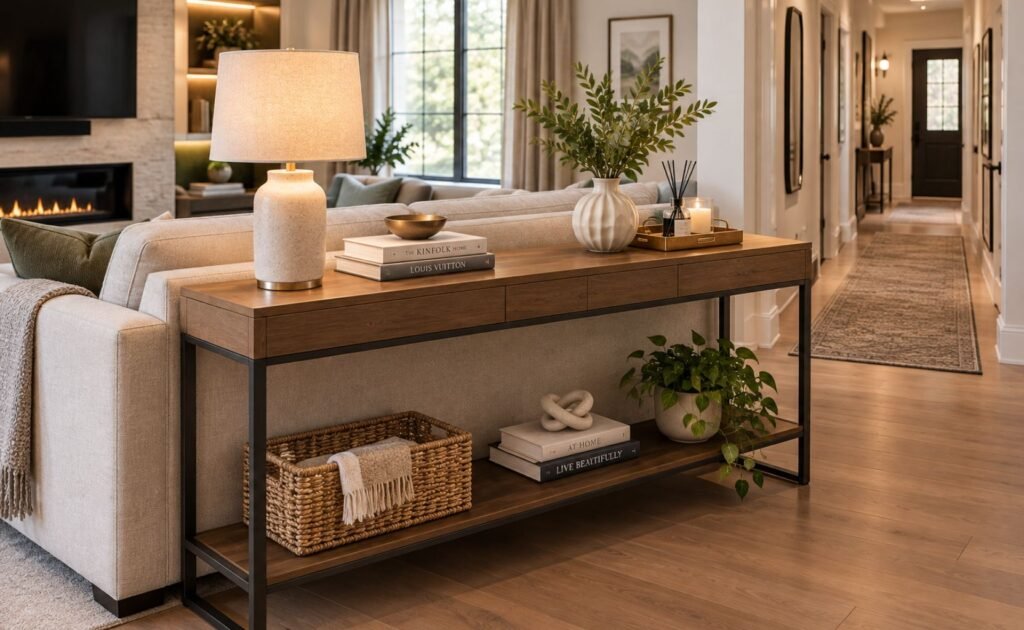
A console table is not limited to the entryway. Its slim shape allows it to work in several areas of the home.
Entryway or Hallway
An entryway console can create a welcoming first impression while providing a convenient place for everyday essentials.
Pair it with a mirror, artwork, lamp, or small decorative arrangement to create a simple focal point.
Behind a Sofa
A console table behind a sofa can help visually define an open living area. It also provides a surface for lamps, books, plants, or other accessories.
Choose a table that works proportionally with the sofa and does not interfere with movement through the room.
Against a Blank Wall
An empty wall can sometimes make a room feel unfinished. A console table can anchor that area and provide a base for artwork, a mirror, or decorative objects.
If you are working with a larger wall, consider combining the console with carefully selected Wall Art for Home to create a cohesive display.
Dining Room
In a dining room, a console table can provide additional surface space for serving items, decorative objects, or tableware.
For a more complete dining-room arrangement, you can also explore our Table Decor Ideas guide.
Bedroom
A compact console can also work in a bedroom as a decorative surface or lightweight workspace, depending on its size and design.
Keep the styling simple so the room remains calm and functional.
How to Style a Console Table for Different Decorating Styles
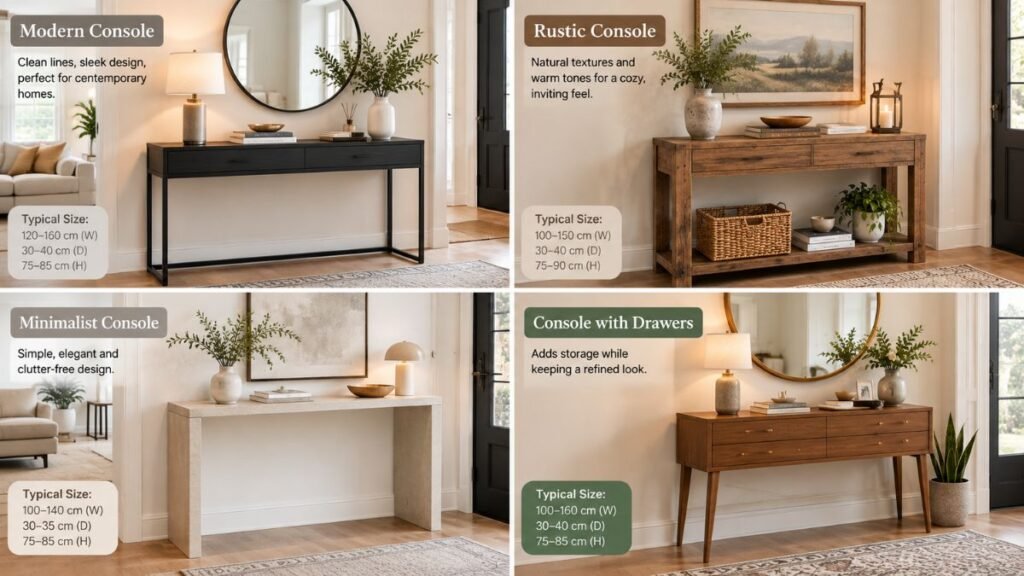
Modern
Choose clean-lined furniture and keep accessories minimal. A lamp, simple artwork, and one or two decorative objects can be enough.
Rustic
Combine natural wood with woven baskets, greenery, ceramic pieces, or other organic textures.
Minimalist
Use fewer accessories and prioritize negative space. A single statement piece can often have more impact than a crowded display.
Traditional
Consider classic wood finishes, framed artwork, lamps, books, and decorative objects with coordinated colors.
Eclectic
Mix different textures, shapes, and materials while keeping at least one visual element consistent, such as color or finish.
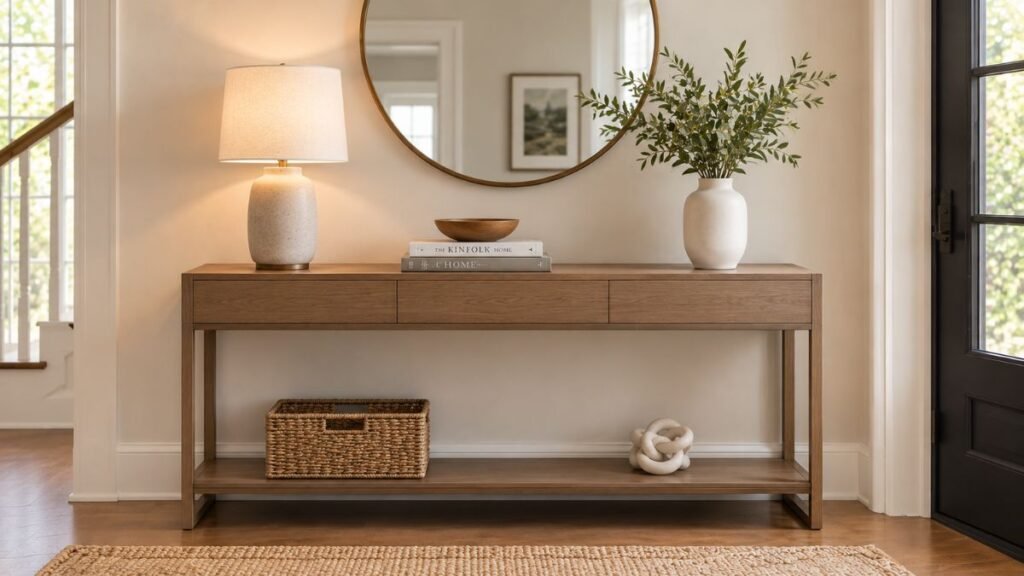
Common Console Table Styling Mistakes to Avoid
Even a beautiful console table can look unbalanced when it is styled incorrectly.
Avoid these common mistakes:
Choosing a Table That Is Too Large
A console that overwhelms the available space can make a hallway or room feel cramped.
Using Too Many Accessories
Too many decorative pieces can make the surface look cluttered. Select a few items that work together instead.
Ignoring the Wall Above the Table
A console table can look disconnected from the rest of the room when the wall above it is left completely empty. Depending on the space, artwork, a mirror, or another suitable wall feature can help connect the arrangement.
Forgetting Practical Use
A beautiful console should still work for the way you use your home. If you need storage, choose drawers or shelves rather than selecting a design based only on appearance.
Frequently Asked Questions
What is a console table used for?
A console table is mainly used as a decorative and functional surface in areas such as entryways, hallways, living rooms, dining rooms, and bedrooms. Depending on the design, it can also provide drawers or shelves for storage.
What is the best depth for a console table in a narrow hallway?
For a narrow hallway, look for a slim console that leaves comfortable walking clearance. Always measure the hallway first rather than choosing a specific depth without considering the available space.
Can a console table go behind a sofa?
Yes. A console table can be placed behind a sofa to provide a decorative surface and help visually define an open living area. Make sure its dimensions work with the sofa and leave sufficient room for movement.
How do you decorate a console table?
Start with one larger anchor piece, such as a lamp, vase, mirror, or artwork. Then add a few smaller accessories at different heights. Avoid covering the entire surface.
Should a console table match the other furniture?
It does not have to match exactly. A console table can complement the rest of the room through similar materials, finishes, colors, or design details.
Can a console table be used in a small apartment?
Yes. Its relatively narrow profile makes a console table useful in compact homes. Choose a size that fits the available wall space without restricting movement.
Final Thoughts
A console table can turn an unused wall, hallway, or area behind a sofa into a useful and attractive part of your home. The best choice depends on your available space, preferred style, storage needs, and how you plan to use the table.
Start by measuring the space. Then choose an appropriate depth, height, material, and finish. Once the table is in place, use a few well-chosen accessories to create a balanced display.
Whether you prefer a modern, rustic, minimalist, or traditional look, the right console table can add function and personality without overwhelming your room.