
A dining room without a rug often feels unfinished. The table may be beautiful, the lighting may sparkle, and the chairs may perfectly match the décor, yet something still feels missing. That missing layer is usually a well chosen Dining Room Rug. It grounds the furniture, softens the atmosphere, and quietly brings the entire room together without demanding attention Dining Room Light Fixtures.
More importantly, the right rug changes how the space feels emotionally. Family dinners become warmer. Gatherings feel more intimate. Even a simple breakfast table suddenly looks styled and intentional. From modern apartments to classic family homes, a thoughtfully selected Dining Room Rug adds both comfort and sophistication while protecting floors from constant chair movement and daily wear.
How to Choose the Perfect Dining Room Rug Size
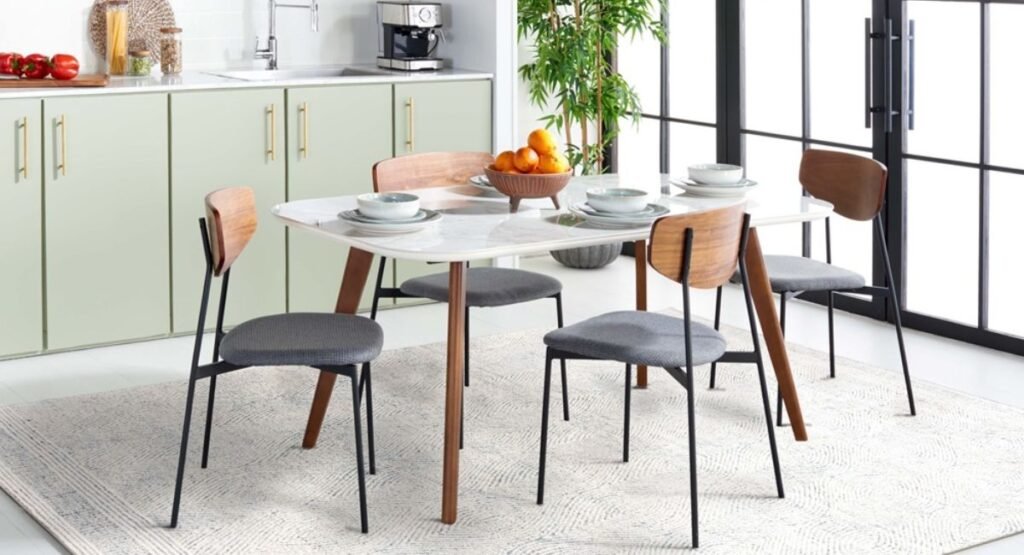
Size is the first thing interior designers focus on because it determines whether the room feels balanced or awkward. A rug that is too small instantly breaks the harmony of the dining area.
The 24 Inch Rule Explained
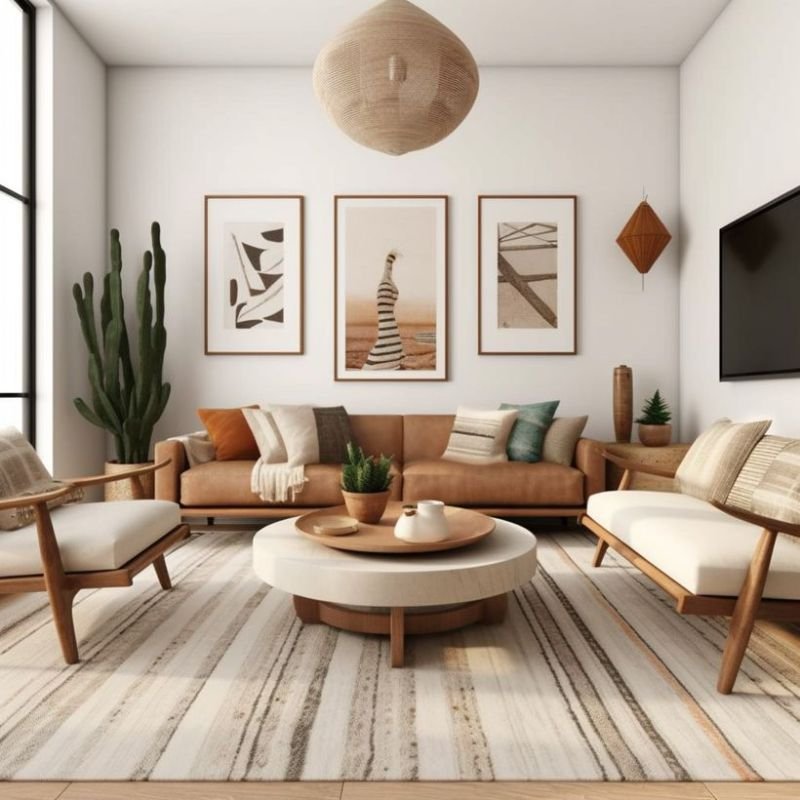
One of the most trusted design principles is the 24 inch rule. Your rug should extend at least 24 inches past every side of the dining table. This allows chairs to slide out comfortably while remaining fully on the rug.
Here is a simple guideline:
- Four seat dining tables usually pair well with 8×10 rugs
- Six seat tables often need 9×12 rugs
- Round tables look best with round rugs of equal proportion
When the proportions are correct, the entire dining setup feels visually connected and more luxurious.
Why Rug Shape Changes the Entire Look
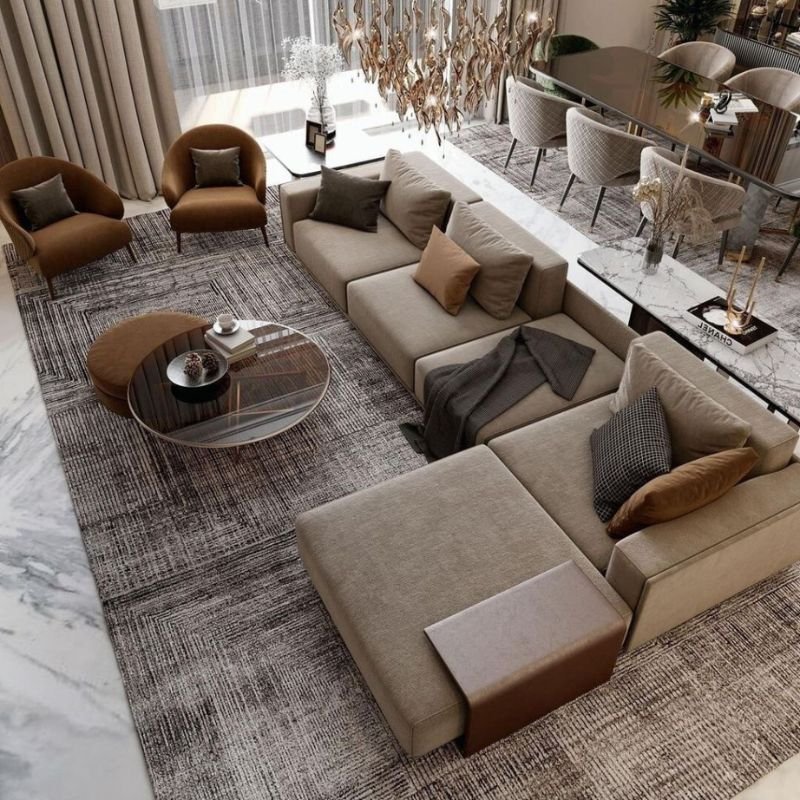
The shape of your rug should follow the shape of the table whenever possible Large Living Room Rugs.
Best combinations include:
- Rectangular table with rectangular rug
- Circular table with round rug
- Square table with square rug
- Oval table with oversized rectangular rug
This simple coordination creates flow and prevents the room from feeling visually chaotic.
Material Matters: Finding the Right Balance Between Beauty and Durability
Dining areas experience heavy foot traffic, food spills, chair movement, and constant activity. Therefore, selecting the right material is just as important as choosing the right color or pattern.
A high quality Dining Room Rug should combine practicality with timeless style.
Wool Rugs for Elegant Dining Spaces
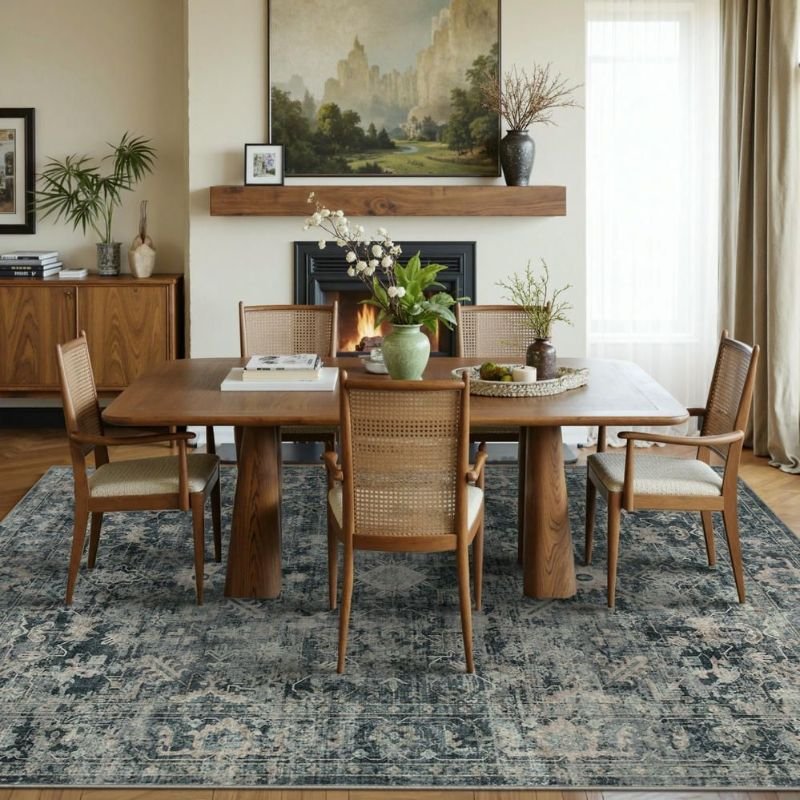
Wool rugs remain a favorite among interior designers because they offer luxury without sacrificing durability.
Advantages of wool rugs:
- Naturally soft texture
- Excellent long term durability
- Warm and inviting appearance
- Resistant to flattening
Additionally, wool fibers age gracefully and maintain their richness for years.
Synthetic Rugs for Busy Homes
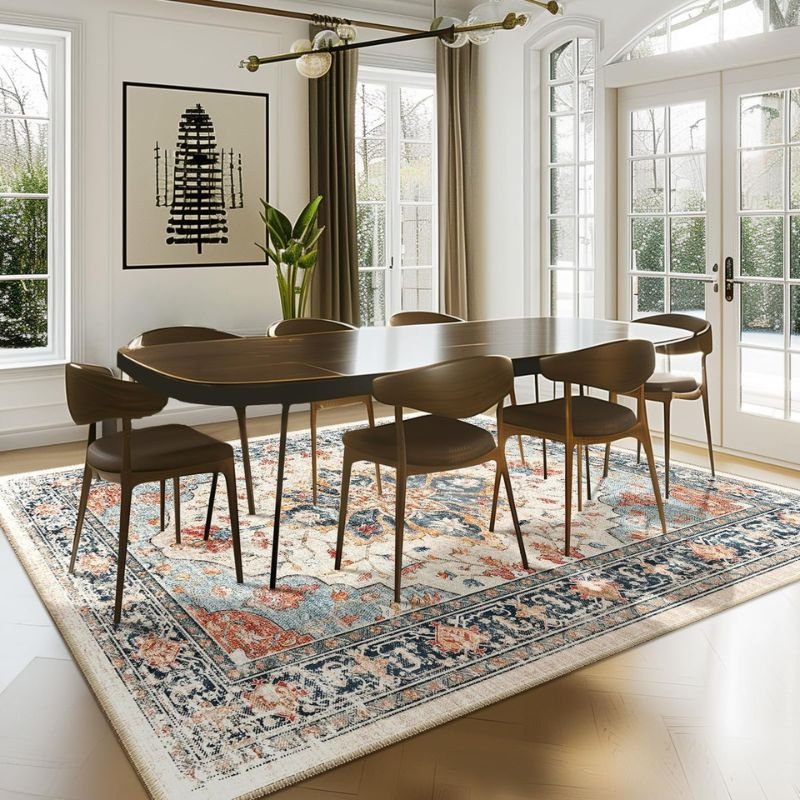
Synthetic rugs are ideal for households that prioritize convenience.
They are especially popular because they are:
- Easy to clean
- Stain resistant
- Budget friendly
- Suitable for children and pets
For active family homes, synthetic area rugs for dining rooms often provide the perfect balance of style and practicality.
Natural Fiber Rugs for Organic Texture
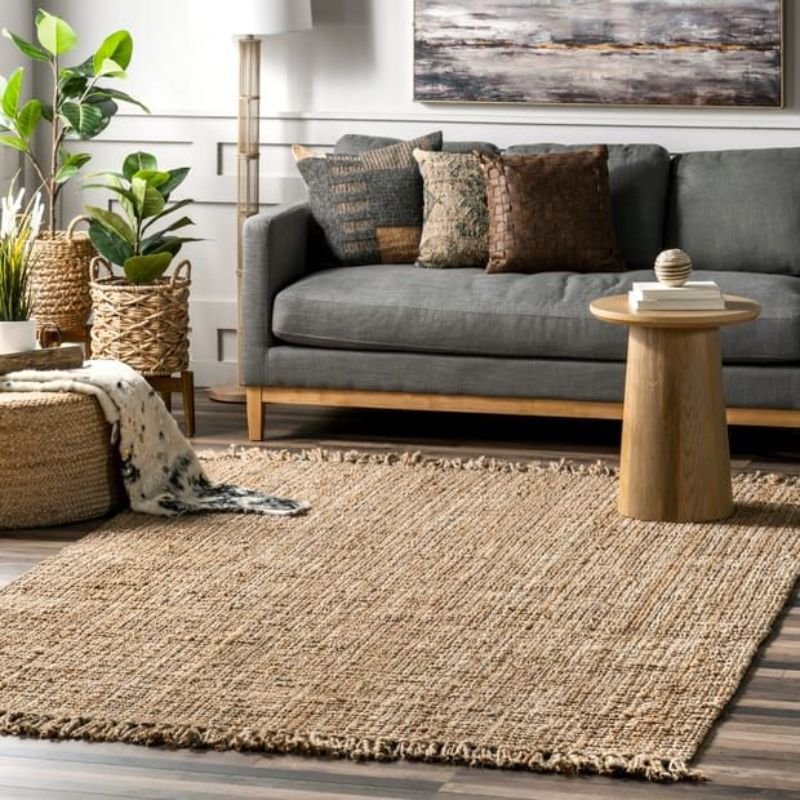
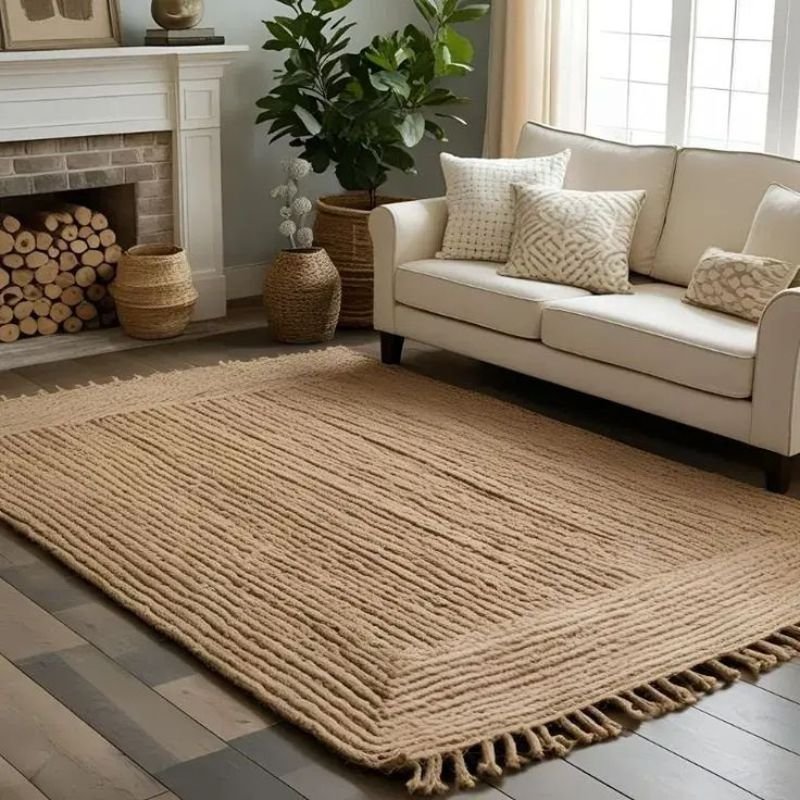
Natural materials like jute and sisal introduce earthy warmth into dining spaces.
These rugs work beautifully in:
- Farmhouse interiors
- Coastal inspired rooms
- Scandinavian spaces
- Neutral minimalist homes
However, they require slightly more care because natural fibers can absorb stains more easily.
Maintenance Tips for High Traffic Dining Areas

A dining room rug stays beautiful longer when maintained properly. Fortunately, a few simple habits make a significant difference.
Helpful care tips include:
- Vacuum regularly to prevent dust buildup
- Clean spills immediately with a dry cloth
- Rotate the rug every few months
- Avoid extremely thick pile rugs under chairs
- Use a rug pad for stability and floor protection
Consistent care helps preserve both the appearance and texture of the rug over time.
Style and Color Coordination for a Harmonious Dining Room
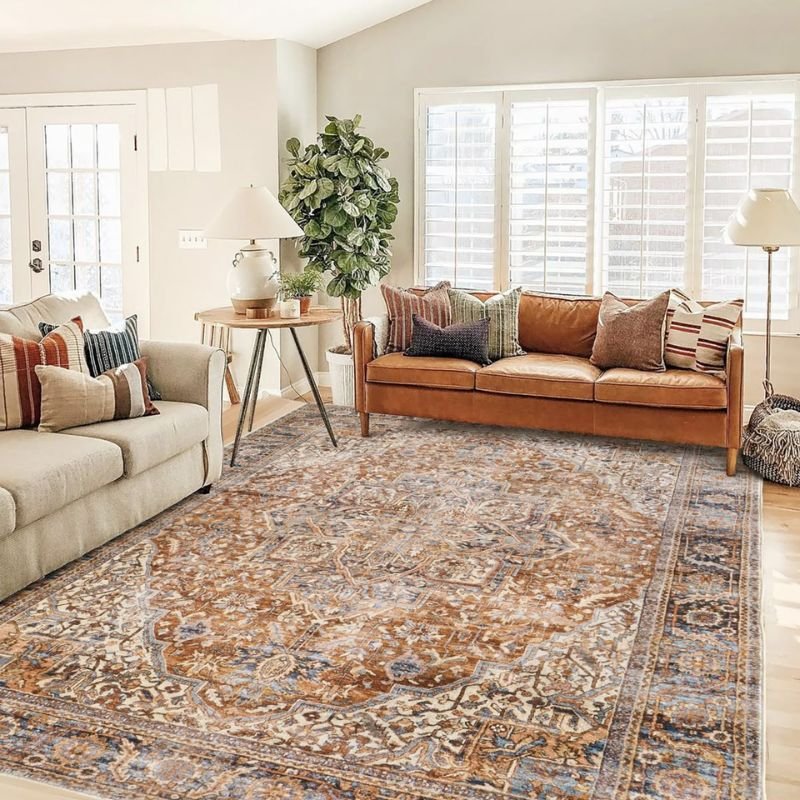
A rug should never feel isolated from the rest of the room. Instead, it should connect the dining table, lighting, walls, flooring, and accessories into one cohesive design story.
Matching the Rug With the Dining Table
Your dining table is the centerpiece of the room, so the rug should complement it naturally.
For example:
- Walnut dining tables pair beautifully with warm beige tones
- Black tables look striking on soft gray rugs
- Glass tables work well with textured patterns
- Rustic wood finishes blend perfectly with woven fibers
The goal is coordination, not exact matching.
Coordinating With Lighting and Flooring
Lighting dramatically changes how rug colors appear throughout the day. Warm lighting enhances earthy tones, while natural daylight highlights texture and detail.
If your flooring is dark:
- Choose lighter rugs to brighten the room
If your flooring is pale:
- Add contrast using richer shades or bold patterns
This balance prevents the space from feeling either too heavy or too washed out.
Choosing Between Patterns and Solid Colors
Both patterned and solid rugs can work beautifully depending on the atmosphere you want to create.
Patterned rugs are excellent for:
- Hiding crumbs and stains
- Adding character
- Creating visual movement
Solid rugs are ideal for:
- Modern dining rooms
- Minimalist interiors
- Smaller spaces needing simplicity
A carefully styled Dining Room Rug should feel like a natural extension of the room rather than a separate decorative element.
Trending Dining Room Rug Styles Homeowners Love
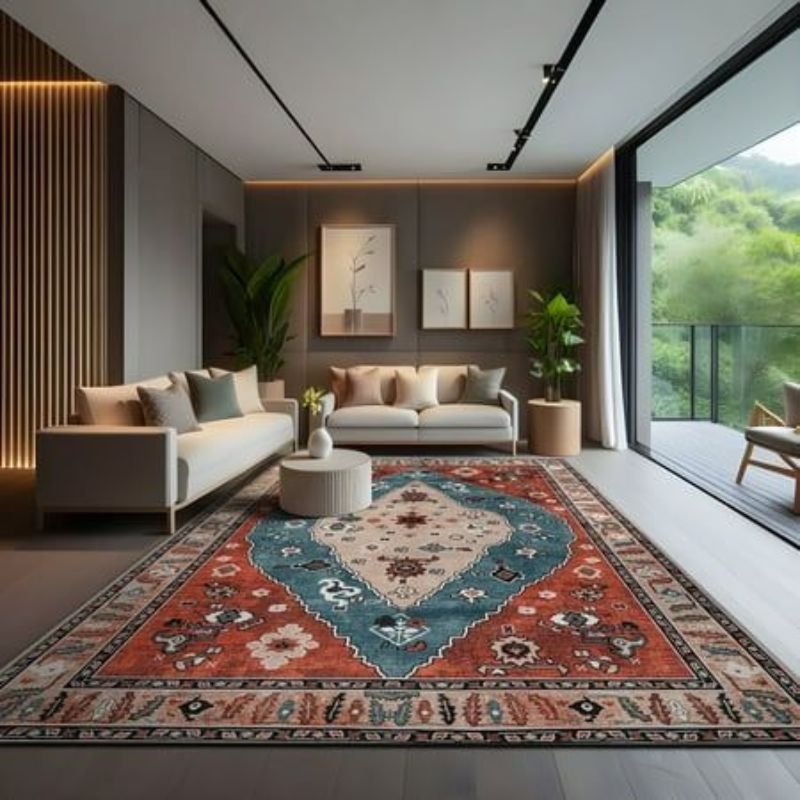
Living Room Storage Modern dining spaces are embracing comfort driven design with layered textures and soft natural tones.
Popular styles currently include:
- Vintage Persian inspired rugs
- Neutral Scandinavian designs
- Muted geometric patterns
- Earth toned woven textures
- Soft contemporary abstract rugs
These styles create warmth while maintaining a sophisticated appearance.
Common Dining Room Rug Mistakes to Avoid
Even expensive rugs can look out of place if basic design principles are ignored.
Avoid these common mistakes:
- Buying a rug that is too small
- Using delicate fabrics in busy dining spaces
- Choosing very thick rugs under chairs
- Ignoring the room’s lighting conditions
- Matching every single color too perfectly
Balanced contrast usually creates a more elegant and natural result.
FAQs
What is the ideal size for a Dining Room Rug?
A Dining Room Rug should extend about 24 inches beyond the table on all sides so chairs move comfortably without leaving the rug.
Are patterned rugs good for dining rooms?
Yes, patterned rugs help hide crumbs, stains, and everyday wear.
Which material lasts longest in dining areas?
Wool and high quality synthetic rugs are among the most durable options.
Should dining room rugs be thick or thin?
Low pile rugs work best because dining chairs move more easily on them.
Can a Dining Room Rug protect hardwood floors?
Yes, rugs reduce scratches and help protect flooring from chair movement.
Conclusion
A beautifully selected Dining Room Rug has the power to transform the entire atmosphere of a home. It adds texture, comfort, warmth, and visual structure while connecting furniture and décor into one harmonious space. Even simple dining rooms instantly feel more refined when the right rug is introduced.
From choosing the correct size to selecting durable materials and coordinating colors thoughtfully, every decision contributes to a dining area that feels elegant yet practical. The result is a welcoming space designed not only for meals, but also for meaningful everyday moments.