
Watching a toddler pretend to cook dinner never gets old. Little hands stir invisible soup, open tiny oven doors, and proudly announce that “dinner is ready.” A play kitchen makes all of this possible, giving children a dedicated space to explore, create, and imagine. This kind of pretend play isn’t just entertaining; it also shapes how kids think, communicate, and interact with the world around them.
Yet with so many models flooding the market today, picking the right one takes more than a quick glance at pictures online. Parents must consider size, material, safety features, and age appropriateness before making a final decision. Therefore, this guide walks you through everything worth knowing, from popular styles to smart buying tips, so you can choose a play kitchen that fits your home and your child’s needs perfectly.
The Real Value Behind a Play Kitchen for Kids
Parents often wonder whether a play kitchen truly earns its spot in the playroom. The answer, quite simply, is yes. Unlike toys that lose appeal within weeks, a kids play kitchen tends to stay relevant for years because children constantly reinvent how they use it.

At its core, pretend cooking teaches sequencing skills. First, a child gathers pretend ingredients. Next, they “cook” the meal. Finally, they serve it to a parent, sibling, or stuffed animal. This sequence strengthens memory and planning abilities long before formal schooling begins.
Moreover, a toy kitchen set naturally invites cooperative play. Two or more children can share responsibilities one washes dishes while another prepares food which builds early teamwork skills. Meanwhile, solo play also holds value, since children learn to entertain themselves independently.
Breaking Down the Main Play Kitchen Styles
Shopping becomes much easier once you understand the categories available.
| Material | Best For | Durability |
|---|---|---|
| Wooden | Long-term use | ⭐⭐⭐⭐⭐ |
| Plastic | Budget buyers | ⭐⭐⭐ |
| Compact | Small homes | ⭐⭐⭐⭐ |
classic wood play kitchens
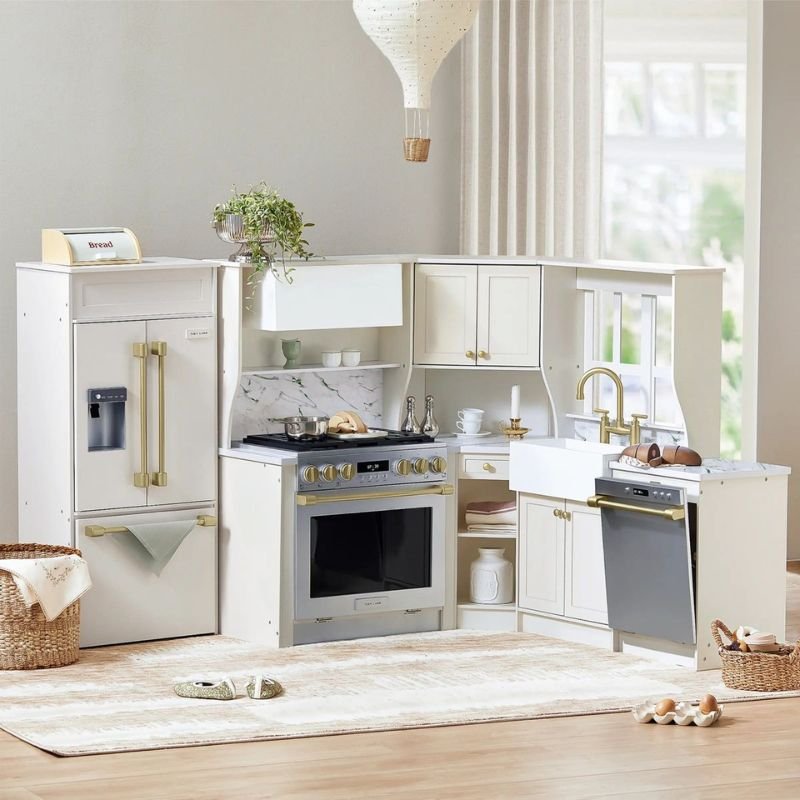
Wood remains a favorite material because it feels sturdy and looks elegant in almost any room. Unlike cheaper alternatives, wooden kitchens rarely crack or fade quickly. Consequently, many parents view them as a worthwhile long term investment, especially if younger siblings will inherit the toy later.
Budget-Friendly Plastic Play Kitchens
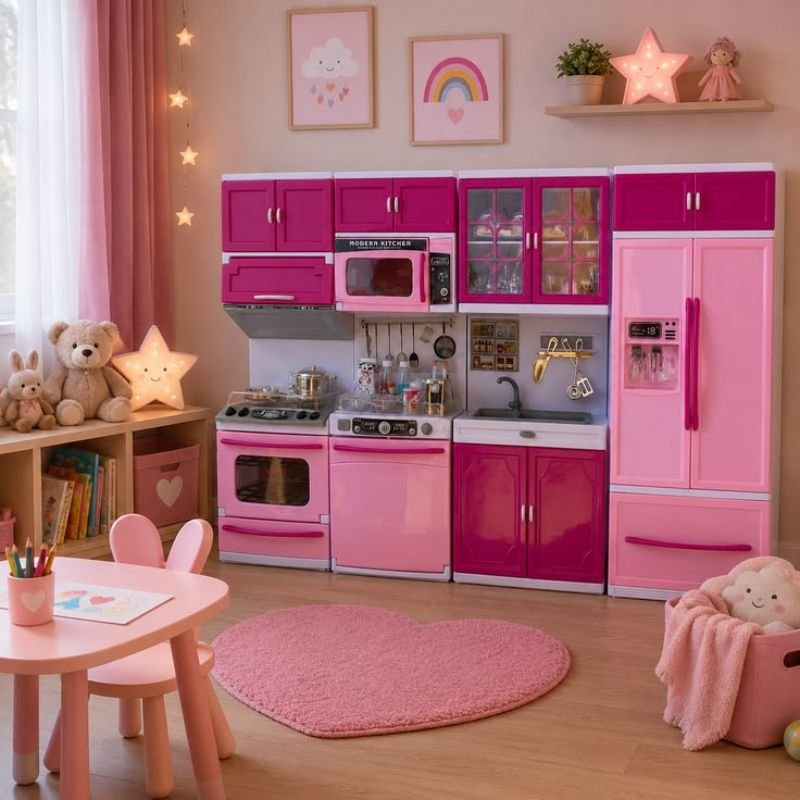
Plastic play kitchens suit families who want an affordable entry point. These sets often include fun extras like beeping timers or flickering “flame” lights. Still, plastic construction tends to show scratches and wear sooner than wood.
Space-Saving Compact Play Kitchens
Apartment dwellers and parents with limited playroom space often gravitate toward smaller units. A compact pretend play kitchen typically includes just a stovetop and sink, skipping bulkier add ons like a full pantry.
Expandable Play Kitchen Systems
Certain brands sell interchangeable pieces, allowing parents to add a fridge, microwave, or extra counter space over time. This approach works well for growing families who prefer spreading out costs across multiple gift occasions.
Key Factors Before Buying a Play Kitchen
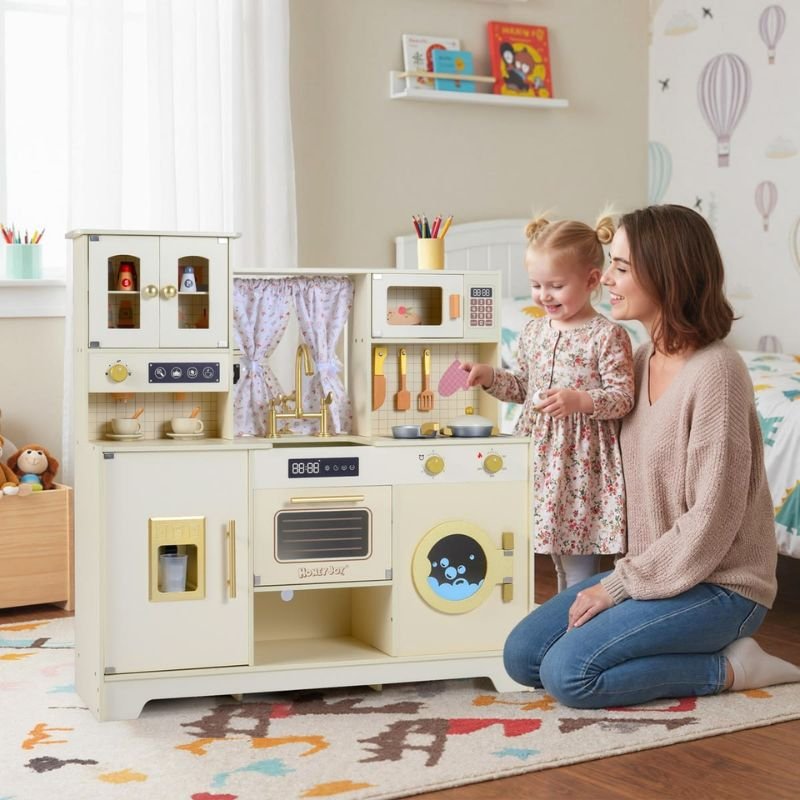
A little research upfront saves plenty of frustration later.
Measuring Your Available Space
Before adding anything to your cart, grab a measuring tape. Playroom corners often look bigger than they actually are, so confirming dimensions prevents costly returns.
Matching the Kitchen to Your Child’s Age
Younger toddlers thrive with simple, chunky designs featuring minimal small parts. School age children, meanwhile, appreciate added realism like spinning dials, sound effects, and detailed accessories.
Evaluating Build Quality
Run your hands along the edges of any model you’re considering. Smooth, rounded corners indicate thoughtful design, whereas sharp edges signal a product to avoid.
Considering Assembly Time
Some kitchens arrive nearly ready to use, while others demand an entire afternoon of assembly. Reading customer reviews beforehand reveals realistic setup expectations.
Prioritizing Storage Options
Built-in shelves and cubbies teach children where their pretend cookware belongs. As a result, kids develop tidying habits without much prompting from parents.
Play Kitchen Safety Guidelines Every Parent Should Follow
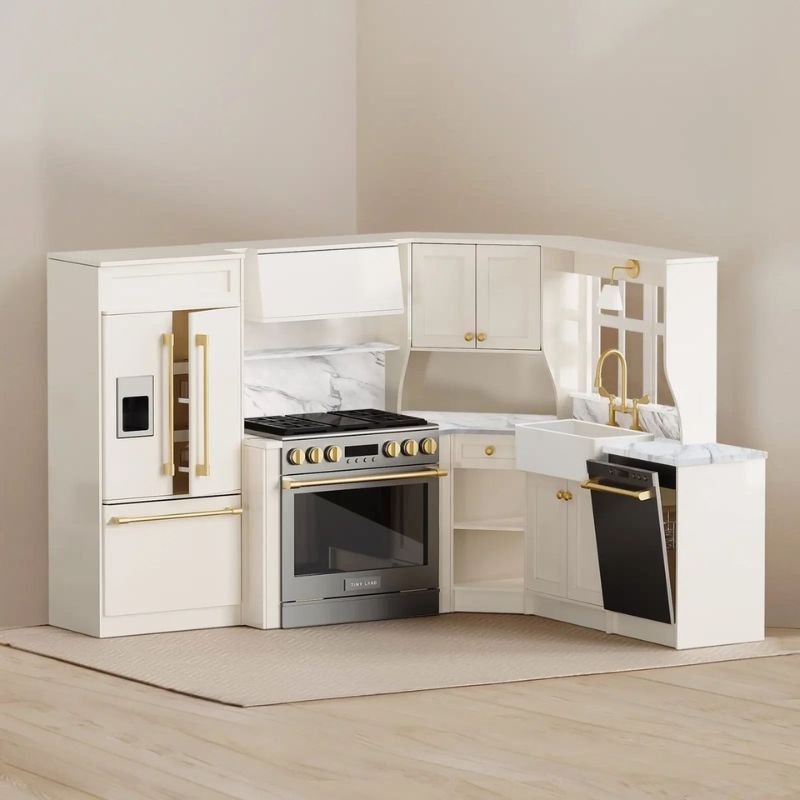
No toy purchase should overlook safety considerations, and play kitchens are no exception.
- Inspect for sharp edges before allowing unsupervised play.
- Skip tiny removable pieces if your child is under three years old.
- Confirm non toxic materials by checking product certifications.
- Test for stability by gently pushing the unit to ensure it won’t tip.
- Recheck hardware periodically, since screws and joints loosen with regular use.
Taking these steps seriously protects children while letting their imagination run freely.
Styling a Play Kitchen to Fit Your Home
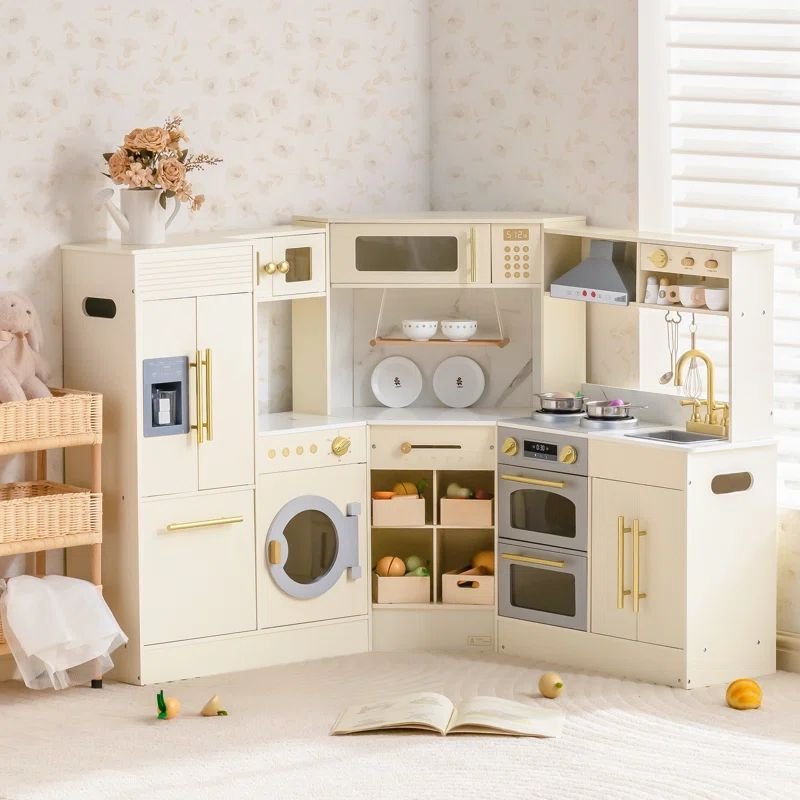
Today’s play kitchens come in enough styles to match nearly any interior design preference.
Soft Neutral Palettes
Whites, creams, and light wood tones blend effortlessly into contemporary homes. These shades also tend to stay visually appealing regardless of changing design trends.
Rustic and Farmhouse Inspired
Distressed wood finishes paired with vintage style knobs create a cozy, homey feel. Families who favor farmhouse décor throughout their home often extend that theme into the playroom.
Vibrant and Playful
Bright color combinations suit playrooms meant purely for fun and imagination. This option works especially well in dedicated kids’ spaces away from shared living areas.
Sleek Minimalist Options
Streamlined shapes without excessive detail appeal to parents who prefer understated design. These models typically skip extras like sound effects in favor of clean aesthetics.
Supporting Growth Through Imaginative Cooking Play
A pretend play kitchen offers far more than surface level fun. Children practice early math skills by counting pretend vegetables or measuring imaginary cups of flour. Additionally, cause and effect learning happens naturally when kids open doors, press buttons, or turn dials.
Social emotional growth also flourishes during this type of play. Kids frequently prepare “meals” for parents or siblings, practicing generosity and care for others. Over time, many children develop genuine curiosity about real cooking, often asking to help in the actual kitchen once they’re old enough.
Conclusion
Selecting the right play kitchen involves balancing style, safety, and your child’s developmental stage. Wooden models offer durability, while plastic versions provide budget-friendly fun. Regardless of which style you choose, prioritizing safety features and age appropriate design ensures years of enjoyable, imaginative play. In addition, matching the kitchen’s design to your home’s décor helps the toy feel like a natural part of your living space rather than a temporary distraction.
Ultimately, a play kitchen does more than fill playtime hours; it nurtures creativity, builds essential life skills, and creates lasting memories for the whole family. Take time to compare your options, weigh what matters most for your household, and soon you’ll find the perfect play kitchen to bring your child’s pretend cooking adventures to life.
FAQs
1. What is the ideal age range for a play kitchen?
Children between 2 and 8 years old typically enjoy play kitchens the most.
2. Do wooden play kitchens last longer than plastic ones?
Yes, wooden models generally withstand daily use better than plastic alternatives.
3. How much floor space should I set aside for a play kitchen?
Most compact designs require roughly 2 to 3 square feet of space.
4. Does a play kitchen offer real educational value?
Yes, it supports language, motor skills, and social emotional development.
5. How long does assembling a play kitchen usually take?
Setup typically ranges from 30 minutes to about 2 hours, depending on the model.