
Choosing the right 24 inch bathroom vanity can make a big difference in a small bathroom. A compact vanity gives you a practical sink, countertop, and storage area without taking up as much space as a larger cabinet. It can work especially well in guest bathrooms, powder rooms, apartment bathrooms, and other compact layouts.
However, choosing the right vanity involves more than checking its width. You also need to consider cabinet depth, overall height, countertop size, sink configuration, plumbing location, storage, door clearance, and mounting requirements.
If you have more available space, you can also compare your options with our complete guide to a 30 inch bathroom vanity. In this guide, you will learn how to measure for a 24-inch vanity, which features are worth considering, how different styles compare, and which mistakes to avoid before buying.
Why Choose a 24 Inch Bathroom Vanity for a Small Bathroom?
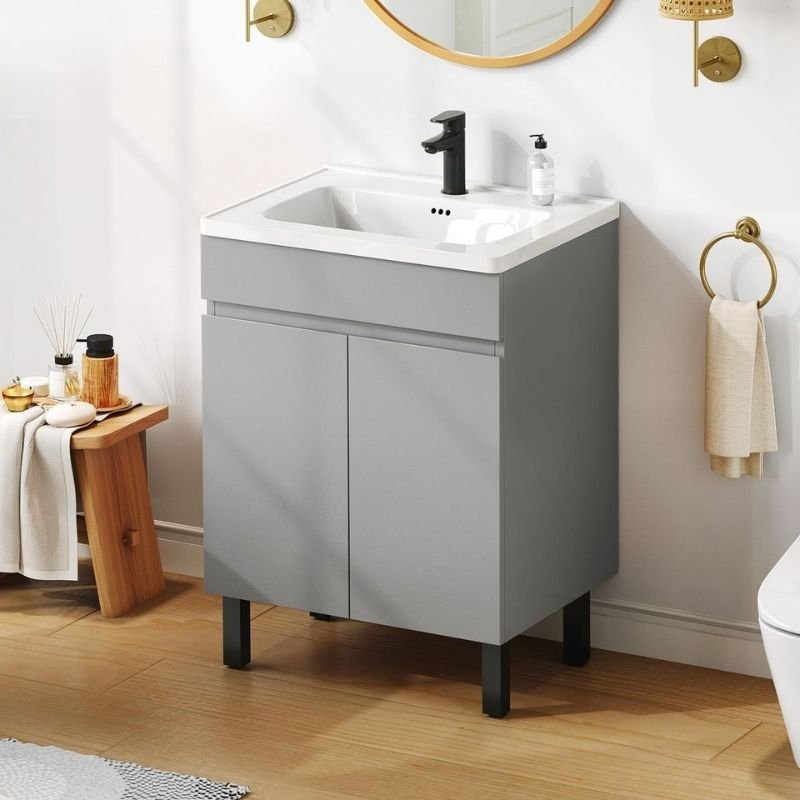
The main reason to choose a 24 inch bathroom vanity is simple: it gives you useful bathroom functionality without requiring the footprint of a larger cabinet.
In a small room, the vanity needs to work with everything around it. The toilet, shower, bathtub, door, mirror, and walking path all compete for space. A compact vanity can make that layout easier to manage.
A 24-inch vanity can help preserve floor space
A smaller cabinet can leave more open area around the sink. This can make movement through the room more comfortable, especially when the bathroom has a narrow layout.
It provides a dedicated sink and storage area
You do not necessarily need a large cabinet to keep everyday bathroom essentials organized. A well-designed 24-inch unit can provide storage for frequently used toiletries, cleaning products, and other small items.
It suits guest and powder bathrooms
Guest bathrooms often need a practical sink and some storage rather than a large double-sink installation. A compact vanity can provide those essentials without becoming the dominant feature of the room.
It works with many design styles
A 24-inch vanity is available in floating, freestanding, farmhouse, transitional, contemporary, and minimalist designs. That makes it easier to match the cabinet with the rest of your bathroom.
It can be a practical choice for remodeling
A smaller vanity can be easier to position than a large cabinet. However, installation difficulty still depends on the existing plumbing, wall construction, and product design.
The key is to choose the vanity based on your actual room measurements rather than buying solely because the cabinet is labeled “24 inch.”
How to Measure for a 24 Inch Bathroom Vanity
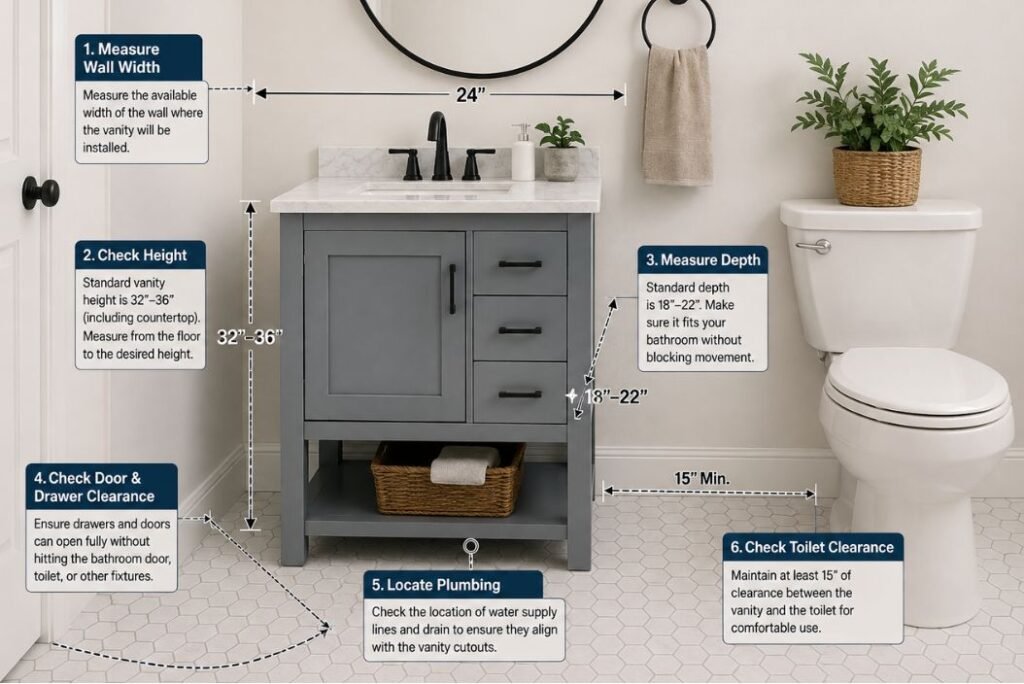
Before purchasing a 24 inch bathroom vanity, measure the entire installation area. A cabinet can have the correct width and still be unsuitable because it is too deep, too tall, or positioned too close to another fixture.
Measure the available width
Measure the wall where the vanity will sit. Check for anything that reduces the usable space, including trim, baseboards, outlets, pipes, and door frames.
Do not assume that exactly 24 inches of available wall space guarantees a comfortable fit. Always compare your measurements with the manufacturer’s complete product dimensions.
Measure the depth
Depth becomes particularly important in compact bathrooms.
Measure how far the vanity can extend into the room without interfering with the toilet, shower, bathtub, or doorway. Also check the countertop depth because it may extend farther than the cabinet itself.
Check the overall height
The listed cabinet height may not be the finished height of the sink area. The countertop and sink can add additional height, especially with vessel-sink designs.
Check door and drawer clearance
Make sure nearby doors, vanity drawers, and cabinet doors can open fully.
Pay particular attention to:
- The bathroom entry door
- Shower or tub doors
- Vanity drawers
- Cabinet doors
- Toilet clearance
- Walking space
Locate the plumbing
Find the existing drain and water-supply lines before selecting your cabinet.
The location of the plumbing can affect which storage configurations will work. Drawers, shelves, and cabinet dividers may need to accommodate the existing connections.
Check wall support
If you are considering a wall-mounted vanity, check how the unit attaches to the wall and where the supporting studs are located.
Always follow the manufacturer’s mounting requirements for the specific product.
Quick Measurement Guide
| Measurement | Why It Matters |
| Width | Confirms the cabinet can fit the wall |
| Depth | Protects usable floor space |
| Height | Affects the finished sink position |
| Countertop depth | Determines the complete footprint |
| Door clearance | Prevents doors from hitting the vanity |
| Drawer clearance | Ensures storage can open properly |
| Plumbing location | Helps avoid pipe and cabinet conflicts |
| Wall support | Important for floating installations |
24 Inch Bathroom Vanity Dimensions Explained
The term 24 inch bathroom vanity generally refers to the approximate width of the vanity cabinet.
It does not mean that every 24-inch model has identical dimensions.
Two cabinets can have the same width while having different:
- Depths
- Heights
- Countertop sizes
- Sink configurations
- Storage layouts
- Leg or base designs
- Mounting systems
That is why the full specification sheet matters.
For a particularly narrow bathroom, a shallower model may be more suitable than a deeper standard-style cabinet. If your room has more available floor space, a deeper countertop may give you more usable surface.
Also remember that the countertop can extend beyond the cabinet. Measure the complete assembled unit rather than relying only on the cabinet width.
Best Features of a 24 Inch Bathroom Vanity
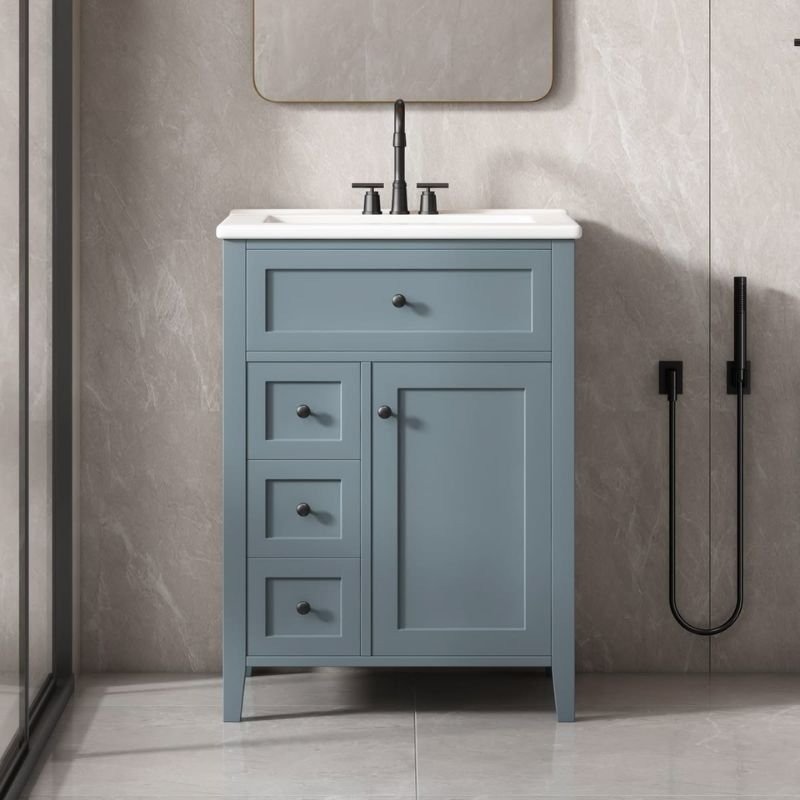
A small vanity has limited space, so its design needs to be efficient.
Soft-close doors and drawers
Soft-close hardware helps reduce slamming and can make everyday use quieter and more comfortable.
Efficient storage
Look for drawers, shelves, pull-out organizers, or a combination of storage types that fit the items you actually use.
Moisture-conscious construction
Bathroom cabinets regularly encounter humidity and water splashes. A suitable finish, protected edges, and proper installation can help reduce moisture-related problems.
Adjustable shelves
Adjustable shelves allow you to change the storage height for bottles, cleaning supplies, and other bathroom essentials.
Quality hardware
Inspect the hinges, drawer slides, handles, and mounting hardware rather than focusing only on the cabinet’s appearance.
Faucet compatibility
Check the sink and faucet configuration before purchasing. The number and position of faucet holes can vary between models.
Easy-clean surfaces
A smooth countertop with a practical sink design can make routine cleaning easier.
Best Materials for a 24 Inch Bathroom Vanity
The material used for the cabinet affects its appearance, construction, maintenance, and long-term performance.
Solid wood
Solid wood offers a natural appearance and can provide a high-quality furniture look. Like any wood product, it still benefits from appropriate finishing and care in a humid bathroom.
Plywood
Quality plywood is commonly used for cabinet construction and can provide a strong and stable structure.
MDF
MDF provides a smooth surface that works well with painted finishes. Its performance depends on how the product is constructed and protected from moisture.
Particleboard
Particleboard is often used in budget-oriented furniture. Quality varies, so pay close attention to the finish, edge protection, hardware, and overall construction.
What should you prioritize?
Instead of assuming that one material is automatically best, consider:
- Construction quality
- Moisture protection
- Finish quality
- Hardware
- Warranty
- Manufacturer specifications
- Maintenance requirements
The material name alone does not tell the whole story.
Choosing a Sink for a 24 Inch Bathroom Vanity
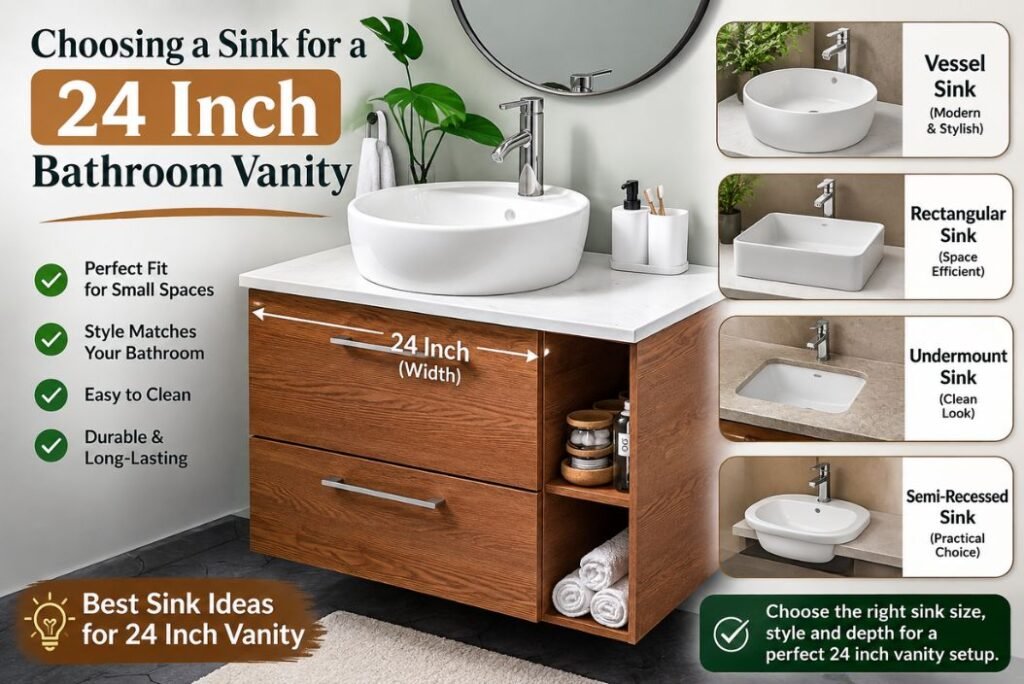
A sink occupies a significant part of a compact countertop, so the sink choice deserves careful attention.
Integrated sink
An integrated sink combines the basin and countertop into one unit. This creates a continuous surface and can simplify cleaning around the sink.
Undermount sink
An undermount sink sits below the countertop surface. It provides a streamlined appearance and keeps the countertop edge visually clean.
Vessel sink
A vessel sink sits above the countertop and creates a distinctive focal point. However, the sink can increase the finished height of the vanity area, so check the complete dimensions before purchasing.
Drop-in sink
A drop-in sink fits into a prepared countertop opening. It is available in many shapes and finishes and can work well with compact vanity designs.
What should you consider?
When selecting a sink, think about:
- Remaining countertop space
- Faucet placement
- Finished height
- Cleaning requirements
- Cabinet compatibility
- Plumbing connections
- Overall bathroom style
A visually impressive sink is not necessarily the most practical option if it leaves almost no usable counter space.
Best 24 Inch Bathroom Vanity Styles
Style matters, but the best vanity should also work with the size and layout of your bathroom.
Modern Floating 24 Inch Bathroom Vanity
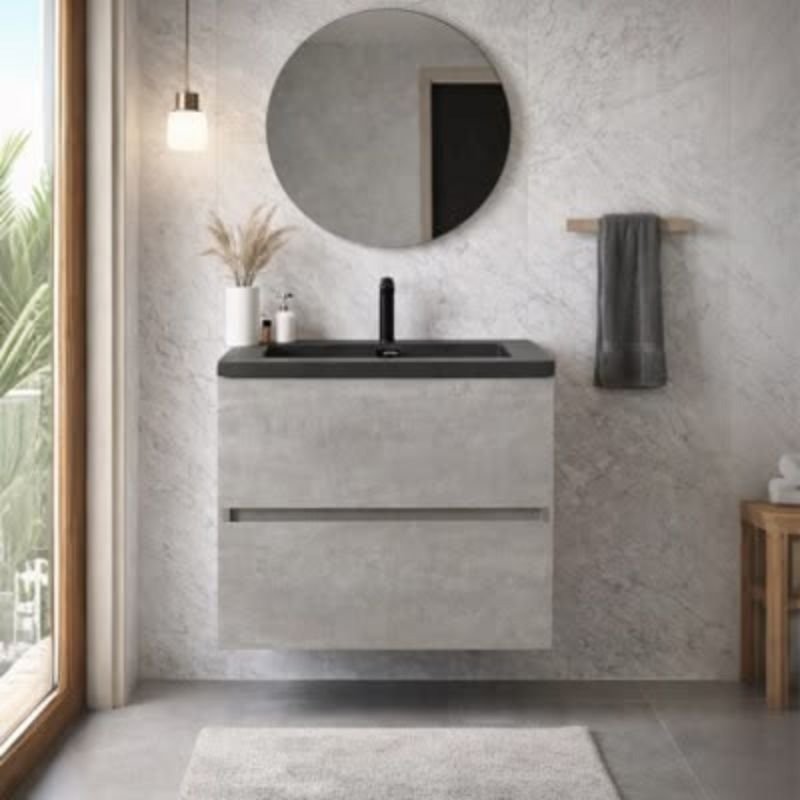
A floating vanity attaches to the wall rather than sitting directly on the floor.
The open area underneath creates a lighter visual effect and can make floor cleaning easier. This style pairs naturally with minimalist bathrooms, simple tile, frameless mirrors, and clean-lined fixtures.
Before choosing one, make sure the wall and mounting system can support the cabinet correctly.
Good lighting can also make a compact vanity area more functional. For ideas on illuminating this part of the bathroom, see our guide to bathroom vanity lights.
Freestanding 24 Inch Bathroom Vanity
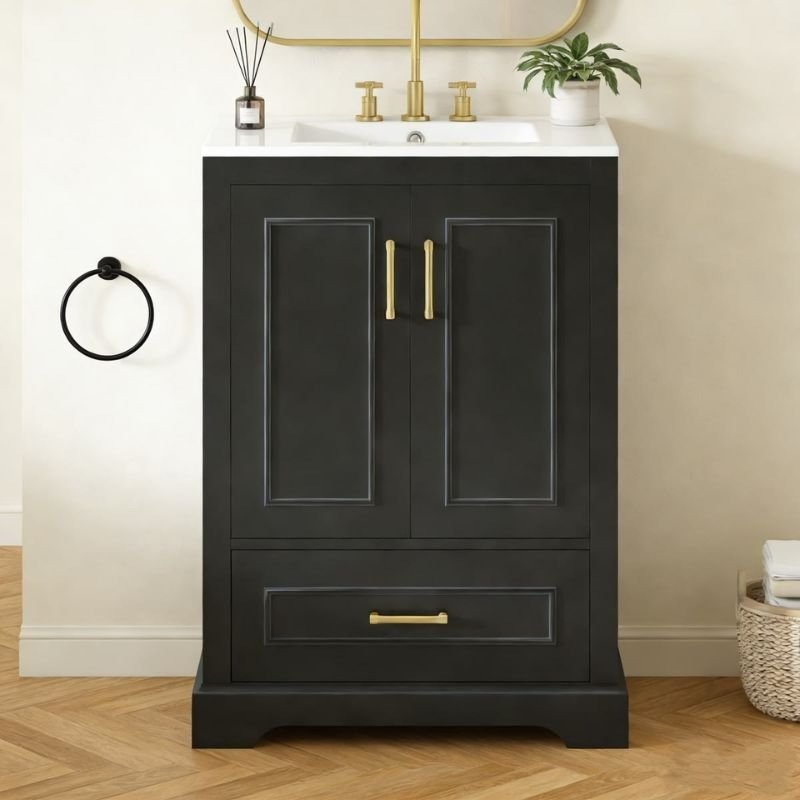
A freestanding vanity sits on the floor and offers a more furniture-like appearance.
It can work with modern, classic, farmhouse, and transitional interiors. Depending on the model, it may also provide useful cabinet storage while remaining compact.
Common finishes include white, gray, natural wood tones, navy, and black.
Farmhouse 24 Inch Bathroom Vanity
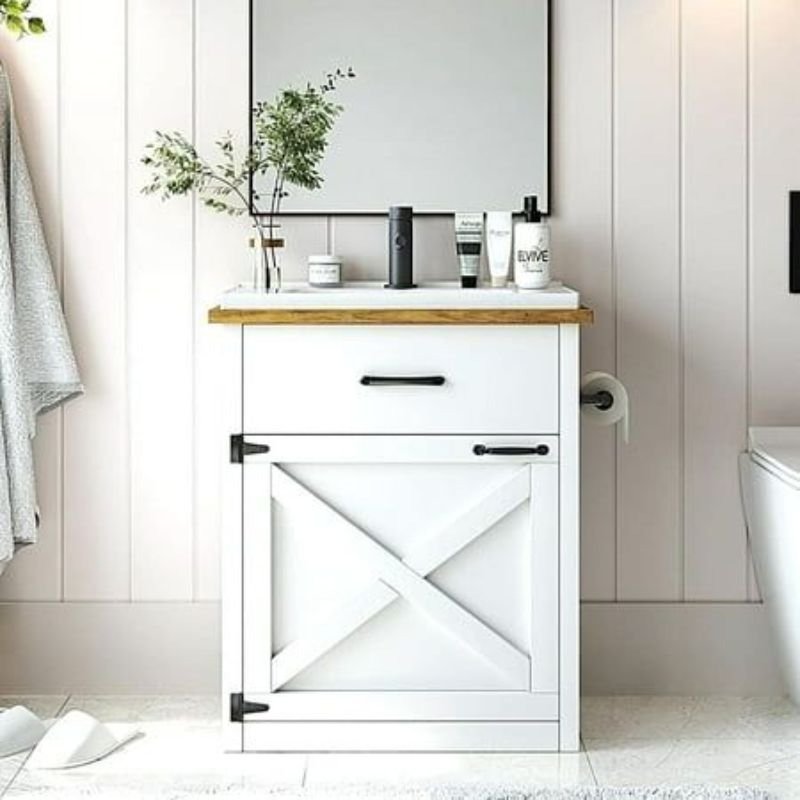
Farmhouse-inspired vanities often feature warm finishes, simple hardware, and traditional cabinet detailing.
A compact farmhouse vanity can work well with:
- Natural wood accents
- Neutral walls
- Matte black hardware
- Traditional mirrors
- Simple tile
- Rustic accessories
The goal is to bring warmth into the room without adding too much visual weight.
Transitional 24 Inch Bathroom Vanity
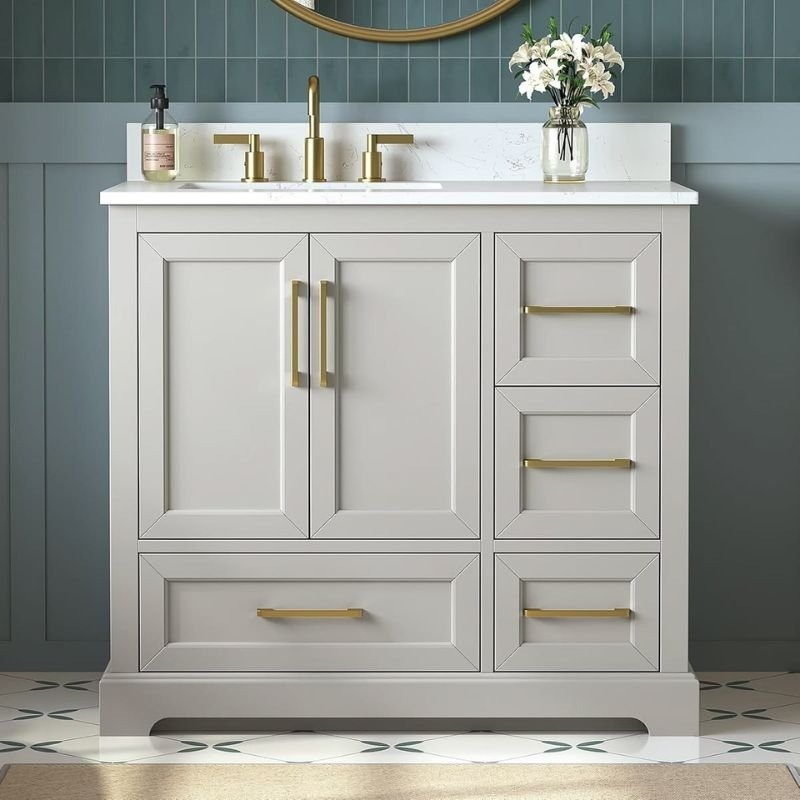
Transitional style combines traditional and modern details.
A transitional 24-inch cabinet can be a versatile choice when you want a timeless appearance that does not feel strongly tied to one design trend.
Look for:
- Neutral finishes
- Simple hardware
- Balanced cabinet proportions
- Clean door profiles
- Understated countertops
24 Inch Floating vs. Freestanding Vanity
Both designs can work well in a small bathroom, but they create different practical and visual results.
| Feature | Floating Vanity | Freestanding Vanity |
| Floor visibility | More open | More enclosed |
| Cleaning beneath | Easier | Less accessible |
| Installation | Requires secure wall mounting | Usually floor-supported |
| Appearance | Modern and minimalist | More furniture-like |
| Storage | Depends on model | Depends on model |
| Best fit | Contemporary layouts | Broad range of styles |
Do not choose between them based on appearance alone. Consider wall construction, plumbing, storage, cleaning, and the amount of visual openness you want.
How to Install a 24 Inch Bathroom Vanity
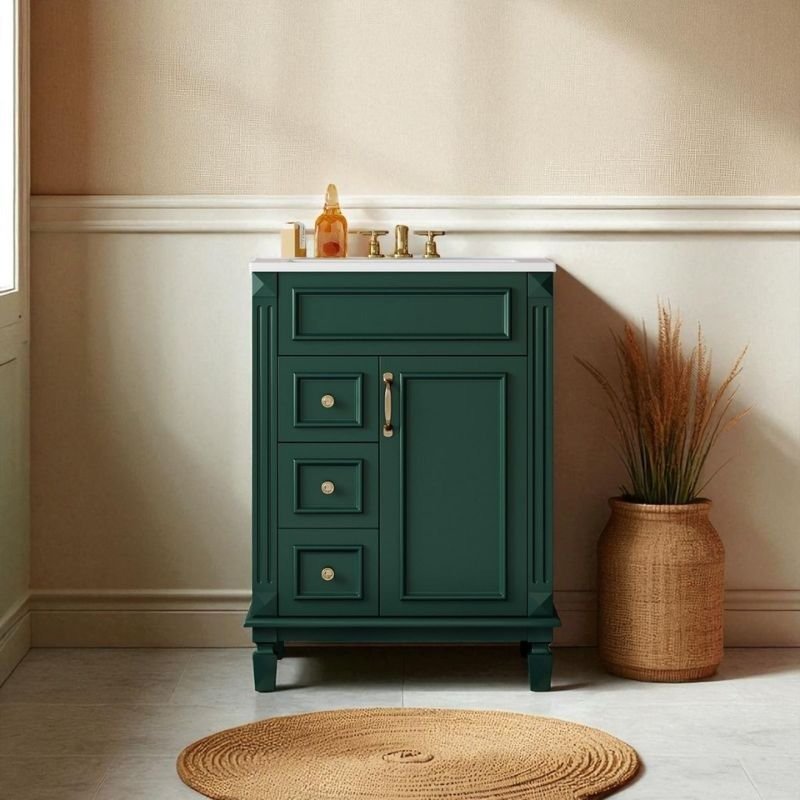
A straightforward vanity replacement may be manageable for an experienced DIYer, but the installation requirements vary by product and bathroom.
Step 1: Turn off the water
Shut off the appropriate water supply before disconnecting the existing sink.
Step 2: Remove the old vanity
Disconnect the water and drain connections and carefully remove the existing unit.
Step 3: Inspect the installation area
Check the wall and floor for water damage, uneven surfaces, or other issues that should be addressed before installing the new cabinet.
Step 4: Locate the mounting points
For a floating vanity, identify suitable wall studs and use the mounting hardware recommended by the manufacturer.
Step 5: Position the cabinet
Place the vanity in position and make sure it aligns correctly with the wall and plumbing.
Step 6: Level the vanity
Use a level before permanently securing the cabinet.
Step 7: Secure the cabinet
Fasten the vanity according to the manufacturer’s instructions.
Step 8: Install the countertop and sink
Follow the installation instructions supplied with the countertop and sink.
Step 9: Reconnect the plumbing
Reconnect the drain and water-supply lines carefully.
Step 10: Test for leaks
Turn the water back on gradually and inspect every connection.
Step 11: Seal appropriate areas
Use the recommended sealant or caulk around areas where the manufacturer specifies protection against water.
Moisture control is also important in a bathroom. Our guide to the best bathroom dehumidifier covers practical ways to manage excess humidity.
If the project involves new plumbing, electrical changes, structural work, or anything outside your experience, use a qualified professional.
How to Maximize Storage in a 24 Inch Bathroom Vanity
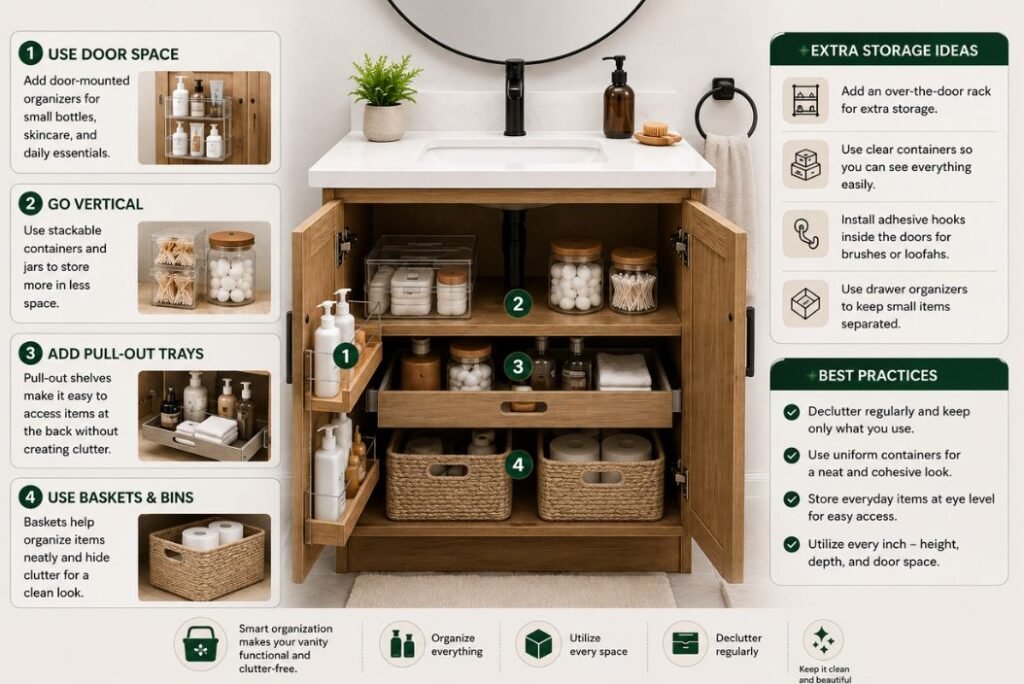
A compact vanity does not have to mean poor organization. The key is to use the available space deliberately.
Use drawer organizers
Small dividers can separate grooming products, toiletries, and other everyday items.
Add pull-out organizers
A pull-out organizer can make the deeper parts of a cabinet easier to reach.
Use vertical wall space
A narrow shelf above or beside the vanity can provide additional room without increasing the cabinet’s footprint.
Consider a mirrored medicine cabinet
A medicine cabinet can provide extra storage while also serving as the mirror.
Keep the countertop uncluttered
Only keep frequently used items on the countertop. A cleaner surface can make a compact room look more organized.
Use the area around the vanity
A slim shelf or compact storage unit can supplement the cabinet without requiring a larger vanity.
Organize the cabinet by daily use
Place the items you use most often in the easiest-to-reach drawers or front sections of the cabinet. Less frequently used products can go toward the back or on higher shelves.
For more practical organization ideas, see our complete guide on How to Organize Bathroom Cabinet.
How Bathroom Walls and Floors Affect Vanity Design
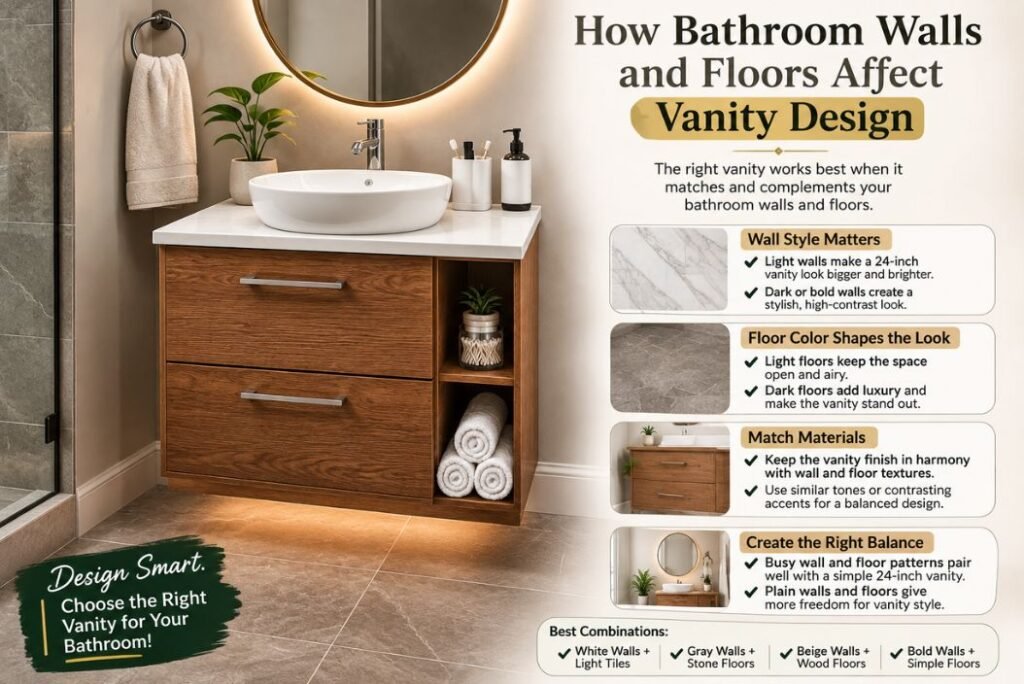
A vanity does not exist separately from the rest of the bathroom. Wall finishes, floor materials, and decorative details can change how the cabinet looks and how spacious the room feels.
Coordinate the wall finish
A compact vanity can look more integrated when its finish works with the surrounding walls.
Wallpaper can add personality, while carefully chosen colors can help create a cohesive space. Explore these bathroom wallpaper ideas for more wall-design inspiration.
Consider your tile pattern
Tile can strongly affect the visual balance of a small bathroom. Large patterns, grout lines, textures, and colors all influence the overall appearance.
For more ideas, explore these bathroom tile ideas before finalizing your vanity and wall combination.
Keep small rooms visually balanced
You do not need to decorate every available surface. A compact vanity often looks better when the surrounding walls and floor have enough visual breathing room.
Common 24 Inch Bathroom Vanity Buying Mistakes
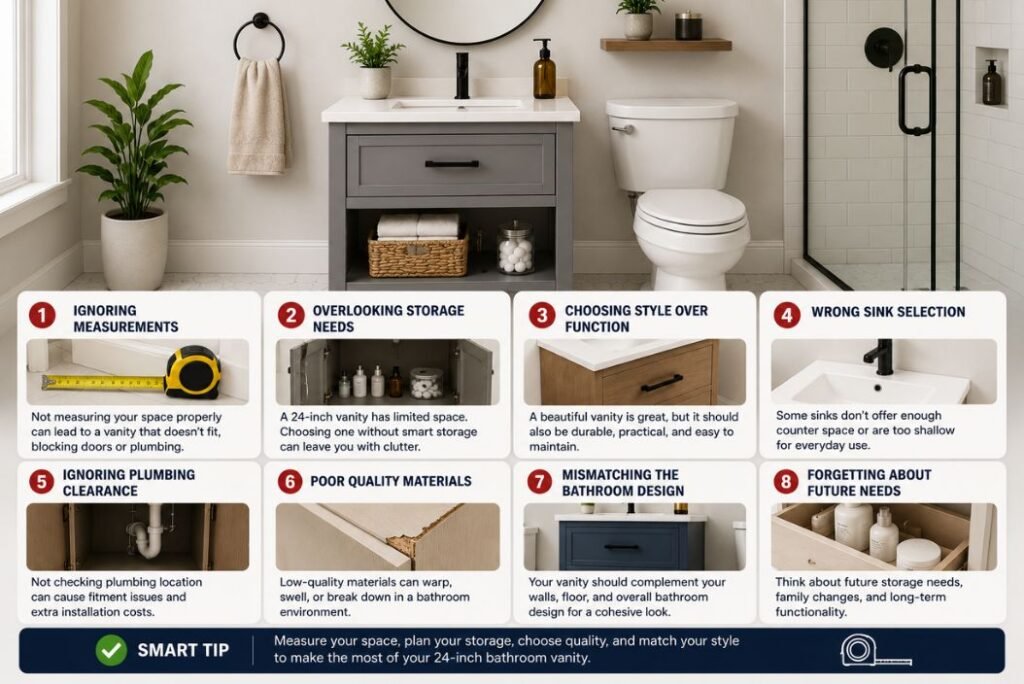
A few simple mistakes can turn an otherwise good vanity purchase into a frustrating project.
Buying by width alone
A 24-inch width does not tell you the complete footprint. Depth and countertop dimensions matter too.
Forgetting plumbing
Interior drawers and shelves may conflict with existing pipes. Check the layout before ordering.
Ignoring door clearance
Nearby doors can prevent drawers or cabinet doors from opening fully.
Choosing an oversized sink
A large sink can consume most of the available counter space in a compact vanity.
Assuming the countertop is included
Some vanities are sold as complete sets. Others include only the cabinet. Read the product description carefully.
Assuming every faucet will fit
Check the faucet-hole configuration before purchasing the sink or vanity.
Choosing looks over storage
A beautiful cabinet may not be useful if it does not hold the items you need every day.
Ignoring installation requirements
Floating vanities, unusual plumbing configurations, and wall modifications can require additional planning.
Skipping the specifications
Do not rely on product photographs alone. Check:
- Exact dimensions
- Sink configuration
- Faucet compatibility
- Cabinet material
- Included components
- Mounting method
- Warranty
- Installation instructions
24 Inch Bathroom Vanity vs. 30 Inch Bathroom Vanity
The choice between a 24-inch and 30-inch vanity usually depends on how much room you have and how much countertop and storage space you need.
| Feature | 24 Inch Bathroom Vanity | 30 Inch Bathroom Vanity |
| Footprint | More compact | Larger |
| Counter space | More limited | More generous |
| Storage potential | Compact | Usually greater |
| Small-room suitability | Often easier | Requires more available space |
| Common configuration | Single sink | Commonly single sink |
| Best for | Tight layouts and guest spaces | Bathrooms with additional room |
A 24 inch bathroom vanity is a sensible option when preserving space is important.
A 30-inch model can be worth considering when you have additional wall and floor space and want more counter area or storage.
For a more detailed comparison, read our complete guide to 30 inch bathroom vanity.
Bathroom Vanity Décor and Countertop Organization
A small vanity can become cluttered quickly because the countertop has limited room.
One simple way to keep everyday items contained is to use a small decorative tray. It can group items such as hand soap, skincare products, or other frequently used essentials without spreading them across the entire countertop.
For practical ideas on choosing and using one, see this guide to a bathroom tray.
The goal is not to fill the countertop with accessories. Instead, use one or two useful pieces that support organization while keeping the surface visually clean.
Bathroom Art and the Vanity Area
Once the functional parts of the bathroom are complete, carefully chosen wall décor can help finish the space.
The wall around a compact vanity often has limited room, so artwork should be proportional to the available surface.
Avoid placing oversized pieces where they interfere visually with mirrors, lighting, or storage.
For more inspiration, explore these bathroom art ideas.
24 Inch Bathroom Vanity FAQs
Is a 24 inch bathroom vanity suitable for a small bathroom?
Yes. A 24-inch vanity can work well in compact bathrooms because it provides a dedicated sink and storage area while taking up less space than many larger cabinets.
What is the depth of a 24 inch bathroom vanity?
There is no single depth shared by every 24-inch model. Manufacturers offer different depths, so check the complete specifications before purchasing.
Does a 24 inch bathroom vanity include a sink?
Some models include a sink and countertop, while others are sold as a cabinet only. Always confirm exactly what is included.
Can I use a vessel sink on a 24 inch vanity?
Some models support vessel sinks, but you must check the countertop dimensions, faucet placement, cabinet compatibility, and finished sink height.
Is a floating vanity better than a freestanding vanity?
Neither is universally better. A floating model can create a more open floor area, while a freestanding vanity can provide a more traditional furniture-like appearance. The right option depends on your bathroom.
What is the best material for a 24 inch bathroom vanity?
Several materials can work well. Focus on construction quality, moisture protection, finish, hardware, and manufacturer specifications instead of relying on the material name alone.
How do I know whether a 24-inch vanity will fit?
Measure the available width, depth, and height, then check plumbing positions, door clearance, drawer movement, and the full countertop dimensions.
How can I make a 24-inch vanity area look larger?
Keep the countertop clear, use an appropriately sized mirror, improve lighting, and choose a cabinet with a visually light design.
Can I install a 24-inch vanity myself?
A simple replacement may be suitable for an experienced DIYer. More complicated plumbing, electrical, or structural work should be handled by a qualified professional.
Should I choose a 24-inch or 30-inch vanity?
Choose the 24-inch option when space is the main constraint. Consider a 30-inch cabinet when your bathroom has enough room for a larger footprint and you want additional counter or storage space.
Final Buying Checklist for a 24 Inch Bathroom Vanity
Before buying, review the complete installation rather than the cabinet width alone.
- Measure wall width
- Measure cabinet depth
- Check total countertop depth
- Confirm overall height
- Check sink dimensions
- Confirm faucet compatibility
- Locate plumbing
- Check door clearance
- Check drawer clearance
- Review storage capacity
- Check cabinet construction
- Confirm moisture protection
- Review mounting requirements
- Confirm what is included
- Read installation instructions
- Check warranty information
Conclusion
A 24 inch bathroom vanity can be a smart choice for a compact bathroom, but the best model is not simply the one with the right width.
Start with the measurements. Check the available depth, countertop footprint, plumbing location, door clearance, and storage requirements. Then compare the sink style, cabinet construction, finish, mounting system, and installation instructions.
The vanity should also work with the surrounding bathroom. Wall finishes, tile, lighting, storage, and décor all contribute to the final result.
A well-chosen compact vanity can give you the sink, storage, and style you need without making the bathroom feel unnecessarily crowded.
The goal is simple: choose a vanity that fits the room, works with the existing layout, supports your daily routine, and looks natural with the rest of your bathroom design.