
A 30 inch bathroom vanity is a smart choice for homeowners who want a functional sink, useful storage, and an attractive design without taking up too much bathroom space. Its compact width makes it especially useful for small bathrooms, guest bathrooms, half baths, and other spaces where floor area is limited.
However, choosing the right vanity involves more than checking the width. You also need to consider the vanity’s depth, height, sink style, countertop, storage capacity, material, finish, plumbing, and installation requirements.
In this guide, you’ll learn how to choose a 30 inch bathroom vanity that fits your space, provides the storage you need, and complements your bathroom design.
What Is a 30 Inch Bathroom Vanity?
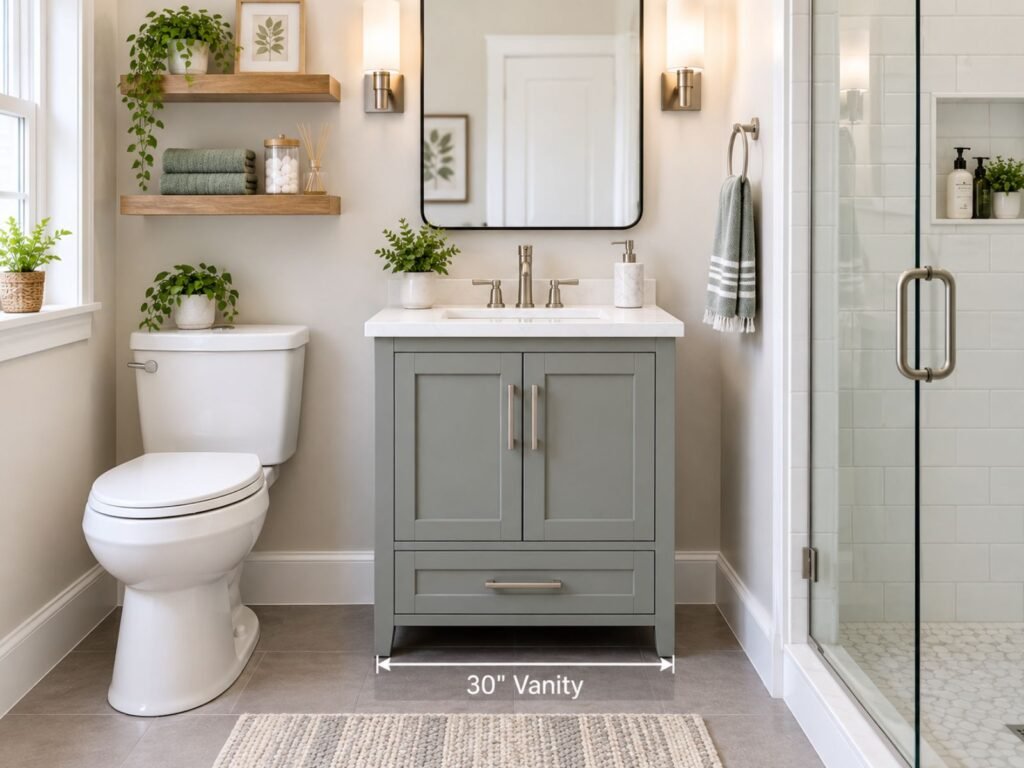
A 30 inch bathroom vanity is a bathroom cabinet approximately 30 inches wide that supports a sink and countertop while providing storage underneath.
Depending on the design, a vanity may include drawers, cabinet doors, open shelves, or a combination of these features. Some models are freestanding, while others are mounted directly to the wall.
The main benefit of this size is its balance between functionality and space. A 30-inch vanity can provide a practical sink and storage area while leaving room for walking space, lighting, mirrors, and other bathroom fixtures.
Keep in mind that 30 inches refers to the width. The depth and height can vary between models, so always check the complete manufacturer’s dimensions before buying.
Why Choose a 30 Inch Bathroom Vanity?
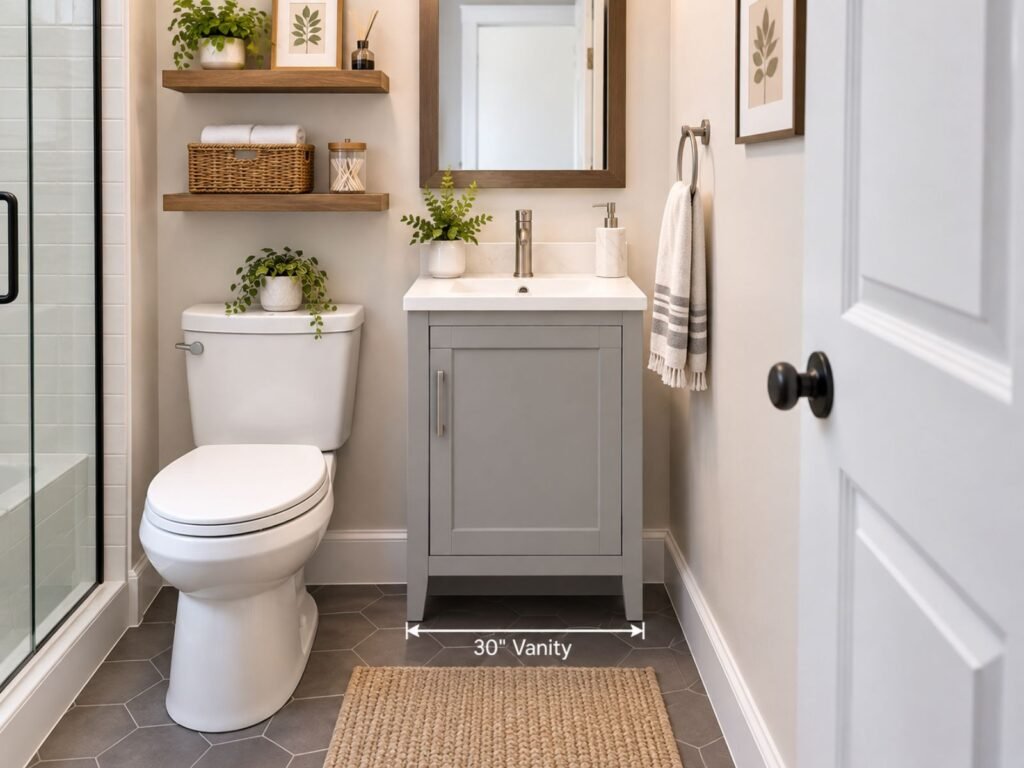
A smaller vanity does not necessarily mean less functionality. When properly selected, a 30 inch bathroom vanity can make a small bathroom more practical and comfortable.
Saves Space in Small Bathrooms
One of the biggest advantages of a 30-inch vanity is its compact footprint.
It can provide a dedicated sink and storage area without taking up as much floor space as a larger vanity. This makes it a useful option when you need to maintain comfortable walking space.
The extra room can also accommodate other bathroom features, such as:
- A wall mirror
- Towel hooks
- Bathroom lighting
- Small storage shelves
- Bathroom accessories
- Decorative elements
Provides Useful Storage
A compact vanity can still provide valuable storage.
Many models include drawers or enclosed cabinets beneath the sink. You can use this space for toiletries, towels, cleaning supplies, grooming products, and other everyday essentials.
When comparing models, look for features such as:
- Deep drawers
- Adjustable shelves
- Multiple compartments
- Soft-close drawers
- Under-sink storage
- Closed cabinets
- Open shelving
The best configuration depends on what you normally store in your bathroom. For more practical ideas, see our guide on how to organize a bathroom cabinet.
Works Well in Guest Bathrooms
A 30 inch bathroom vanity can be an excellent option for a guest bathroom.
Guests generally need the basic functions of a bathroom, including a comfortable sink and convenient storage. A 30-inch vanity can provide these features without making the room feel unnecessarily crowded.
Pair the vanity with a suitable mirror, good lighting, and coordinated hardware to create a complete look.
Offers Many Design Options
You don’t have to sacrifice style when choosing a smaller vanity.
30-inch vanities are available in many designs, including:
- Modern
- Minimalist
- Traditional
- Farmhouse
- home decor styles
- Transitional
- Contemporary
Popular finishes include white, gray, navy, natural wood, and other neutral tones.
Choose a finish that works with your existing flooring, wall color, mirror, lighting, and bathroom fixtures.
Can Make a Small Bathroom Feel More Open
A large cabinet can make a compact bathroom feel crowded.
A properly sized vanity can create better visual balance and leave more visible floor area. A floating 30 inch bathroom vanity can make this effect even stronger because the cabinet is raised from the floor.
The open space underneath can also make routine floor cleaning easier.
Types of 30 Inch Bathroom Vanities
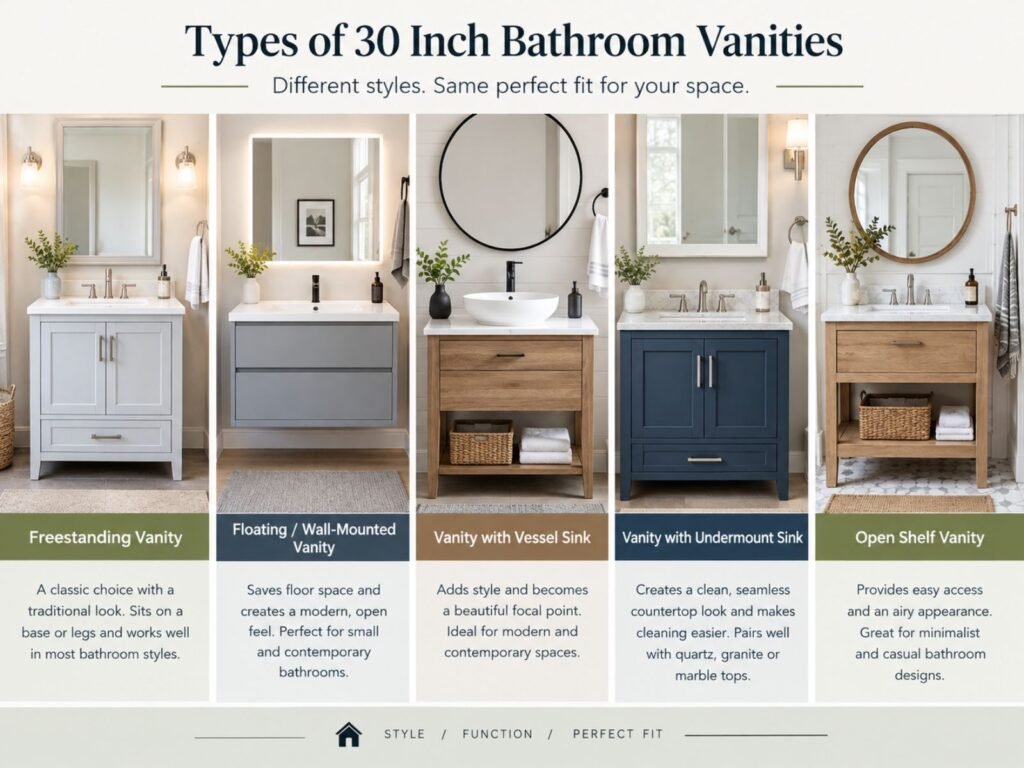
Different vanity styles offer different benefits. Before buying, consider your bathroom layout and the amount of storage you need.
Freestanding 30 Inch Vanity
A freestanding vanity rests on a base or legs instead of being completely attached to the wall.
This is a classic choice for traditional, farmhouse, and transitional bathrooms. It also offers a familiar cabinet-style appearance and can be easier to replace in the future.
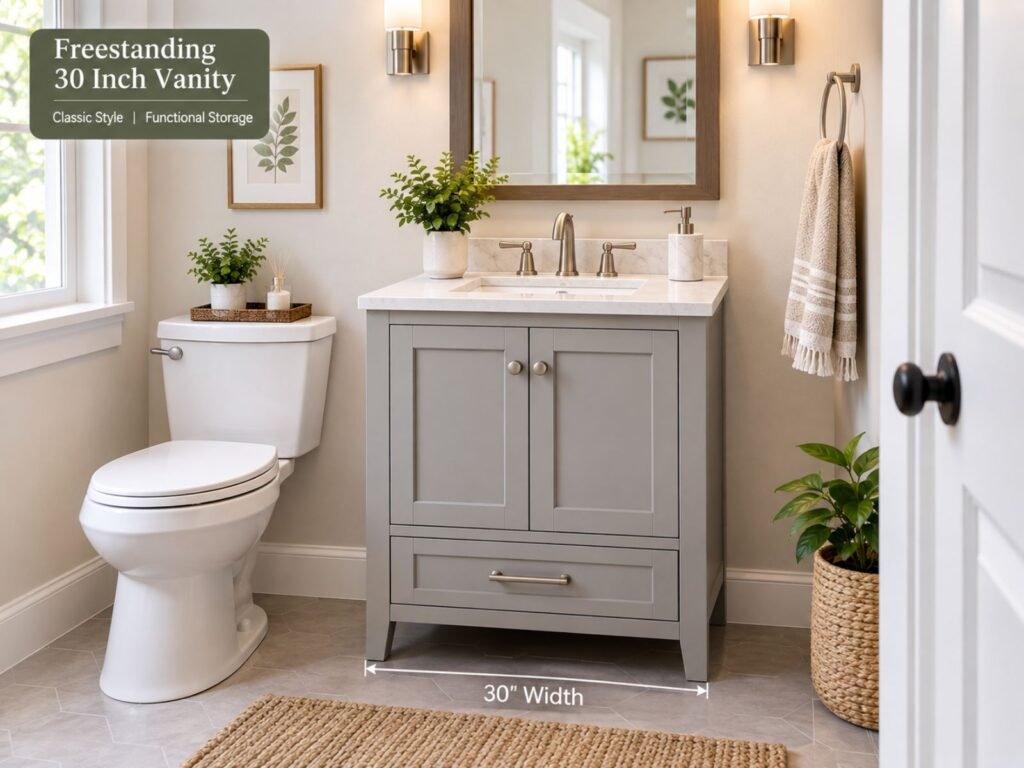
Choose a freestanding vanity if you prefer:
- A traditional appearance
- Enclosed storage
- A standard cabinet design
- Easy access to the cabinet area
Floating or Wall-Mounted Vanity
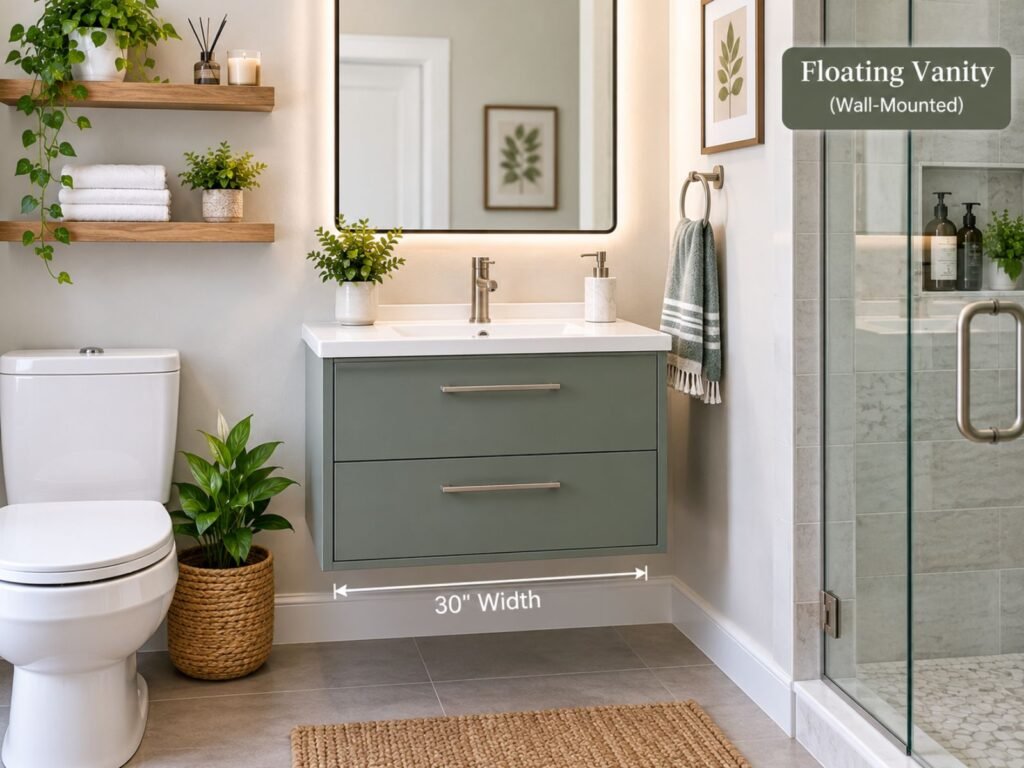
A floating vanity attaches to the wall and leaves open space underneath.
This design works particularly well in modern and minimalist bathrooms. Because more of the floor remains visible, the room can appear more open.
Floating vanities can also make cleaning underneath the cabinet easier.
Before installation, make sure the wall can adequately support the vanity. Follow the manufacturer’s installation requirements and use professional help when necessary.
30 Inch Vanity With a Vessel Sink
A vessel sink sits above the countertop instead of being installed underneath it.
This style can create a strong visual focal point and works particularly well with contemporary bathroom designs.
The main consideration is overall height. Since the sink sits above the countertop, measure the combined height of the vanity, countertop, and sink before purchasing.
30 Inch Vanity With an Undermount Sink
An undermount sink is installed beneath the countertop.
This creates a clean and streamlined appearance. It can also make countertop cleaning easier because water and debris can be wiped directly toward the sink.
Undermount sinks are commonly paired with countertop materials such as quartz, granite, or marble, depending on the specific vanity design.
Open Shelf Vanity
An open shelf vanity uses exposed shelving instead of completely enclosed cabinet storage.
Open shelves can hold:
- Folded towels
- Storage baskets
- Decorative accessories
- Frequently used bathroom items
This design creates an airy appearance. However, because the contents remain visible, you’ll need to keep the shelves organized.
30 Inch Bathroom Vanity Dimensions
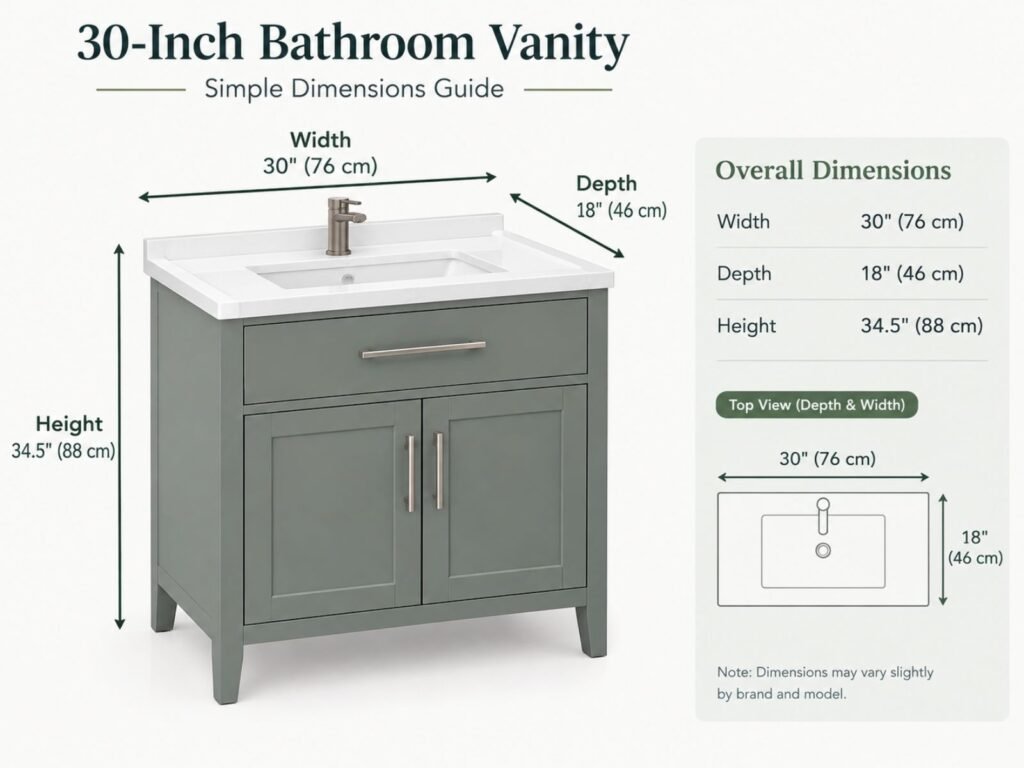
Before buying a vanity, don’t focus only on the 30-inch width.
Check all of the following dimensions:
- Overall width
- Overall depth
- Overall height
- Countertop dimensions
- Sink dimensions
- Faucet-hole configuration
- Wall clearance
- Floor clearance
- Door clearance
- Drawer clearance
Many 30-inch vanities are approximately 18 to 21 inches deep, although the exact measurement varies by manufacturer and design.
Bathroom vanity heights commonly fall around 32 to 36 inches, but the ideal finished height depends on the cabinet, countertop, sink configuration, and user comfort.
Always use the manufacturer’s exact dimensions rather than relying only on general size ranges.
How to Measure Your Bathroom for a 30 Inch Vanity
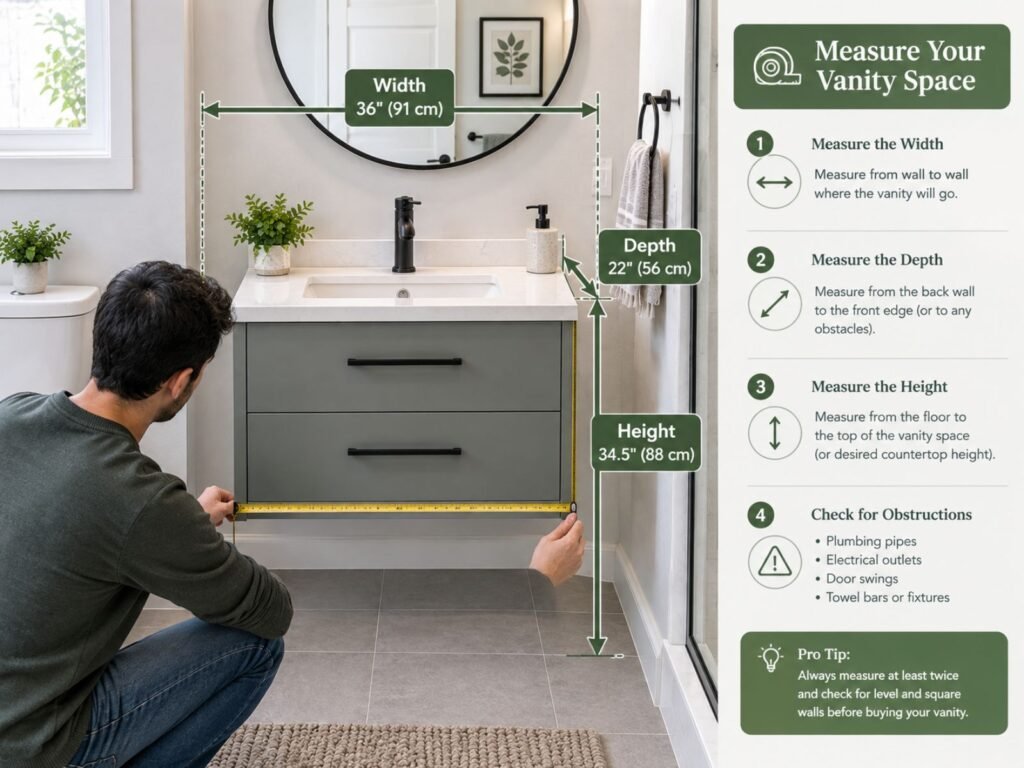
Accurate measurements can prevent installation problems and clearance issues.
Measure the Available Width
Measure the wall where you plan to install the vanity.
Don’t assume that a product advertised as 30 inches wide will fit perfectly into a 30-inch opening. Check the manufacturer’s actual width and consider the surrounding walls and fixtures.
Also check whether nearby doors or drawers need additional clearance.
Check the Depth
Depth is particularly important in a small bathroom.
Measure from the installation wall toward the center of the room. Then determine whether the vanity will interfere with:
- Walking space
- Bathroom doors
- Shower doors
- Toilet clearance
- Nearby cabinets
- Other fixtures
A vanity that fits the wall width can still make the bathroom uncomfortable if it extends too far into the room.
Measure the Height
Consider the complete finished height rather than the cabinet height alone.
If you are purchasing a vessel sink, remember that the sink sits above the countertop. This can significantly affect the final sink height.
Check Plumbing Locations
Before purchasing, identify the location of your existing water supply lines and drain.
Compare those locations with the vanity’s cabinet design. A different plumbing configuration may require adjustments during installation.
Check Door and Drawer Clearance
Open nearby bathroom doors, drawers, and cabinets to make sure everything can operate properly.
A simple way to test the layout is to mark the approximate vanity footprint on the floor using removable tape. This can help you visualize the available space before purchasing.
How to Choose the Right 30 Inch Bathroom Vanity
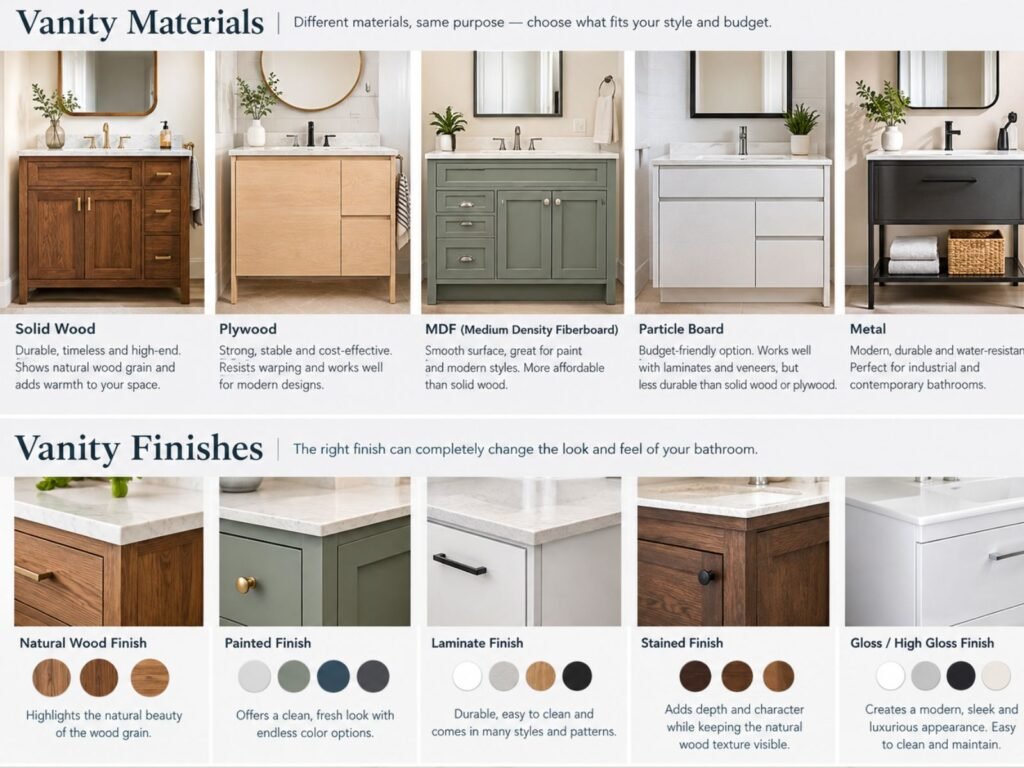
Once you know the available space, compare the vanity’s construction, storage, sink, countertop, and design.
Best Materials for a 30 Inch Bathroom Vanity
Bathroom vanities can be made from several materials, including:
- Solid wood
- Engineered wood
- MDF
- PVC
- Other manufactured materials
Solid wood can provide a natural appearance and durable construction. Manufactured materials can offer different combinations of cost, moisture resistance, and maintenance requirements.
Because bathrooms experience humidity and moisture, don’t choose a vanity based only on appearance. Pay attention to construction quality, joints, hardware, protective finishes, and the manufacturer’s specifications.
Consider Your Bathroom Style
Your vanity should work with the rest of the room.
For example, shaker-style cabinets can complement traditional or transitional bathrooms, while simple slab-front cabinets can work well in modern and minimalist spaces.
Consider the relationship between the vanity and your:
- Flooring
- Wall color
- Mirror
- Lighting
- Faucet
- Shower fixtures
- Cabinet hardware
A coordinated design can make the bathroom feel more polished.
Decide How Much Storage You Need
Think about your daily storage needs before selecting a cabinet.
If you keep many toiletries and bathroom supplies in the room, look for drawers and enclosed cabinet storage.
If you prefer a lighter appearance, an open shelf or minimalist design may work better.
Don’t judge storage capacity only by the outside appearance. Check the actual drawer depth, shelf configuration, and usable cabinet space.
Select the Right Sink
The sink is one of the most important parts of the vanity.
Depending on the model, you may find:
- Vessel sinks
- Undermount sinks
- Integrated sinks
- Other sink configurations
Make sure the sink dimensions are compatible with the countertop and cabinet.
If you’re buying the sink separately, verify compatibility before placing the order.
Choose a Durable Countertop
The countertop needs to handle regular exposure to water and everyday bathroom use.
Common countertop choices include:
- Quartz
- Granite
- Marble
- Manufactured surfaces
- Other bathroom-rated materials
Each material has different characteristics, maintenance requirements, appearance, and price.
Choose a countertop that matches both your practical needs and the overall bathroom design.
Important Features to Look For
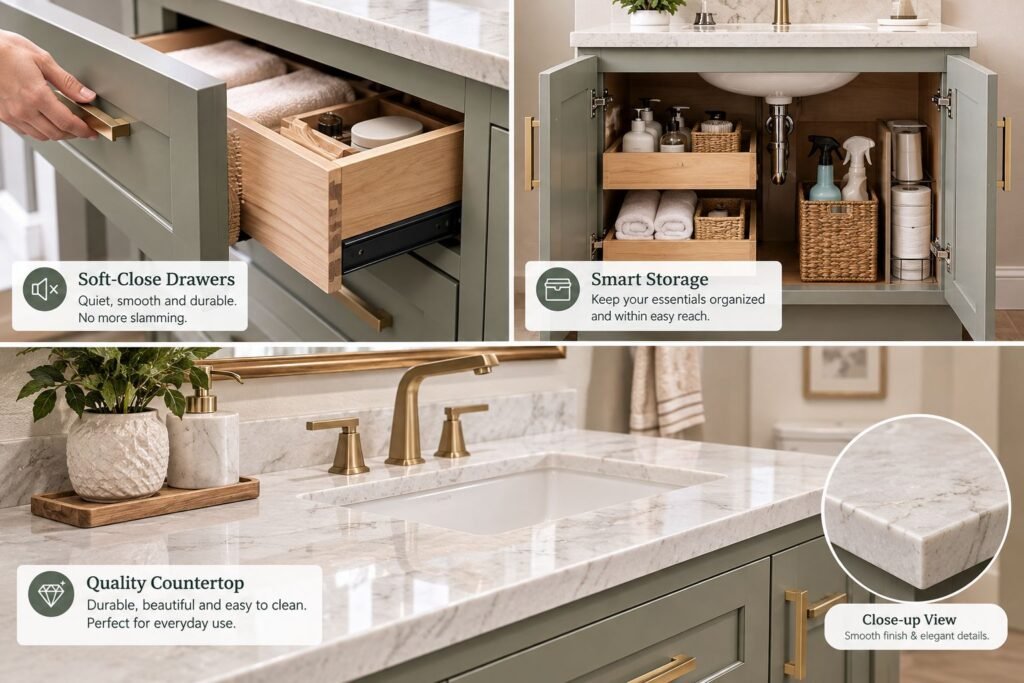
Small features can make a noticeable difference when using your vanity every day.
Soft-Close Drawers and Hinges
Soft-close hardware helps reduce slamming and creates a smoother, quieter experience.
It can also make drawers and cabinet doors feel more refined.
Water-Resistant Finish
Bathrooms regularly experience moisture and humidity.
A suitable protective finish can help the vanity remain attractive and easier to maintain. However, a water-resistant finish does not mean the cabinet should be exposed to standing water.
Wipe up spills and splashes promptly.
Adjustable Shelves
Adjustable shelves make it easier to organize products of different heights.
You can change the shelf position to accommodate bottles, baskets, towels, and other bathroom essentials.
Easy-Clean Surfaces
Smooth surfaces can make routine cleaning easier.
Look for practical countertop and cabinet finishes that don’t contain unnecessary areas where dirt and moisture can collect.
Pre-Drilled Faucet Holes
Some vanities and countertops include pre-drilled faucet holes.
Before buying, check whether the hole configuration matches the faucet you plan to use.
Quality Hardware
Drawer slides, hinges, handles, and other hardware affect the everyday performance of a vanity.
When comparing two similar models, hardware quality can be an important deciding factor.
Warranty
A manufacturer’s warranty can provide additional peace of mind.
Before purchasing, check:
- Warranty length
- Covered components
- Installation requirements
- Exclusions
- Return policy
Installation Tips for a 30 Inch Bathroom Vanity
Bathroom vanity installation requires careful planning.
First, turn off the water supply before disconnecting existing plumbing. Remove the old vanity carefully and prepare the installation area.
Position the new cabinet and check that it is level. Secure it according to the manufacturer’s instructions.
After the cabinet is positioned, install the countertop and sink according to the product instructions. Reconnect the plumbing and check carefully for leaks.
Use an appropriate bathroom sealant where necessary to help protect vulnerable areas from moisture.
If plumbing connections need to be changed or you’re not comfortable working with water lines, consider hiring a qualified professional.
How to Make a 30 Inch Vanity More Functional
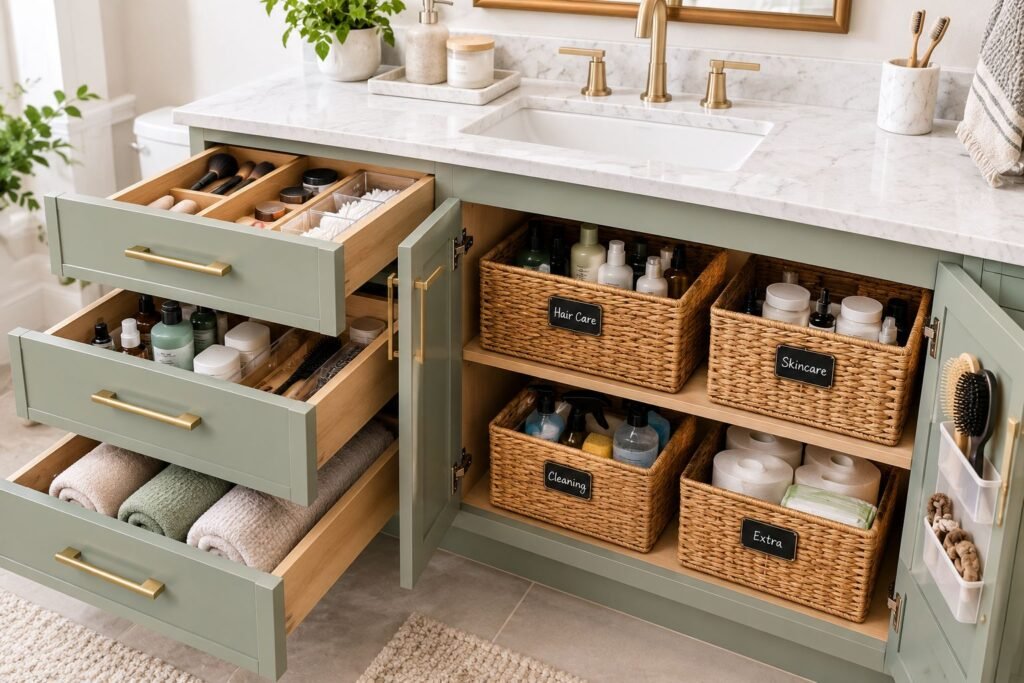
A compact vanity can still provide excellent organization when you use the available space efficiently.
Use Drawer Organizers
Small organizers can separate toiletries and prevent drawers from becoming cluttered.
Group similar items together so everyday products are easy to find.
Add Storage Baskets
Baskets can keep towels and bathroom supplies organized.
They are especially useful with open shelf vanities because they create a cleaner appearance while keeping smaller items together.
Use Vertical Space
Don’t rely only on the vanity for storage.
You can use wall space for:
- Shelves
- Medicine cabinets
- Wall-mounted cabinets
- Mirrors with storage
- Towel storage
This adds organization without increasing the vanity’s floor footprint.
Keep Everyday Items Accessible
Store frequently used products where they are easy to reach.
Less frequently used items can go into deeper cabinets or higher storage areas.
This simple approach can make a small bathroom feel much more organized.
30 Inch Vanity vs. Larger Vanity
A larger vanity can provide more countertop and storage space, but it also requires more floor and wall space.
A 30 inch bathroom vanity can be a better choice when:
- Your bathroom has limited floor space.
- You have a guest bathroom or half bath.
- You need a single-sink setup.
- You want to maintain comfortable walking space.
- You prefer a compact bathroom design.
- You don’t need a large countertop.
- You want to leave room for other fixtures.
A wider vanity may be more suitable if you have a large bathroom and need substantial storage or multiple sinks.
The right choice depends on the actual layout rather than simply choosing the largest cabinet that fits.
Common Mistakes to Avoid
Avoid these mistakes when shopping for a 30-inch vanity.
Buying Without Measuring
Never rely only on the product title.
Check the complete width, depth, height, countertop, sink, and clearance dimensions.
Ignoring Plumbing
A vanity may look perfect but still create installation problems if the plumbing configuration doesn’t work with your existing setup.
Check plumbing before purchasing.
Choosing Style Over Function
A vanity should look attractive, but it also needs to meet your everyday storage and countertop needs.
Choose the design after considering how you will actually use the bathroom.
Forgetting Door Clearance
Make sure nearby bathroom doors, shower doors, drawers, and cabinets can open properly.
Ignoring Material Quality
Bathrooms regularly experience moisture, so construction quality and finish matter.
Don’t choose a vanity based only on its color or appearance.
Choosing the Wrong Sink Configuration
Always confirm that the sink, faucet, countertop, and cabinet are compatible before purchasing.
This is particularly important when buying components separately.
Frequently Asked Questions
Is a 30 inch vanity good for a small bathroom?
Yes. A 30 inch bathroom vanity can be an excellent option for a small bathroom because it provides a sink and useful storage while using relatively little floor space.
What is the standard depth of a 30 inch bathroom vanity?
Many models are approximately 18 to 21 inches deep, although exact dimensions vary between manufacturers and designs.
Always check the product specifications before buying.
What height should a bathroom vanity be?
Bathroom vanity heights commonly fall around 32 to 36 inches, but the ideal finished height depends on the vanity design, sink type, countertop, and user comfort.
Can a 30 inch vanity have a large sink?
The sink size depends on the vanity’s countertop and cabinet configuration.
Always check the manufacturer’s recommended sink dimensions before choosing a replacement or separate sink.
Is a floating vanity better than a freestanding vanity?
Neither is automatically better.
A floating vanity can create a more open appearance and make floor cleaning easier. A freestanding vanity offers a traditional cabinet appearance and may be easier to replace.
Choose the style that best matches your bathroom layout and needs.
How much does a 30 inch bathroom vanity cost?
Prices vary considerably depending on construction, materials, countertop, sink, hardware, brand, and customization.
Basic models can be relatively affordable, while premium or custom designs can cost significantly more.
Instead of choosing only by price, compare the construction quality and features you receive for the money.
What is the best material for a bathroom vanity?
There isn’t one material that is best for every bathroom.
Compare durability, moisture resistance, construction quality, appearance, maintenance requirements, and budget before making your choice.
Does a 30 inch vanity provide enough storage?
For many small bathrooms and guest bathrooms, yes.
Choose a model with drawers, cabinets, adjustable shelving, or a combination of storage features if you need more capacity.
Final Thoughts
A 30 inch bathroom vanity can provide an excellent combination of storage, functionality, and style without overwhelming a small or medium-sized bathroom.
The best vanity depends on more than appearance. Before buying, measure your available space carefully, check the depth and height, review the plumbing configuration, and decide how much storage you actually need.
You should also compare the vanity’s material, sink style, countertop, hardware, finish, and overall construction quality.
Whether you prefer a modern floating cabinet, traditional freestanding design, open shelf vanity, or vessel sink, there are plenty of ways to create a practical and attractive bathroom.
Take your time, compare the exact specifications of different models, and choose a vanity that fits both your bathroom and your everyday needs.