
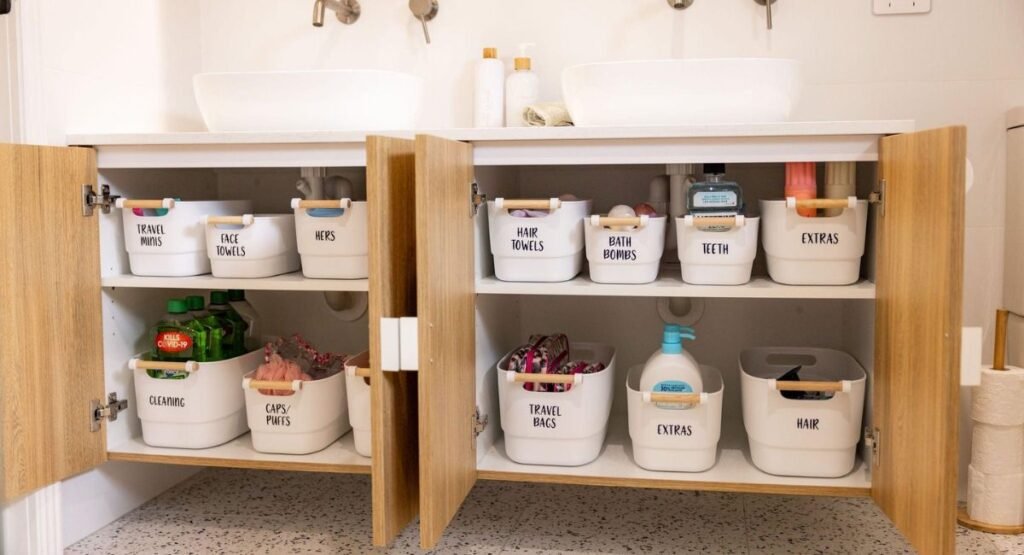
A messy bathroom cabinet turns a simple morning routine into a daily hunt for lost items. If you constantly dig through tangled cords, half empty bottles, and expired medicine to find what you need, you already know how frustrating that feels. Learning how to organize bathroom cabinet space does not require a full renovation or an expensive shopping spree. Instead, it requires a clear plan, a few affordable tools, and about an hour of focused effort. This guide walks you through every step, from clearing the shelves to maintaining the system for months to come. As a result, you will open your cabinet each morning and find exactly what you need, right where you expect it. Learning how to organize bathroom cabinet space properly helps you save time, reduce clutter, and keep everyday essentials easy to find.
Bathroom storage struggles affect nearly every household, regardless of the size of the space. Small apartments often squeeze an entire family’s toiletries into one narrow cabinet, while larger homes sometimes spread items across several cabinets without any real system. Either way, the underlying problem stays the same: too many items compete for too little organized space. Fortunately, the solution does not depend on your cabinet’s size. Instead, it depends on how thoughtfully you sort, categorize, and store what you own.
Why Learning How to Organize Bathroom Cabinet Matters
An organized cabinet saves time, reduces stress, and even protects your health. For example, expired medications and old cosmetics can cause skin irritation or reduce a treatment’s effectiveness. Similarly, a cluttered cabinet makes it easy to overlook mold, moisture damage, or pest problems that build up behind bottles. Therefore, taking time to sort your cabinet is not just about tidiness; it is about safety and efficiency too. In addition, a well organized space makes your whole bathroom feel calmer and more spacious, even if the room itself is small.
Beyond safety, an organized cabinet also saves money over time. When you can see everything you own at a glance, you avoid buying duplicate products simply because you forgot you already had them. Consequently, your monthly toiletry budget stretches further, and your cabinet never overflows with three half used bottles of the same lotion. Furthermore, a tidy cabinet makes it easier to spot when supplies run low, so you restock efficiently instead of scrambling at the last minute.
What You Need to Organize Bathroom Cabinet Efficiently
Before diving into the process, gather a few simple supplies. A roll of paper towels, an all purpose disinfecting spray, several clear storage bins, drawer dividers, and a label maker or masking tape will cover most projects. None of these items cost much, and you likely already own several of them. Additionally, set aside a box for donations and a trash bag for anything expired or broken. Having these tools ready before you start prevents interruptions once you begin sorting, since running out mid project often stalls momentum entirely.
Step 1: Assess Your Bathroom Cabinet Space Before You Start
Before you buy a single organizer, take a close look at what you are working with. Open every door and drawer, and note the dimensions of each shelf. Furthermore, check for adjustable shelves, since moving them up or down can instantly create more usable space. Measure the depth, width, and height of each section so you know exactly what size bins or trays will fit later. Consequently, you avoid the common mistake of buying organizers that are too large or too small for your cabinet.
Look closely at how you currently use the space, too. Notice which items you reach for daily and which ones sit untouched for months. This assessment gives you a realistic picture of your storage needs, rather than a guess based on how you wish you used the space. Take a few photos of the empty cabinet as well, since these can help you visualize layout options later without needing to stand in front of the cabinet each time.
Step 2: Remove Everything and Sort It Into Piles
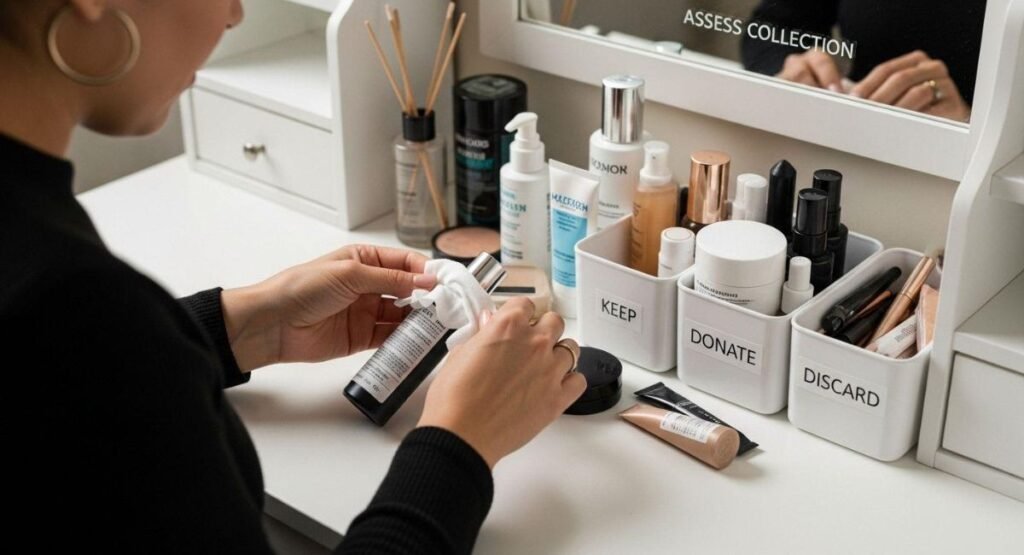
Once you understand your cabinet’s dimensions, empty it completely. Place every item on a towel or tray on your counter so nothing rolls away or spills. Then, sort everything into four piles: keep, relocate, donate, and toss. This step feels tedious at first, but it forms the foundation of a lasting organization system. Meanwhile, wipe down every shelf and corner with a disinfecting cleaner, since built up dust and grime often hide in the back of cabinets.
As you sort, check expiration dates on every bottle, tube, and box. Medications, sunscreen, and skincare products all lose effectiveness over time, and some even become harmful. Similarly, toss any makeup that has changed color, texture, or smell, because bacteria can grow quickly in warm, humid bathrooms. If you find items that belong in another room entirely, such as tools or office supplies, place them in the relocate pile so they do not clutter your bathroom any further.
Step 3: Declutter Ruthlessly Before You Reorganize
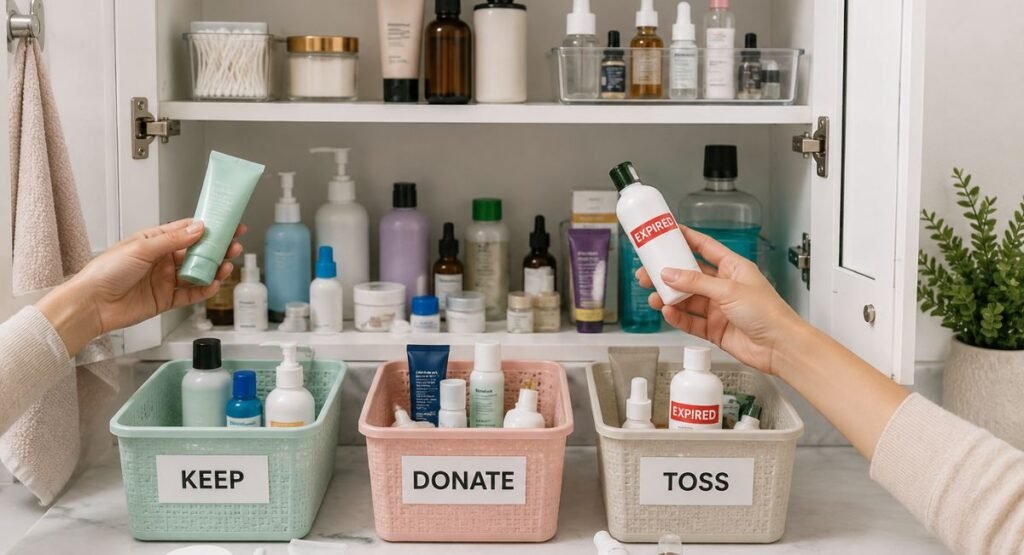
Decluttering forms the single most important part of a lasting organization project. Without this step, even the best bins and trays will not solve a clutter problem; they will simply hide it for a while. Ask yourself honestly whether you have used each item in the past six months. If not, consider donating unopened products or discarding anything expired or unused. If you truly want to know how to organize bathroom cabinet storage, decluttering is the most important step before adding any organizers.
In addition, resist the urge to keep “just in case” items that rarely get used. A backup toothbrush is reasonable, but ten travel-size shampoo bottles from old hotel stays are not. As a result of this honest sorting, you will likely reduce your total cabinet contents by 20 to 40 percent before you even begin organizing. This reduction alone often solves half the storage problem, since fewer items naturally require less space and less effort to maintain.
Decluttering also extends to duplicate products. Many households accumulate three or four half-empty bottles of the same shampoo or lotion over time. Combine duplicates into a single container whenever the ingredients match, and discard the empty bottles immediately. This simple habit frees up noticeable shelf space and makes future organizing far easier.
Step 4: Categorize Items by Function
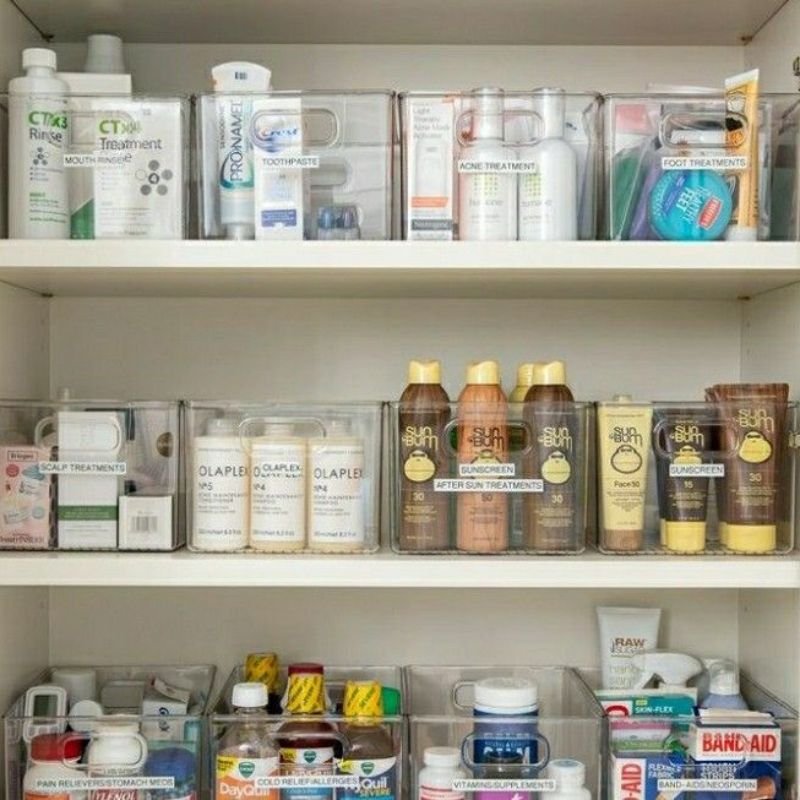
After decluttering, group your remaining items into clear categories. Common categories include:
- Daily essentials (toothpaste, deodorant, floss)
- Skincare and haircare products
- Medications and first aid supplies
- Cleaning supplies
- Extra toiletries and backups
- Tools like hair dryers, straighteners, and trimmers
This categorization step matters because it determines how you will assign shelf space later. For instance, daily essentials should sit at eye level or within easy reach, while backup supplies can move to a higher or lower shelf. Consequently, your morning routine becomes faster since everything has a logical home. Furthermore, grouping similar items together makes it far easier to notice when a category runs low, so you can restock before you fully run out.
If multiple people share the bathroom, consider creating a separate zone or bin for each person’s daily essentials. This small adjustment prevents mix ups and reduces the frustration of searching through someone else’s products every morning.
Step 5: Choose the Right Organizers and Bins
Once you know your categories, select organizers that match your cabinet’s exact measurements. Clear plastic bins work particularly well because they let you see contents at a glance without pulling everything out. Stackable bins also maximize vertical space, which is especially helpful in small bathrooms. For instance, a two-tier bin can double your usable shelf area without any construction or renovation.
Lazy Susans are another excellent option for corner cabinets or deep shelves where items tend to get lost toward the back. Similarly, drawer dividers keep small items like cotton swabs, hair ties, and nail clippers from becoming a jumbled mess. When you shop for organizers, bring your measurements with you or keep them saved on your phone, so you buy pieces that fit correctly the first time.
Consider the material of each organizer, too. Plastic bins resist moisture well, which matters in a humid bathroom environment. On the other hand, woven baskets add a decorative touch but may absorb moisture over time, so reserve them for drier storage areas like a linen closet shelf rather than directly under a sink.
Step 6: Maximize Vertical Space
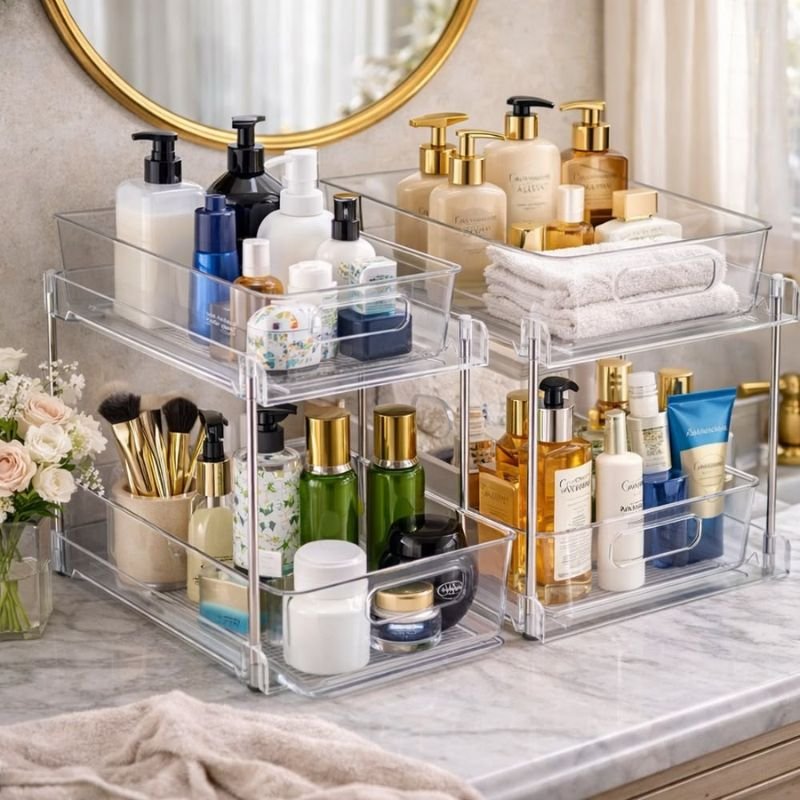
Many bathroom cabinets waste significant vertical space between shelves. Adding stackable shelves, tension rods, or hanging baskets can instantly create extra storage without changing the cabinet’s footprint. Tension rods, for example, work well for hanging spray bottles by their trigger handles, which frees up shelf space below. Meanwhile, an over the door organizer with clear pockets adds an entirely new storage zone that many people overlook.
If your cabinet has tall, empty gaps above shorter items, consider adding a small riser shelf. This simple addition lets you place items both on the riser and underneath it, effectively doubling that shelf’s capacity. As a result, you can store more without cramming everything onto a single flat surface. Furthermore, risers keep taller bottles visible instead of hidden behind shorter ones, so you spend less time searching for what you need. Many homeowners search for how to organize bathroom cabinet shelves because maximizing vertical space instantly creates more storage.
Step 7: Organize the Cabinet Door and Under Sink Areas
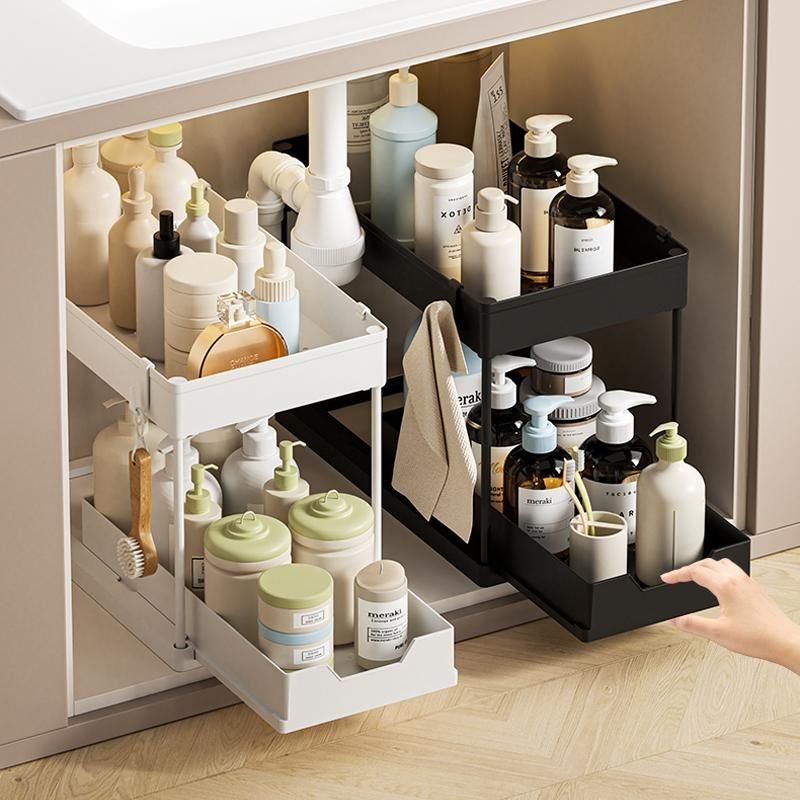
The inside of your cabinet door often goes unused, yet it offers valuable real estate for lightweight items. Adhesive hooks or small pocket organizers can hold hairbrushes, tweezers, or travel bottles. Similarly, under sink cabinets benefit from sliding drawers or pull out bins, since reaching to the back of a deep, dark cabinet is otherwise inconvenient.
Because under sink areas often deal with pipes and moisture, choose organizers designed around plumbing shapes, such as U shaped shelves. In addition, place a small tray under any cleaning supplies to catch drips and protect the cabinet floor from stains or water damage. A battery operated puck light inside a dark under sink cabinet also helps you see contents clearly without fumbling for a flashlight.
Step 8: Label Everything for Long Term Success
Labels turn a good organization system into a lasting one, especially in households with multiple people sharing the same bathroom. Use a label maker or simple masking tape and a marker to identify each bin’s contents. Consequently, everyone in the household knows exactly where to return items after use, which prevents the space from sliding back into chaos.
Labels also help when family members or guests need to find something quickly, such as first aid supplies during an emergency. Furthermore, labeling makes restocking easier, since you can see at a glance when a bin runs low on a specific item. For younger children, consider using picture labels alongside text, since this encourages them to put items back correctly on their own.
Step 9: Establish a Simple Maintenance Routine
Even the best organization system needs occasional upkeep. Set a recurring reminder every three months to quickly review your cabinet, discard expired items, and restock essentials. This regular check prevents small messes from snowballing into a full overhaul later. Similarly, make it a habit to return items to their designated bin immediately after use rather than setting them on the counter “for now.”
A short weekly reset, where you spend two minutes straightening bins and wiping surfaces, also goes a long way. As a result, your cabinet stays functional between the larger quarterly reviews, and you rarely face the frustration of a cluttered mess again. Consider pairing this reset with an existing habit, such as your Sunday cleaning routine, so it becomes automatic rather than another task to remember.
Step 10: Avoid Common Bathroom Cabinet Organizing Mistakes
Many people undo their hard work by falling into a few predictable traps. First, avoid overbuying organizers before you know your exact needs; excess bins often become clutter themselves. Second, do not ignore expiration dates during future restocks, since old products can silently accumulate again over time. Third, avoid stacking items haphazardly, since this makes it hard to see what you have and encourages duplicate purchases.
Additionally, resist the temptation to store items you rarely use in your most accessible cabinet space. Instead, reserve prime real estate for daily essentials, and move seasonal or occasional items to a secondary storage spot, such as a linen closet. By avoiding these mistakes, you protect the time and effort you invested in building your organized cabinet system.
Finally, do not treat organization as a one time event. Habits and product needs change throughout the year, so revisit your system periodically and adjust the categories or bins as needed. A setup that works perfectly in summer, for example, may need small tweaks once cold and flu season arrives and adds new items to your daily routine.
Special Considerations for Small Bathrooms
Small bathrooms present unique challenges, but they also respond especially well to thoughtful organization. Because every inch counts, prioritize vertical storage solutions like stackable bins, tension rod shelves, and over the door organizers. Furthermore, consider slim, rolling carts that tuck beside a vanity when floor space allows, since these add extra storage without permanently altering the cabinet itself.
In addition, a small bathroom benefits from ruthless decluttering even more than a larger one. Since there is less room for error, every item you keep should genuinely earn its spot. Consequently, homeowners with compact bathrooms often see the biggest transformation after completing this process, since a small, cluttered space feels chaotic while a small, organized space feels efficient and calm.
Rental bathrooms add another layer of consideration, since permanent shelving or drilled hooks are often off limits. Fortunately, tension rods, adhesive hooks, and freestanding bins solve this problem without leaving marks on cabinet walls. Furthermore, these temporary solutions travel easily when you move, so the investment you make in your organization system continues paying off in your next home. Renters should also check with their landlord before installing anything semi permanent, since a quick conversation can prevent disputes over a security deposit later.
Budget also plays a meaningful role in how quickly a project comes together. Thankfully, dollar stores, discount retailers, and even repurposed containers from your kitchen can substitute for pricier designer organizers. A clean jar or a shoebox works just as well as a boutique bin, provided it fits your shelf and keeps items visible. Consequently, you can complete this entire project on a modest budget while still achieving a polished, functional result.
Conclusion
Now that you know how to organize bathroom cabinet space efficiently, maintaining it becomes much easier with a simple routine. Learning how to organize bathroom cabinet space transforms a chaotic daily routine into a smooth, stress free habit. By assessing your space, decluttering honestly, categorizing items, and choosing the right bins, you build a system that lasts far longer than a quick weekend tidy-up. Furthermore, small additions like labels, vertical organizers, and a simple maintenance routine keep the space functional for months at a time. Start with just one shelf today, and you will likely find the motivation to tackle the rest of the cabinet soon after. Ultimately, an organized bathroom cabinet gives you back time, reduces morning stress, and makes your whole bathroom feel more put together.
FAQs
1. How often should I reorganize my bathroom cabinet?
You should do a full review every three months, with quick weekly tidy ups in between.
2. What is the best material for bathroom cabinet organizers?
Clear plastic bins work best because they resist moisture and let you see contents instantly.
3. How do I organize a small bathroom cabinet with limited shelves?
Use stackable trays and vertical risers to double your usable space without adding shelves.
4. Should I throw away half used skincare products?
Yes, you should discard any product that has passed its expiration date or changed in smell or texture.
5. How can I keep my bathroom cabinet organized long term?
Label every bin and return items to their spot immediately after each use.