
Every beautifully styled dining space needs one defining centerpiece. A dining room chandelier does exactly that it commands attention, sets the mood, and ties the entire room together. dining room décor ideas Much like a statement necklace elevates an outfit, the right overhead luminaire transforms an ordinary dining area into an extraordinary experience.
Consequently, choosing the right fixture is never just about illumination. It is about personality, proportion, and purpose. Whether you are hosting an intimate dinner or a festive gathering, your dining room chandelier communicates your design sensibility before a single word is spoken.
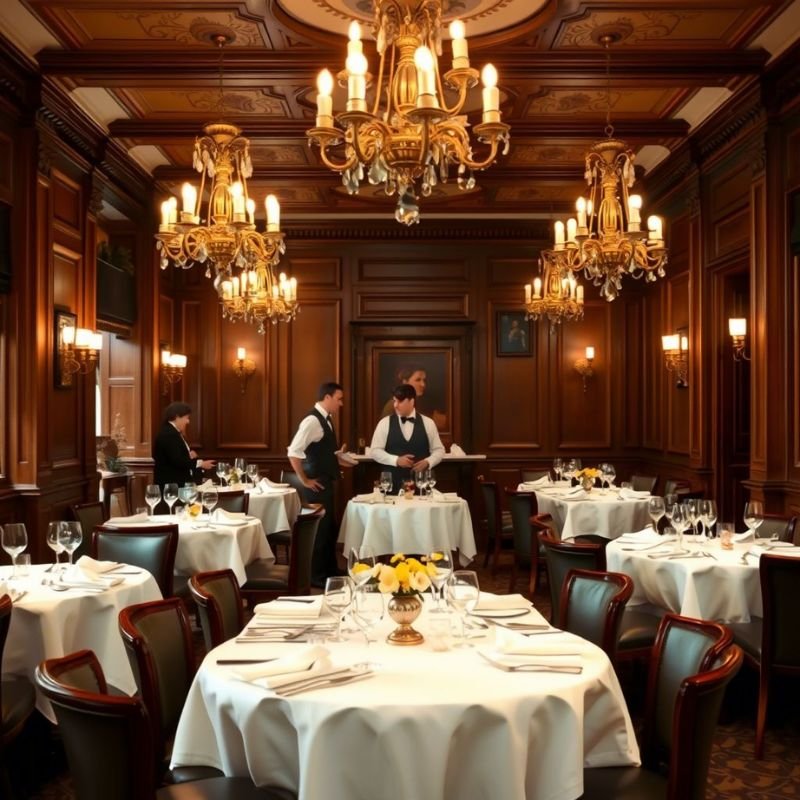
Furthermore, research consistently shows that lighting is the single most impactful and most overlooked element of interior design. Homeowners often invest heavily in furniture and decor but underestimate how dramatically proper pendant fixtures elevate the entire aesthetic. This guide covers everything from sizing and styles to installation and care so you can make a confident, informed choice.
Dining Room Chandelier Sizing Guide: Getting the Math Right
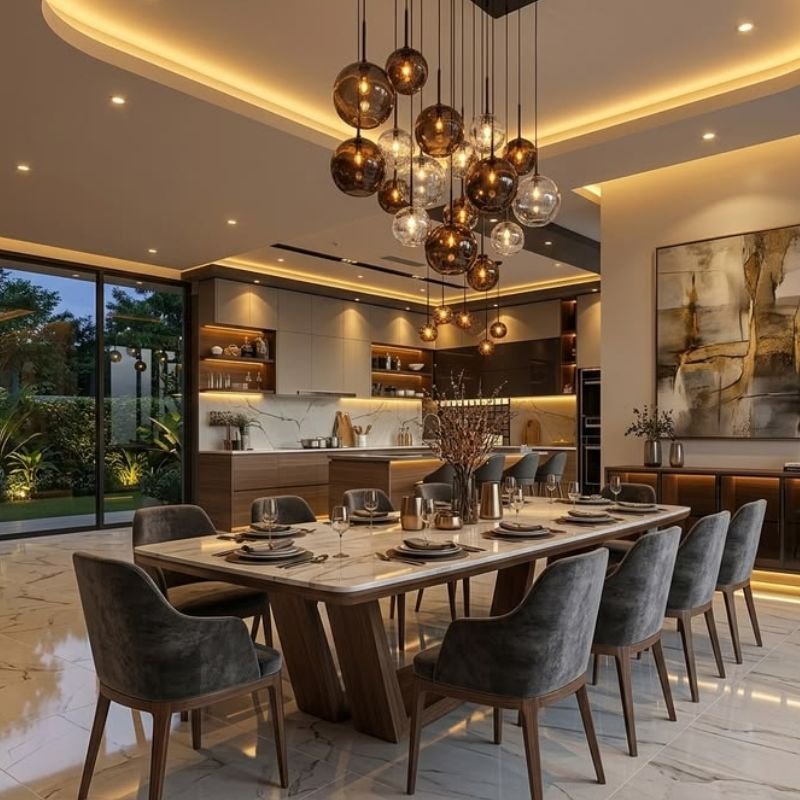
Selecting the wrong size is the most common mistake homeowners make. Specifically, a fixture that is too small will look lost and insignificant, while one that is too large will visually overwhelm the space. Fortunately, there is a reliable formula interior designers use every day.
The Diameter Formula
Add the length and width of your dining room in feet. That sum, converted to inches, gives you the ideal chandelier diameter. For example, a 12foot by 14foot room equals 26 meaning a 26 inch diameter dining room chandelier is ideal.
✦ Quick Sizing Formula Room Length (ft) + Room Width (ft) = Chandelier Diameter (inches) Example: 12 ft + 14 ft = 26 inches → Choose a 26″ chandelier For rectangular tables, the fixture should be 12 inches narrower than the table on each side.
Table Based Sizing Rules
Ideally, your dining room chandelier should span roughly one half to two thirds the width of your dining table. This proportion ensures visual harmony between the fixture and the surface below it. Additionally, always maintain at least 12 inches of clearance on each side of the table.
- Round tables (48 inches): work best with chandeliers between 20 and 24 inches in diameter.
- Rectangular tables (72–84 inches): pair well with fixtures between 30 and 36 inches wide.
- Long farmhouse tables: consider using two smaller pendant fixtures instead of one large chandelier.
- Open plan dining areas: size up by 10–15% to compensate for the visual openness.
Common Dining Room Chandelier Mistakes
Selecting a dining room chandelier without proper planning can affect both the appearance and functionality of your space. Many homeowners focus only on design while overlooking important details that influence comfort and lighting performance. Avoid these common mistakes to create a balanced and inviting dining area.
- Selecting a fixture that is either too large or too small for the table.
- Installing the chandelier at an incorrect hanging height.
- Ignoring ceiling height when choosing the suspension length.
- Using bulbs with the wrong brightness or color temperature.
- Skipping a dimmer switch that allows flexible lighting control.
- Choosing a style that does not complement the room’s furniture and décor.
Paying attention to these details will help you achieve a dining room that feels stylish, comfortable, and well proportioned for everyday use.
The Correct Hanging Height for Your Dining Room Chandelier
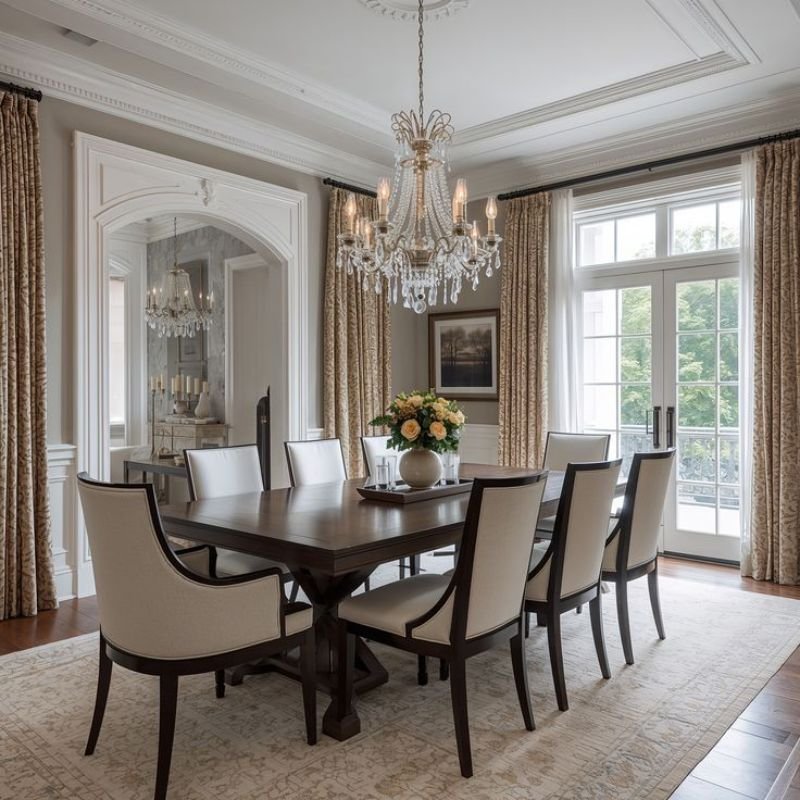
Hanging height is just as important as diameter. Hang the fixture too low, and it blocks sightlines across the table. Too high, and it loses its intimate effect. If you are also upgrading your dining furniture, explore our Dining Room Chairs Set of 6 guide to find chairs that perfectly complement your chandelier and dining table.
The golden rule: hang your dining room chandelier 30 to 36 inches above the tabletop for standard 8 foot ceilings. For every additional foot of ceiling height, raise the fixture by 3 inches.
Height Adjustments for Different Ceiling Types
- 8 foot ceilings: bottom of fixture sits 30–33 inches above the table.
- 9 foot ceilings: adjust to 33–36 inches above the tabletop.
- 10 foot ceilings: increase to 36–40 inches for visual balance.
- Vaulted or cathedral ceilings: use a canopy or swag kit to maintain correct height.
Furthermore, if your dining room serves double duty as a work or homework space, err toward the higher end of the range. This keeps the fixture out of direct eyeline while still delivering ample task lighting below.
Dining Room Chandelier Styles: Finding Your Perfect Match
The market offers an extraordinary range of overhead luminaires from grand crystal creations to stripped back geometric forms. Understanding each style category makes the selection process far more intuitive.
Modern & Contemporary Chandeliers
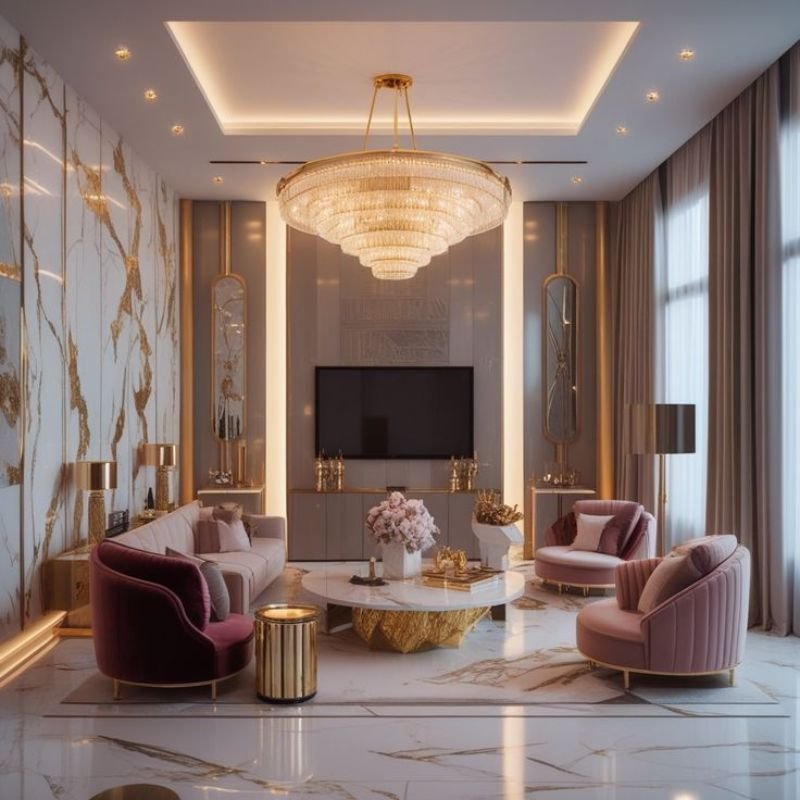
Modern dining room chandeliers prioritize clean lines, geometric silhouettes, and minimalist hardware. Matte black, brushed nickel, and warm brass finishes dominate this category. They work beautifully in open plan homes, loft apartments, and any space with a sleek, uncluttered aesthetic.
Specifically, linear suspension lights long horizontal bars with multiple bulb positions are a contemporary favourite for rectangular dining tables. They provide even light distribution while adding strong architectural interest.
Farmhouse & Rustic Chandeliers
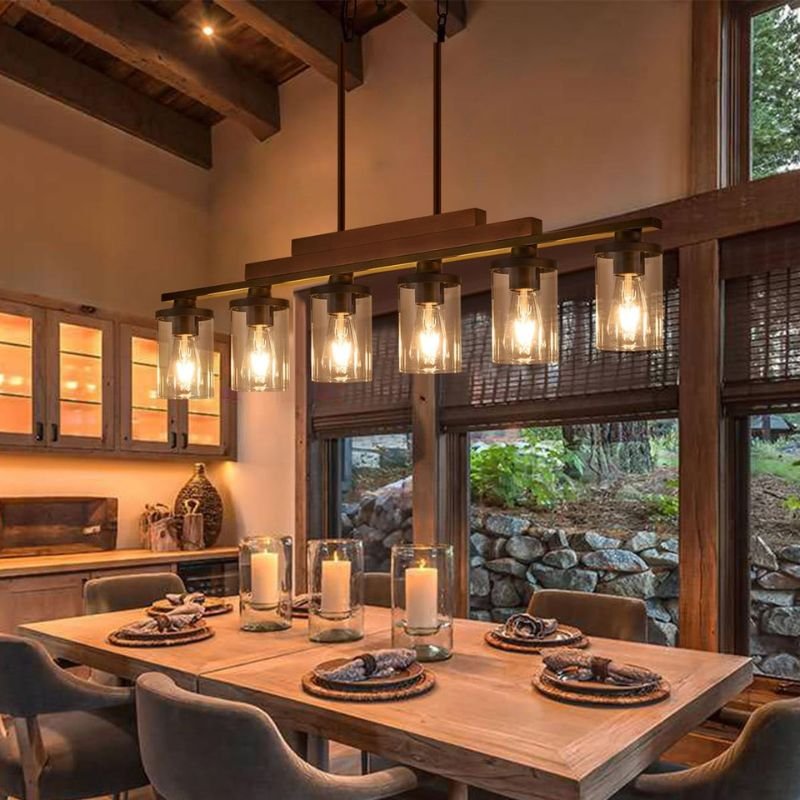
Farmhouse style dining area lighting leans on raw materials: distressed wood, wrought iron, rope, and Edison style filament bulbs. These fixtures feel warm, unpretentious, and deeply inviting. Consequently, they suit cottage style homes, ranch properties, and any dining space that celebrates natural textures and earthy colour palettes.
Lantern style pendants and wagon wheel fixtures are the most recognisable forms in this category. Both deliver a sense of heritage and craftsmanship that mass produced alternatives rarely match.
Crystal Chandeliers
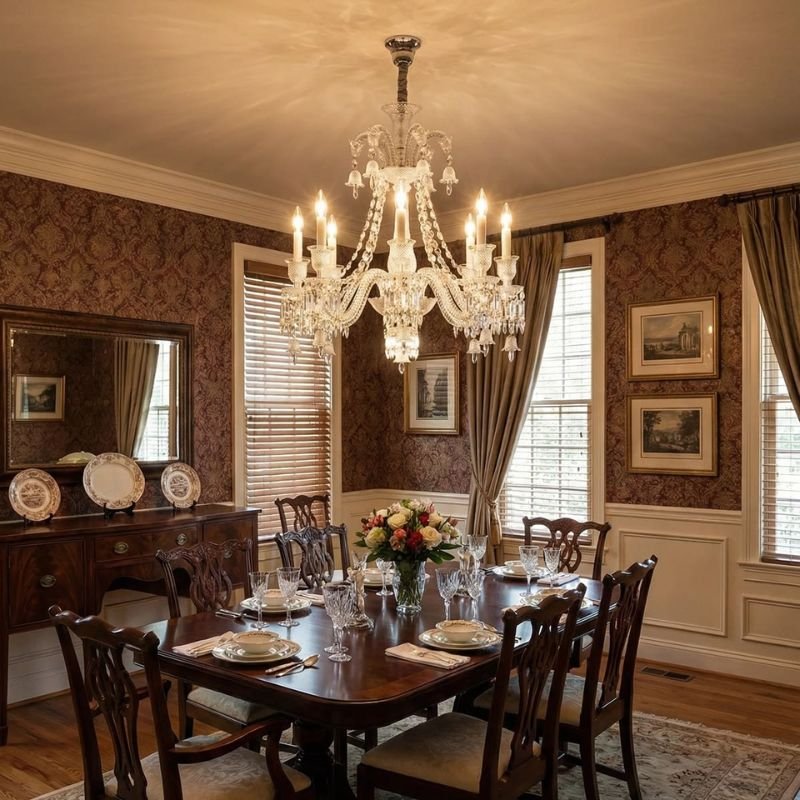
Crystal dining room chandeliers remain a timeless symbol of luxury and elegance. The way they refract and scatter light creates an unmatched sense of drama and occasion. Traditional crystal fixtures feature cascading prisms in classic tiered arrangements, while modern interpretations use angular or asymmetric crystal formations for a fresher look.
Ideally, pair crystal overhead luminaires with neutral wall colours and reflective surfaces mirrors, polished floors, or lacquered furniture to maximise their light scattering effect.
Minimalist & Scandinavian Chandeliers
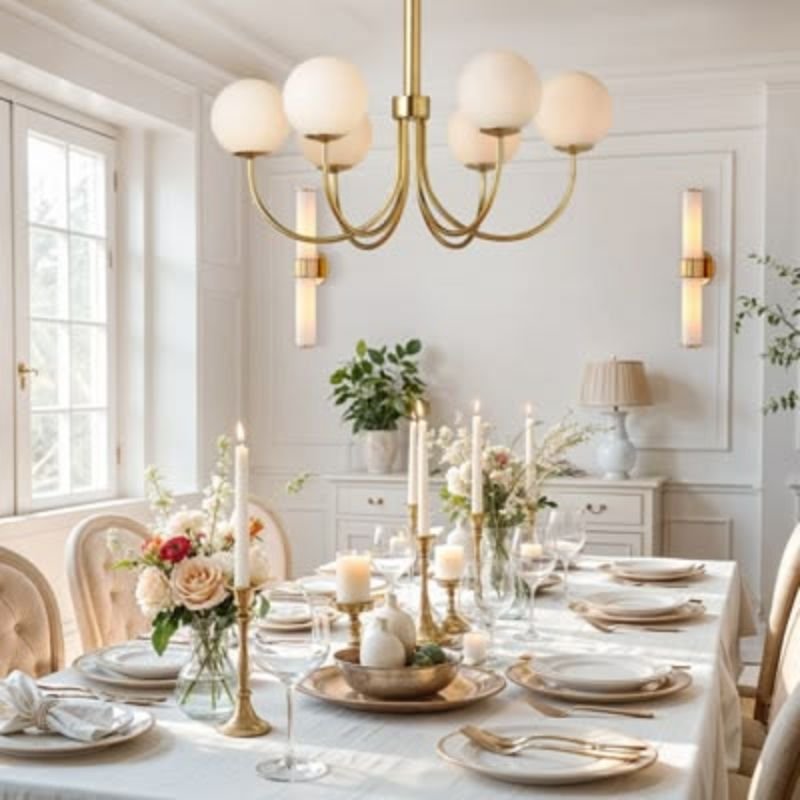
For dining rooms defined by restraint and calm, minimalist chandeliers offer extraordinary appeal. These fixtures feature simple arms, exposed bulbs, and honest materials. They celebrate the beauty of negative space rather than competing with it.
Scandinavian influenced designs in particular think slender brass arms, globe bulbs, and subtle organic forms have surged in popularity. They complement contemporary Japandi interiors as effortlessly as they suit mid-century modern dining rooms.
Choosing the Right Bulbs for Your Dining Room Chandelier
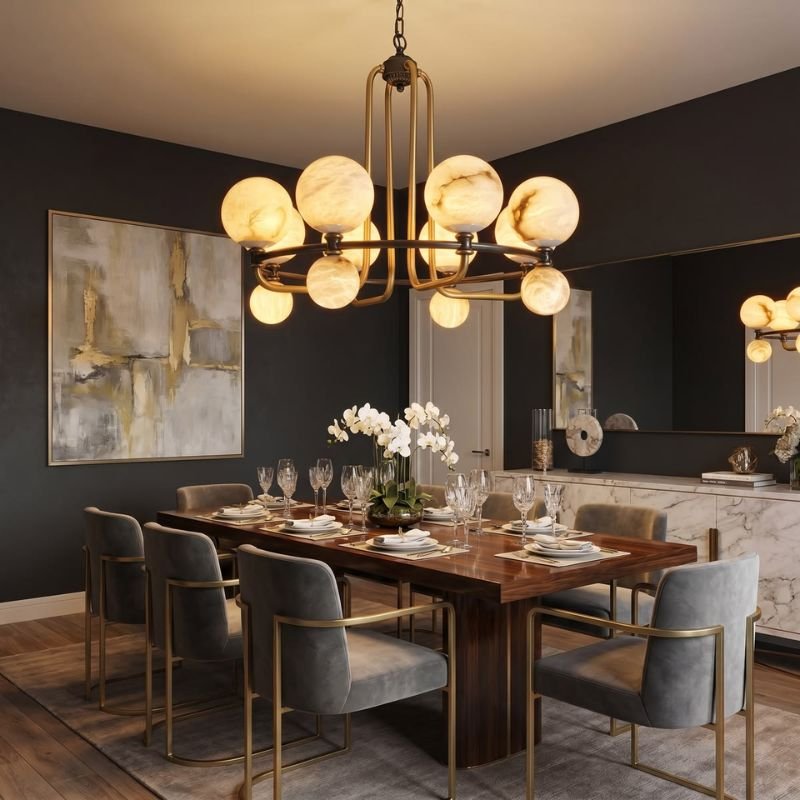
The fixture is only half the equation. The type of bulb you use inside your dining room chandelier determines the quality, warmth, and energy efficiency of the light it produces. To complete the overall look, you can also read our Dining Room Rug Secrets guide for practical tips on selecting the right rug for your dining space.
- Warm white (2700K–3000K): creates a flattering, intimate ambience ideal for dining.
- Cool white (4000K+): better suited to kitchens or workspaces too clinical for dining.
- LED bulbs: dramatically reduce energy consumption without sacrificing light quality.
- Dimmable LEDs: the best all round choice install on a dimmer switch for maximum flexibility.
- Edison filament bulbs: beautiful for exposed bulb fixtures; slightly less energy efficient but visually stunning.
Furthermore, always check the maximum wattage rating on your fixture before installing bulbs. Exceeding this rating creates a fire hazard and voids most manufacturer warranties.
Best Dining Room Chandelier Trends for 2026
Lighting trends for dining rooms are becoming more practical while maintaining a sophisticated appearance. In 2026, homeowners are choosing chandeliers that offer a balance of elegant design, energy efficiency, and modern convenience. Instead of oversized decorative fixtures, many people now prefer lighting that enhances everyday living and complements a wide range of interior styles.
Popular chandelier trends this year include:
- Contemporary linear lighting for large dining tables.
- Soft metallic finishes such as satin brass, bronze, and matte black.
- Sustainable materials including natural wood, woven rattan, and recycled metal.
- Smart lighting features with remote control and voice assistant compatibility.
- Simple Scandinavian inspired fixtures with clean and uncluttered designs.
- Long lasting LED lighting systems that reduce energy consumption.
Rather than selecting a chandelier simply because it is fashionable, choose one that fits your dining room’s layout, furniture, and lighting needs. A timeless fixture will continue to add value and style to your home for many years.
Smart Tips for Choosing the Right Dining Room Chandelier
Finding the ideal chandelier starts with understanding your space. A lighting fixture should not only look attractive but also provide the right amount of illumination while maintaining visual balance with your dining table and surrounding décor.
| Factor | Buying Advice |
|---|---|
| Room Measurements | Measure the available space before selecting a fixture. |
| Table Design | Match round tables with circular chandeliers and rectangular tables with linear fixtures. |
| Ceiling Clearance | Select the correct suspension length based on your ceiling height. |
| Lighting Quality | Choose warm LED bulbs with dimming capability for flexible lighting. |
| Home Style | Pick materials and finishes that blend naturally with your interior design. |
A thoughtfully selected chandelier enhances both the appearance and functionality of your dining room. When size, lighting, and style work together, the fixture becomes a lasting focal point that makes every meal more enjoyable.
Installation Tips for Your Dining Room Chandelier

Installing a dining room chandelier is a project that rewards careful planning. While a qualified electrician should handle the actual wiring especially for heavier fixtures understanding the process helps you prepare effectively.
Step by Step Installation Overview
- Turn off the power: always switch off the circuit breaker before beginning work.
- Confirm the ceiling box rating: heavy chandeliers (over 35 lbs) require a fan rated electrical box for safe support.
- Assemble the canopy and chain: follow manufacturer instructions precisely to avoid loose connections.
- Set the hanging height first: adjust the chain or rod before securing wiring to avoid repeated adjustments.
- Test before final installation: briefly restore power to check all bulbs before closing the canopy permanently.
Specifically, if your dining room chandelier weighs more than 50 pounds, consider installing a structural support brace between ceiling joists. This provides additional load bearing security beyond the standard electrical box.
Dimmer Switch Compatibility
Nearly every dining room benefits from a dimmer switch paired with its chandelier.Dimmers allow you to shift seamlessly from bright, energising light during meals to soft, atmospheric glow during evenings. Ensure your dimmer switch is rated for LED loads if you are using LED bulbs standard incandescent dimmers can cause LED flickering.
Caring for Your Dining Room Chandelier
A well maintained dining room chandelier retains its beauty for decades. Dust accumulates quickly on both the fixture and bulbs, reducing light output and dulling finishes over time. Ideally, clean your chandelier every three to four months.
- Crystal fixtures: wipe each prism with a lint free microfibre cloth lightly dampened with a 1:3 solution of isopropyl alcohol and distilled water.
- Metal frames: use a dry or barely damp cloth; avoid harsh chemical cleaners that strip protective coatings.
- Fabric shades: use a soft brush attachment on a low suction vacuum to remove accumulated dust.
- Wood or rope elements: dust gently with a dry cloth; avoid moisture, which can warp or discolour natural fibres.
Consequently, always turn off and allow the fixture to cool completely before any cleaning. Never use spray cleaners directly on the chandelier spray the cloth first to maintain full control over moisture.
FAQs
Q1. What size dining room chandelier do I need for my table?
Add your room’s length and width in feet, then convert that number to inches for the ideal diameter. For table specific sizing, the fixture should span roughly half to two thirds the table’s width, with at least 12 inches of clearance on each side.
Q2. How high should a dining room chandelier hang above the table?
Hang the bottom of the fixture 30 to 36 inches above the tabletop for standard 8 foot ceilings. Add 3 inches for every additional foot of ceiling height to maintain proper proportion and visual comfort.
Q3. Can I install a chandelier myself, or do I need an electrician?
Basic replacements swapping one fixture for another of similar weight are manageable for confident DIYers. However, new ceiling cuts, heavy fixtures over 50 lbs, or upgraded electrical boxes should always be handled by a licensed electrician for safety and code compliance.
Q4. What style of chandelier works best in a modern dining room?
Contemporary linear pendants, geometric cage fixtures, and Scandinavian inspired arm chandeliers all complement modern dining rooms beautifully. Matte black, brushed brass, and satin nickel finishes integrate effortlessly with clean, minimal interiors.
Q5. How do I clean a crystal dining room chandelier without damaging it?
Use a lint free microfibre cloth lightly dampened with a 1:3 mix of isopropyl alcohol and distilled water. Clean each crystal individually, allow the fixture to air dry fully, and always work with the power switched off and the bulbs completely cool.
Final Buying Tips
Before making your final purchase, compare different chandelier styles, check the fixture dimensions carefully, and always read customer reviews. Investing in a high-quality chandelier may cost more initially, but it usually provides better durability, improved lighting performance, and a timeless appearance that enhances your dining room for years.
Conclusion
A dining room chandelier is far more than a functional fixture it is an expression of taste, a driver of atmosphere, and the visual anchor of one of the most meaningful spaces in your home. When chosen with care and installed correctly, it elevates every meal, every gathering, and every quiet evening into something worth remembering.
Take the time to measure accurately, explore styles that genuinely reflect your personality, and invest in quality that will outlast trends. The right overhead luminaire will reward you every single day.