
Wood Wall Art is an easy way to add warmth, texture, and personality to a home. Unlike flat prints, wooden artwork brings natural grain, depth, and visual character to an otherwise empty wall.
From reclaimed wood panels and geometric designs to carved and minimalist pieces, there are many styles to choose from. The right option depends on your room size, existing furniture, color scheme, interior style, and the amount of visual impact you want.
In this guide, you’ll learn about different types of Wood Wall Art, how to choose the right piece, where to place it, how to style it with other decorations, and how to maintain it over time.
If you are also looking for more ways to decorate empty walls, explore our guide to wall decor ideas for additional inspiration.
What Is Wood Wall Art?
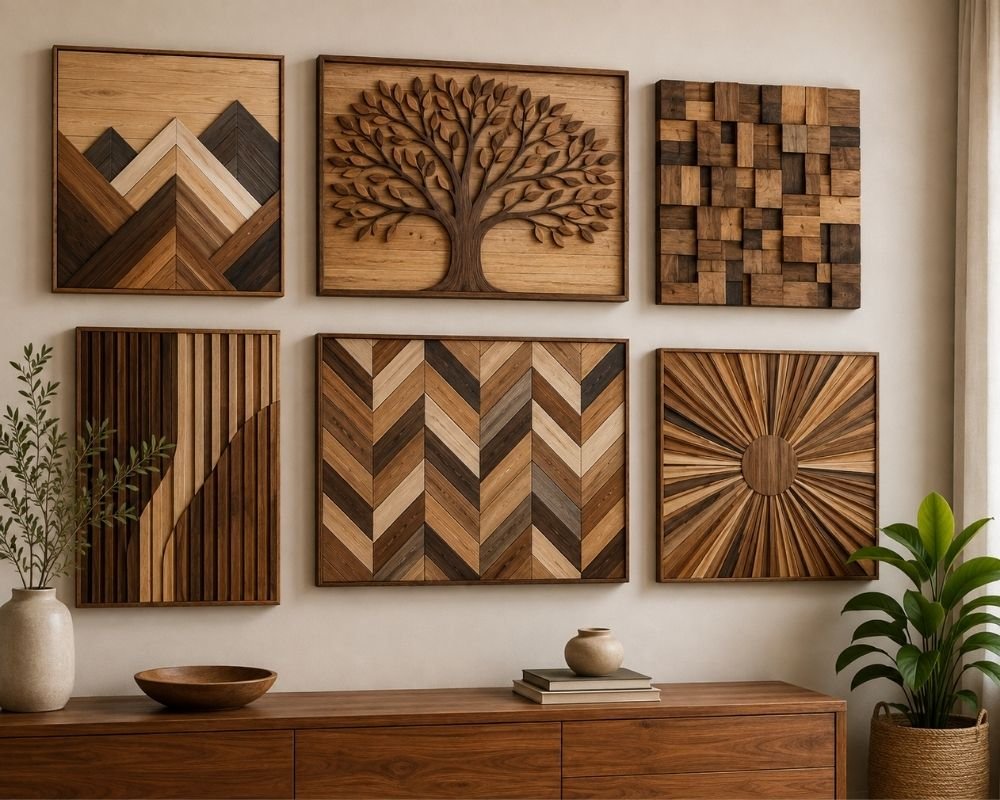
Wood Wall Art refers to decorative pieces made primarily from natural or engineered wood and designed to be displayed on a wall. These pieces can include carved panels, wooden sculptures, geometric arrangements, reclaimed timber designs, abstract artwork, and decorative wood panels.
One of the main advantages of wooden artwork is its natural texture. Even a simple wooden panel can introduce warmth and depth that printed artwork may not provide.
Wood also works with many decorating styles. A rough reclaimed panel can complement a rustic room, while a clean geometric design can fit naturally into a modern interior.
The key is choosing a design that complements the room instead of competing with everything around it.
Types of Wood Wall Art
There is no single style of wooden wall decoration. Understanding the different options makes it easier to choose something suitable for your home.
Reclaimed Wood Wall Art
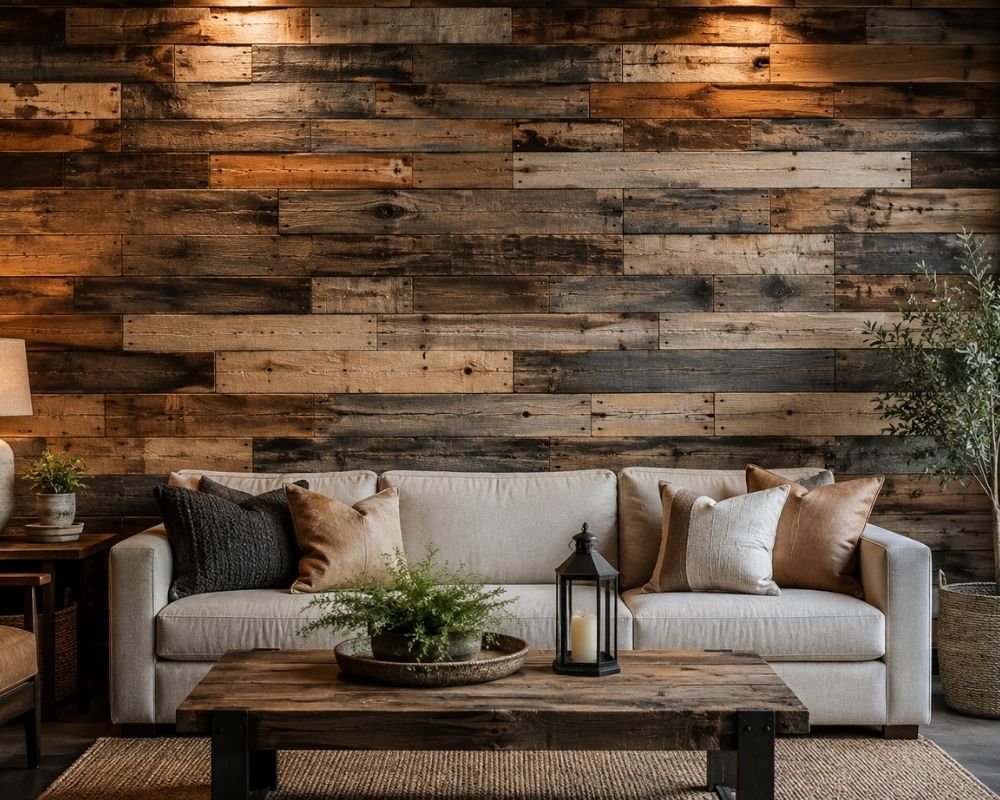
Reclaimed wood art uses timber that has been recovered from older structures, furniture, barns, buildings, or other sources.
Its biggest attraction is character. Knots, variations in color, weathered surfaces, and natural imperfections can make every piece look different.
Reclaimed wood works particularly well with:
- Rustic interiors
- Farmhouse rooms
- Industrial spaces
- Country-style homes
- Warm neutral color schemes
Before buying reclaimed wood artwork, check that the wood has been properly prepared and treated for indoor use.
Geometric Wood Wall Art
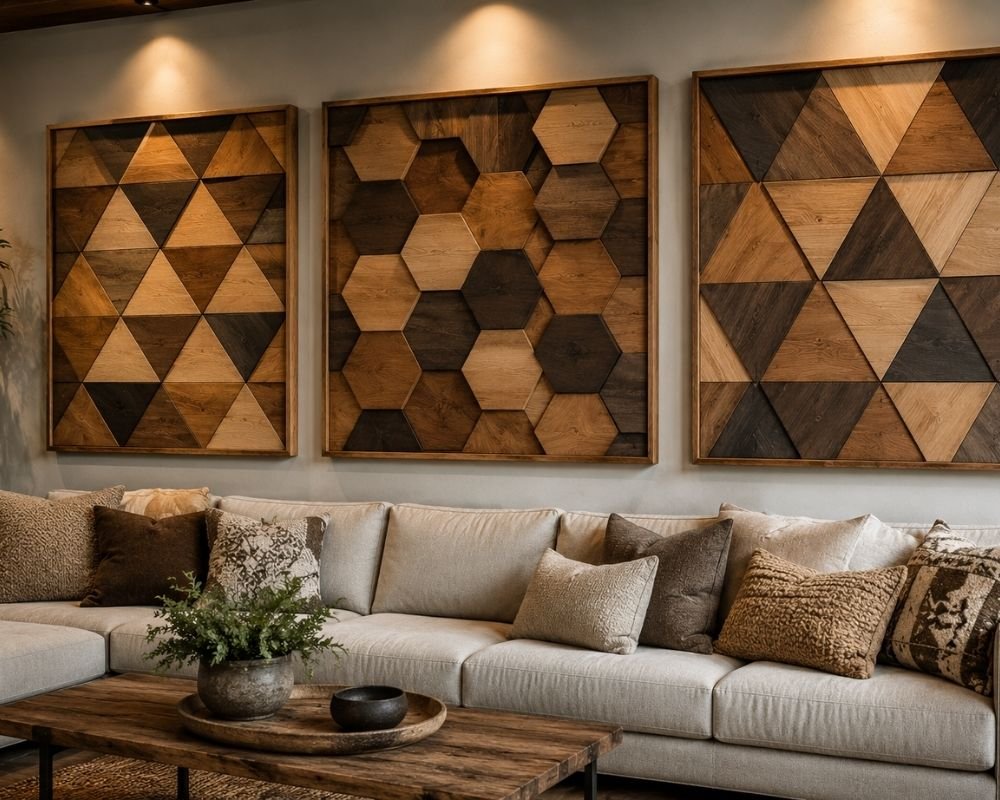
Geometric Wood Wall Art uses shapes such as triangles, hexagons, circles, diamonds, and intersecting lines.
These designs are especially suitable for modern interiors because their clean shapes create structure without making the room feel cluttered.
They can work particularly well in a living room. If you are planning a complete living room makeover, you can also explore our guide to living room decor for ideas that coordinate wall decorations with furniture and accessories.
Carved Wood Wall Art
Carved wooden artwork adds a handcrafted quality to a room. Designs may include floral patterns, abstract shapes, landscapes, animals, or traditional motifs.
Because carving creates shadows and depth, these pieces can look different depending on the direction of the light.
A carved panel can become the main focal point of a room, especially when placed on a simple wall without too many competing decorations.
Wood Panel Wall Art
Wood panels are usually larger pieces or arrangements made from multiple wooden sections.
They are useful for filling wide, empty walls and can be arranged horizontally, vertically, or in repeating patterns.
Large panels are particularly effective behind:
- Sofas
- Beds
- Dining tables
- Consoles
- Entryway furniture
Abstract Wood Wall Art
Abstract wooden pieces focus on shapes, texture, movement, and composition rather than recognizable objects.
They are a good choice if you want your wall decoration to feel artistic without following a specific theme.
Neutral wood tones also make abstract pieces easier to combine with different furniture colors.
Rustic Wood Wall Art
Rustic wooden artwork usually emphasizes natural textures, weathered finishes, simple shapes, and earthy colors.
This style works well with materials such as:
- Linen
- Wicker
- Jute
- Leather
- Stone
- Ceramic
The goal is to create a comfortable and natural atmosphere rather than a highly polished appearance.
Benefits of Wood Wall Art
Wooden artwork can do more than fill an empty wall.
Adds Natural Texture
The grain and surface of wood introduce a natural texture that can make a room feel more layered.
Creates a Focal Point
A large or distinctive wooden piece can immediately attract attention and give the room a visual center.
Works With Different Styles
Wood can fit modern, rustic, boho, Scandinavian, farmhouse, industrial, and traditional interiors.
Adds Warmth
Natural wood tones can soften rooms that contain a lot of white, gray, black, glass, or metal.
Offers Design Flexibility
You can choose from small individual pieces, large statement panels, grouped arrangements, or complete gallery walls.
How to Choose the Right Wood Wall Art
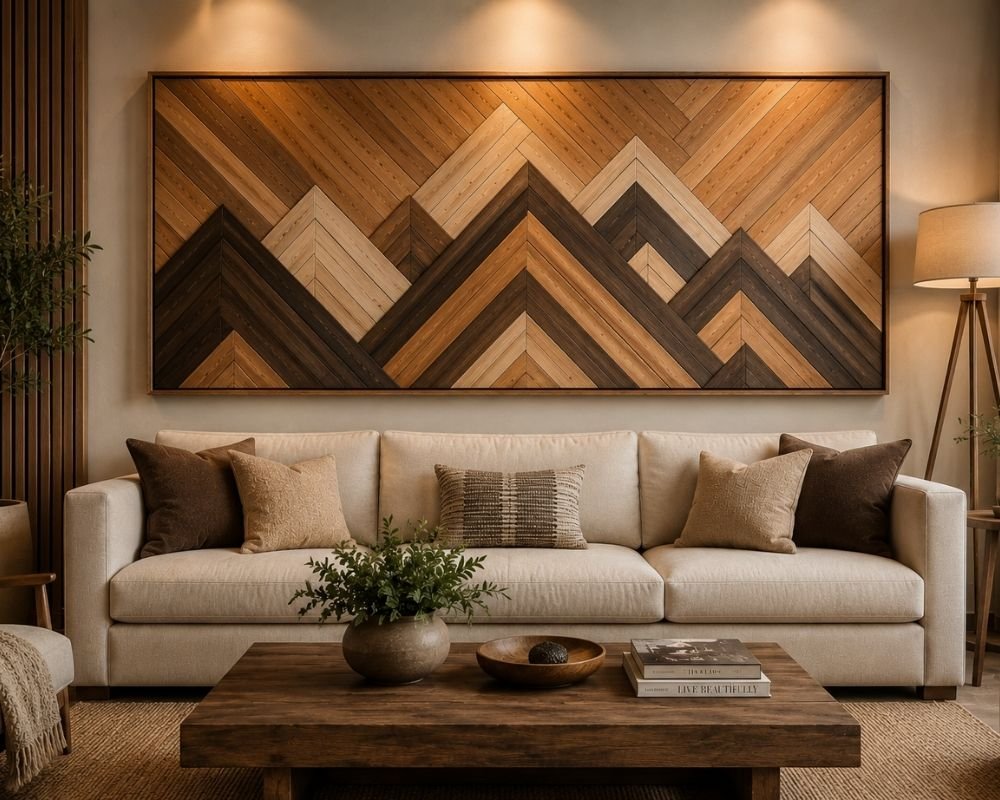
Choosing artwork should start with the room rather than the artwork itself.
Consider Your Wall Size
Measure the available wall before buying anything.
A small piece can disappear on a large empty wall, while an oversized design may overwhelm a narrow area.
For a large wall above a sofa or bed, consider either:
- One large statement piece
- A wide wooden panel
- A group of coordinated pieces
For smaller walls, one medium-sized piece may be enough.
Match Your Existing Color Palette
Look at the colors already present in the room.
Light woods such as oak, ash, or pine can help maintain a bright and airy appearance. Darker woods such as walnut can create stronger contrast.
You do not need to match every wooden item exactly. Slight variations can actually make a room look more natural.
Think About Wood Type
Different types of wood offer different colors, textures, and levels of durability.
Common choices include:
- Oak
- Walnut
- Pine
- Cedar
- Teak
- Ash
The best option depends on the intended location, finish, budget, and appearance you prefer.
Choose the Right Finish
Wood artwork may have a natural, matte, stained, painted, waxed, or polished finish.
A natural or matte finish usually emphasizes the character of the wood. A darker stain can create a more dramatic appearance, while painted wood can introduce a specific accent color.
Choose a finish that works with the rest of the room.
Consider Your Interior Style
Your artwork should support the room’s existing style.
Modern: Choose geometric, minimalist, or abstract designs.
Rustic: Look for reclaimed or distressed wood.
Boho: Consider carved patterns and natural textures.
Scandinavian: Choose simple designs with light wood tones.
Industrial: Darker wood and metal combinations can work well.
Traditional: Carved panels and detailed craftsmanship may be more suitable.
Wood Wall Art Ideas for Different Rooms
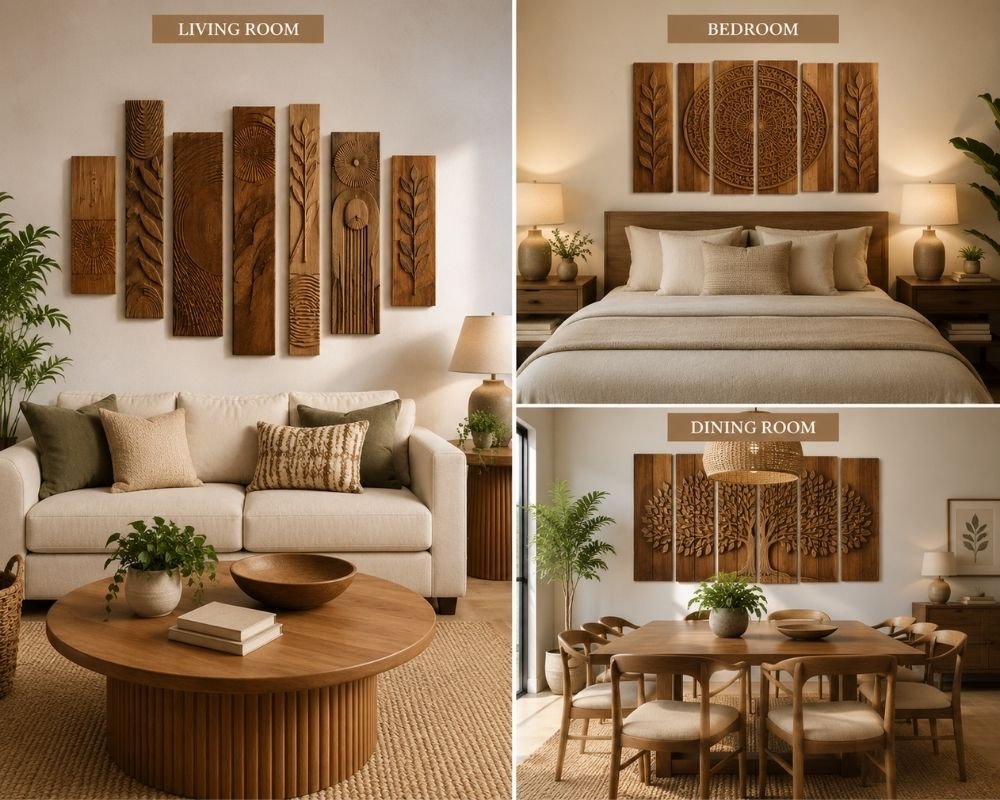
The same piece can look completely different depending on where it is placed.
Wood Wall Art for the Living Room
The living room is one of the best places for a statement wooden piece.
A large panel can be placed above the sofa, fireplace, or console table. Keep the surrounding wall relatively simple so the artwork remains the main feature.
If your living room already contains many decorative objects, choose a simpler wooden design. If the room has plain furniture and walls, a more detailed panel can provide visual interest.
You can also coordinate the wall art with your coffee table and other accessories. For more ideas, see our guide to coffee table decor.
Wood Wall Art for the Bedroom
In a bedroom, wooden artwork can create a warm and relaxing atmosphere.
A common placement is above the headboard. However, make sure the artwork is securely mounted and does not interfere with the bed or other furniture.
Simple horizontal panels, carved designs, and soft natural wood tones can work particularly well in bedrooms.
Wood Wall Art for the Dining Room
A wooden panel can add warmth to a dining area without taking up floor space.
Consider placing it on the wall behind the dining table or on another large empty wall.
You can also coordinate the artwork with your dining table, centerpiece, and other decorations. For more inspiration, see our guide to dining room wall decor.
Wood Wall Art for the Kitchen
Wooden wall decorations can make a kitchen feel warmer and less clinical.
Choose pieces that are appropriate for the environment and keep them away from direct heat, steam, and areas where they may regularly become wet.
For more ideas on decorating kitchen walls, visit our guide to kitchen wall decor.
Wood Wall Art for the Entryway
The entryway gives visitors their first impression of your home.
A carved wooden panel, small geometric arrangement, or natural wood artwork above a console table can create an inviting entrance.
Keep the arrangement simple enough that it does not make the entryway feel crowded.
How to Style Wood Wall Art
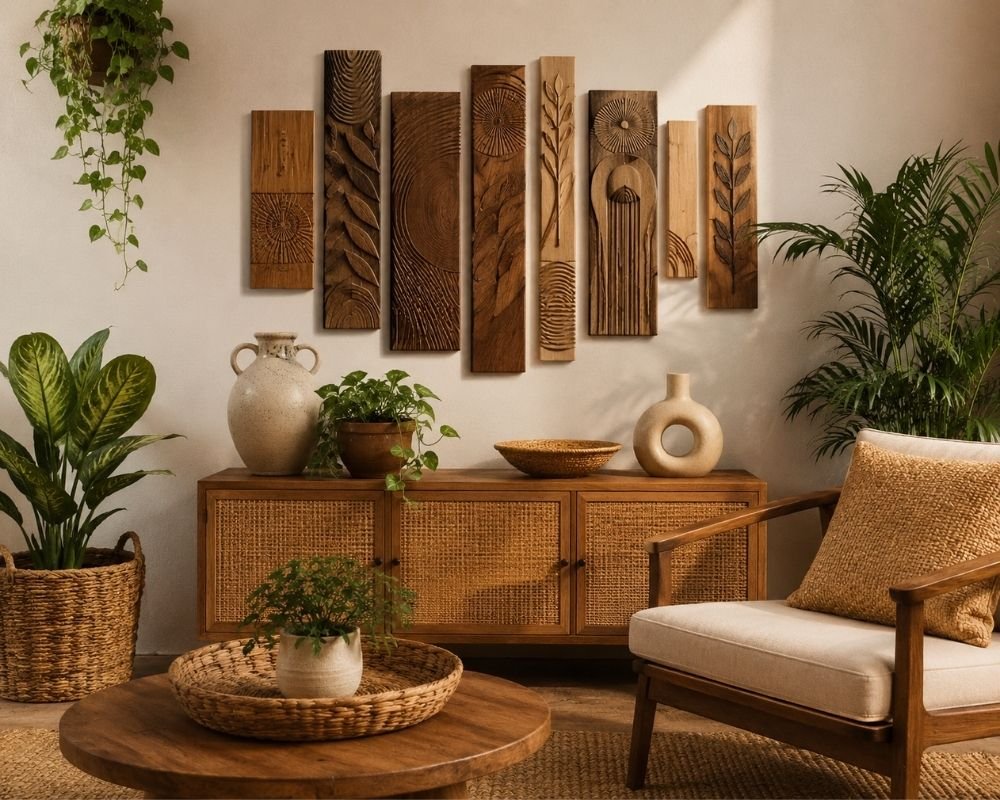
Buying the right artwork is only part of the process. Placement and surrounding decorations also matter.
Create a Focal Wall
Choose one wall to receive the most visual attention.
Avoid placing several large decorative pieces close together. Give your wooden artwork enough empty space to stand out.
Mix Different Textures
Wood works naturally with other materials.
Try combining it with:
- Woven baskets
- Linen
- Ceramic
- Glass
- Leather
- Metal
- Natural fibers
The contrast between these materials can make the room feel more layered.
Use a Gallery Wall
Wooden pieces can also be incorporated into a gallery wall.
Combine wood with framed artwork, photographs, mirrors, or other decorative objects.
To prevent the arrangement from looking random, repeat one or two elements such as:
- Similar wood tones
- Matching frame colors
- A consistent color palette
- Similar spacing
Coordinate With Table Decor
Wall artwork does not need to match every accessory in the room. However, repeating similar colors and materials can create visual consistency.
For example, warm wood artwork can work well with natural centerpieces and neutral accessories.
For more ideas on coordinating decorative elements around the home, explore our complete table decor guide..
How High Should You Hang Wood Wall Art?
The ideal height depends on the room and surrounding furniture.
When artwork is placed above a sofa, bed, or console, it should feel connected to that furniture rather than floating too high above it.
As a general starting point, position the center of the artwork around eye level and then adjust it according to the furniture underneath.
For large pieces, always consider the entire wall rather than focusing only on the artwork itself.
How to Hang Heavy Wood Wall Art Safely
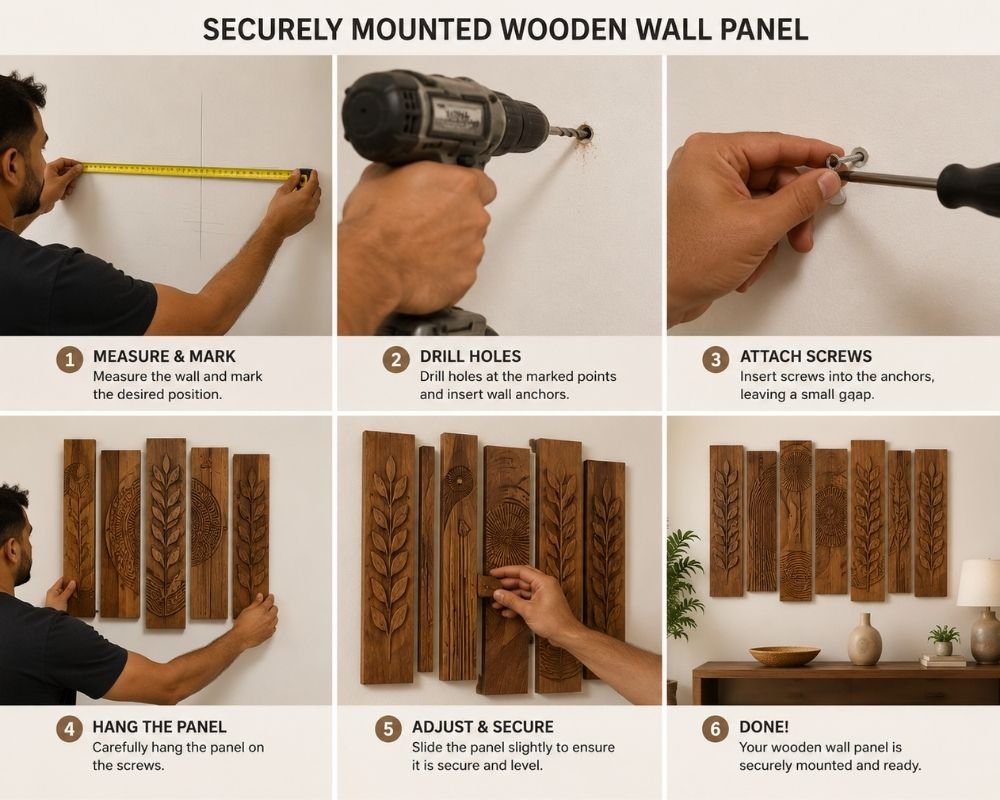
Wood can be considerably heavier than a typical framed print.
Before installation:
- Check the weight of the artwork.
- Check the type of wall.
- Use suitable wall hardware.
- Locate wall studs when appropriate.
- Follow the manufacturer’s mounting instructions.
- Use a French cleat for many large or heavy pieces when suitable.
Never rely on a small nail for a heavy wooden panel.
If you are unsure about the wall or mounting system, get help from someone experienced with wall installation.
How to Clean and Maintain Wood Wall Art
Maintenance depends on the wood and its finish.
For most indoor pieces, regular dusting with a soft, dry cloth is a good starting point.
Avoid soaking the artwork with water. Excess moisture can damage some finishes and may cause problems for unfinished wood.
For finished or treated pieces, follow the care instructions provided by the manufacturer or artisan.
Do not automatically apply oil, wax, or polish unless the finish is designed for that product.
Keep wooden artwork away from prolonged direct sunlight and excessive humidity when possible. These conditions can affect the color and condition of some types of wood.
Can You Use Wood Wall Art in Humid Areas?
Yes, but the material and finish matter.
Bathrooms, kitchens, and other humid areas require more consideration than dry rooms. Choose wood that is properly treated for the intended environment and avoid placing artwork where it will receive direct water exposure.
For areas with frequent moisture, always follow the manufacturer’s recommendations.
Frequently Asked Questions
What type of wood is best for wall art?
Oak, walnut, ash, pine, cedar, and other woods can all work well. The best choice depends on the design, finish, budget, durability requirements, and location.
Is Wood Wall Art good for modern homes?
Yes. Geometric, abstract, minimalist, and clean-lined wooden designs can complement modern interiors particularly well.
How big should Wood Wall Art be?
The artwork should be proportional to the wall and surrounding furniture. Large walls often benefit from larger artwork or grouped pieces, while smaller walls usually need a more compact design.
Can I use reclaimed wood for wall art?
Yes. Reclaimed wood can provide natural character and an aged appearance. Make sure the material has been properly cleaned, prepared, and treated before bringing it into your home.
How do I clean Wood Wall Art?
Start with a soft, dry cloth. For additional cleaning, follow the care instructions for the specific wood and finish. Avoid excessive water unless the manufacturer specifically recommends it.
Can Wood Wall Art be used outdoors?
Some wooden artwork can be used in protected outdoor areas when it has been specifically designed and treated for outdoor conditions. Indoor artwork should not automatically be assumed to be weather-resistant.
What style of Wood Wall Art works best in a modern home?
Geometric, abstract, minimalist, and simple panel designs generally work well in modern spaces because they provide texture without creating excessive visual clutter.
Final Thoughts
Wood Wall Art can transform an empty wall into an important part of your home’s overall design. Its natural texture, warmth, and variety make it suitable for many different decorating styles.
The best piece is not necessarily the largest or most expensive option. Focus on size, placement, color, wood type, finish, and how the artwork works with the furniture already in your room.
Whether you choose reclaimed timber, geometric panels, carved artwork, or minimalist designs, give the piece enough space to stand out. With thoughtful placement and proper care, wooden wall decor can remain a distinctive part of your interior for years.