
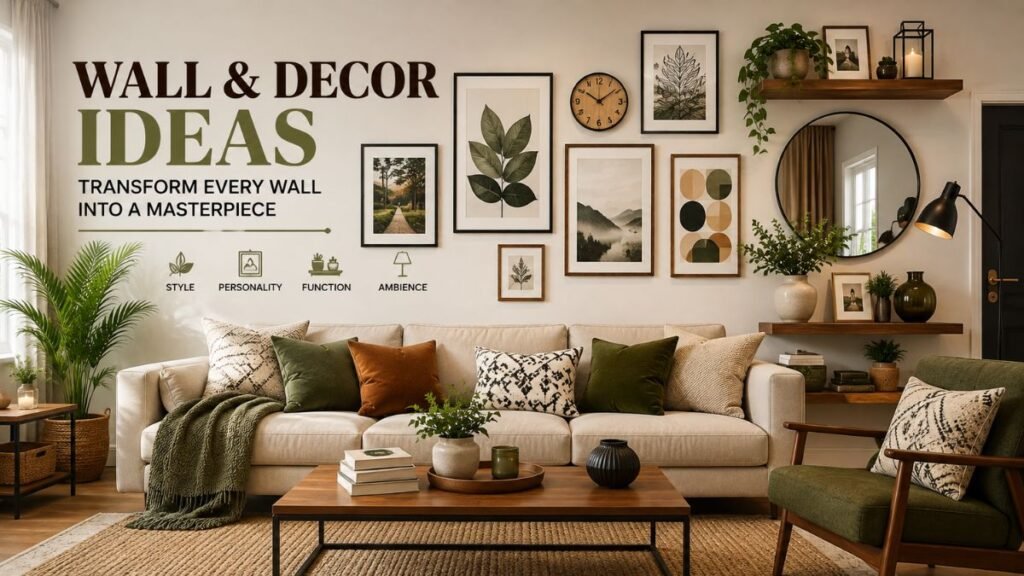
Wall & decor can do much more than simply fill an empty wall. With thoughtful wall & decor ideas, you can turn a plain wall into a beautiful focal point, add personality to your home, and make any room feel more complete. In addition, the right wall design can connect your furniture, colors, lighting, and accessories into one cohesive look.
Whether you are decorating a living room, bedroom, kitchen, dining area, hallway, or small apartment, the right wall design can make a noticeable difference. For example, simple artwork can add personality, while mirrors can reflect light and floating shelves can provide both storage and decoration. As a result, you do not always need an expensive renovation to improve an ordinary wall.
Furthermore, this guide explores practical wall & decor ideas for different rooms, budget-friendly solutions, gallery wall tips, accent wall options, common mistakes to avoid, and simple steps for creating a balanced wall design.
What Is Wall & Decor?
Wall & decor refers to decorative and functional elements used to improve the appearance or usefulness of a wall. These elements can include framed artwork, mirrors, photographs, shelves, wallpaper, wood panels, clocks, tapestries, sculptures, plants, and lighting.
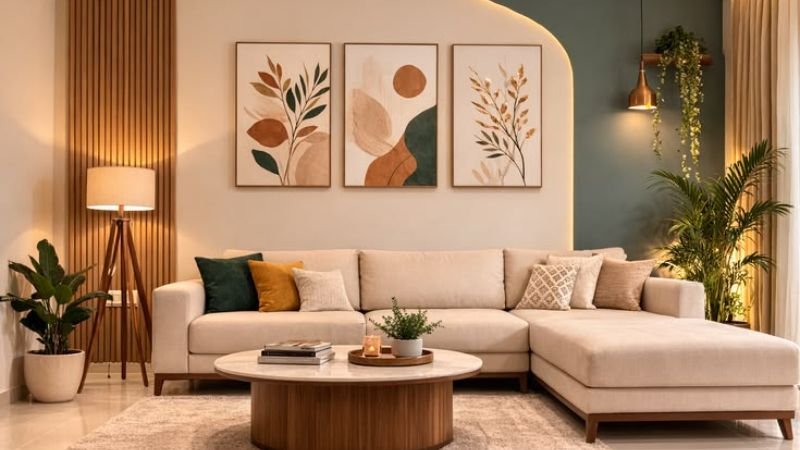
The best wall decoration does not simply fill an empty surface. Instead, it should work with the room’s furniture, colors, lighting, proportions, and overall style.
For example, a large piece of artwork may work well above a sofa, while floating shelves can provide both storage and decoration in a small room. Similarly, a mirror can reflect natural light and create greater visual depth.
Ultimately, the goal is to create a wall that feels intentional rather than crowded.
Benefits of Wall & Decor
Thoughtful wall & decor can improve a room in several practical ways. Moreover, well-planned wall styling can make decorative elements feel connected to the rest of your interior.
1. Makes Empty Walls Feel Complete
An entirely empty wall can sometimes make a room feel unfinished. Therefore, artwork, shelves, mirrors, or other decorative elements can create a stronger visual connection between the walls and furniture.
2. Adds Personality
Your wall choices can show your interests and taste. For instance, family photographs, travel memories, artwork, books, handmade pieces, and meaningful objects can make a room feel more personal.
3. Creates a Focal Point
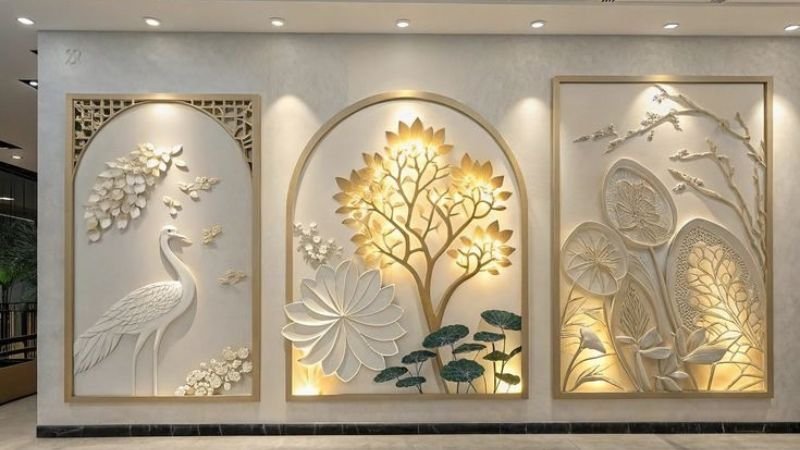
A statement wall can naturally attract attention. For example, a large artwork, textured accent wall, oversized mirror, or carefully arranged gallery can become the main visual feature of a room.
4. Adds Functionality
Wall decoration does not always have to be purely decorative. Instead, shelves, hooks, pegboards, wall-mounted cabinets, and organizers can provide useful storage while improving the appearance of the space.
5. Adds Visual Depth
Mirrors, layered artwork, shelves, and textured wall treatments can introduce depth to an otherwise flat surface. As a result, the room may feel more visually interesting without adding extra furniture.
6. Helps Connect the Room’s Design
A wall can repeat colors and materials already used elsewhere in the room. For example, wooden shelves can complement a wooden coffee table, while artwork can repeat accent colors found in cushions or curtains.
Wall & Decor Ideas for Every Room
Different rooms have different needs. For example, a wall treatment that works beautifully in a living room may not be practical in a kitchen or hallway.
Therefore, consider the purpose, size, lighting, and existing furniture of each room before choosing your wall decoration.
Living Room Wall & Decor Ideas
The living room often provides a large opportunity for creative wall styling. However, sofas, chairs, coffee tables, and entertainment units already occupy much of the space, so wall decoration should complement the furniture rather than compete with it.
Large Statement Artwork for Wall & Decor
A large painting or framed print can create an attractive focal point above a sofa or console table.
When choosing artwork, consider the room’s existing color palette. You do not need every color to match exactly. Instead, repeating one or two accent colors can create visual harmony.
Gallery Wall & Decor Ideas
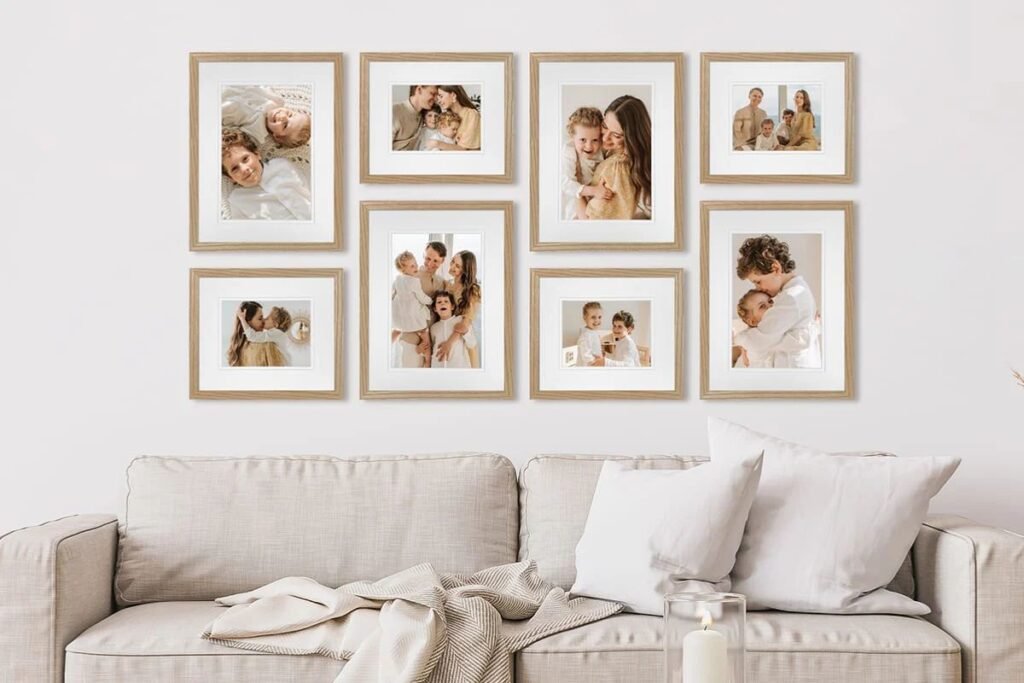
A gallery wall works particularly well above a sofa, sideboard, or console. In addition, it gives you an opportunity to combine different types of artwork.
You can combine:
- Family photographs
- Artwork
- Botanical prints
- Travel pictures
- Small mirrors
- Decorative objects
Before hanging anything, arrange the pieces on the floor. This makes it easier to experiment with spacing and composition.
Floating Shelves for Wall & Decor
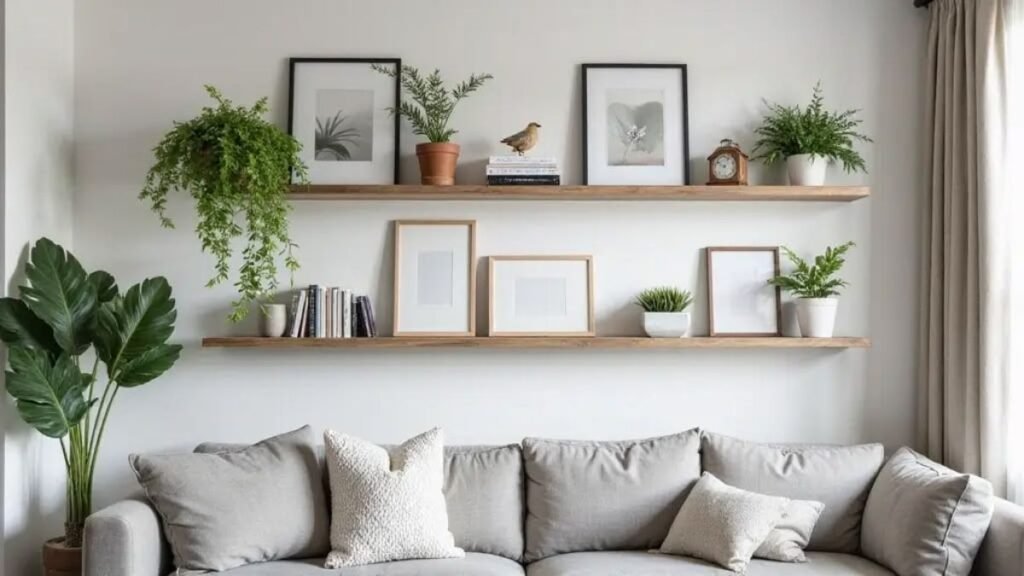
Floating shelves provide an opportunity to display books, plants, framed photographs, and small decorative objects. However, avoid filling every inch of the shelves.
Leaving some empty space helps the arrangement feel cleaner. In addition, different object heights can create a more interesting composition.
TV Wall & Decor Ideas
The wall around a television can easily become visually cluttered. Instead of adding many unrelated decorations, consider a simple TV wall decor approach, wood paneling, a narrow shelf, or subtle lighting.
As a result, the television remains the main functional element while the surrounding decor supports the overall design.
Bedroom Wall & Decor Ideas
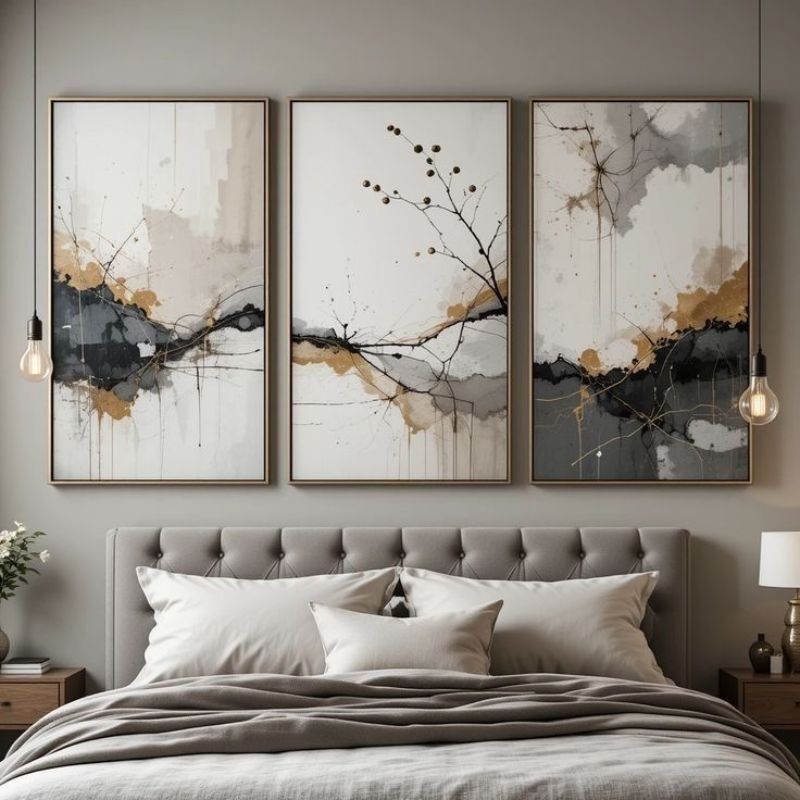
Bedroom wall decoration should create a calm and comfortable atmosphere. For this reason, choose colors, textures, and artwork that support the feeling you want in the room.
Above-Bed Wall & Decor Ideas
A horizontal artwork arrangement can work well above the headboard. However, choose pieces that complement the bedding rather than competing with it.
Accent Wall & Decor Behind the Bed
The wall behind the bed is a natural location for an accent wall. Paint, wallpaper, wood slats, or textured panels can help define the sleeping area.
For example, a muted paint color can create a subtle change, while wood panels can add warmth and texture.
Minimal Gallery Wall & Decor
If you enjoy photographs or artwork, create a small gallery rather than covering the entire bedroom wall. This approach can maintain a peaceful atmosphere while still adding personality.
Decorative Mirrors for Wall & Decor
A well-placed mirror can add light and visual depth. However, consider what the mirror reflects before installing it.
A reflection of a beautiful window, artwork, or light source can enhance the room. On the other hand, a reflection of clutter may make the space feel less organized.
Kitchen Wall & Decor Ideas
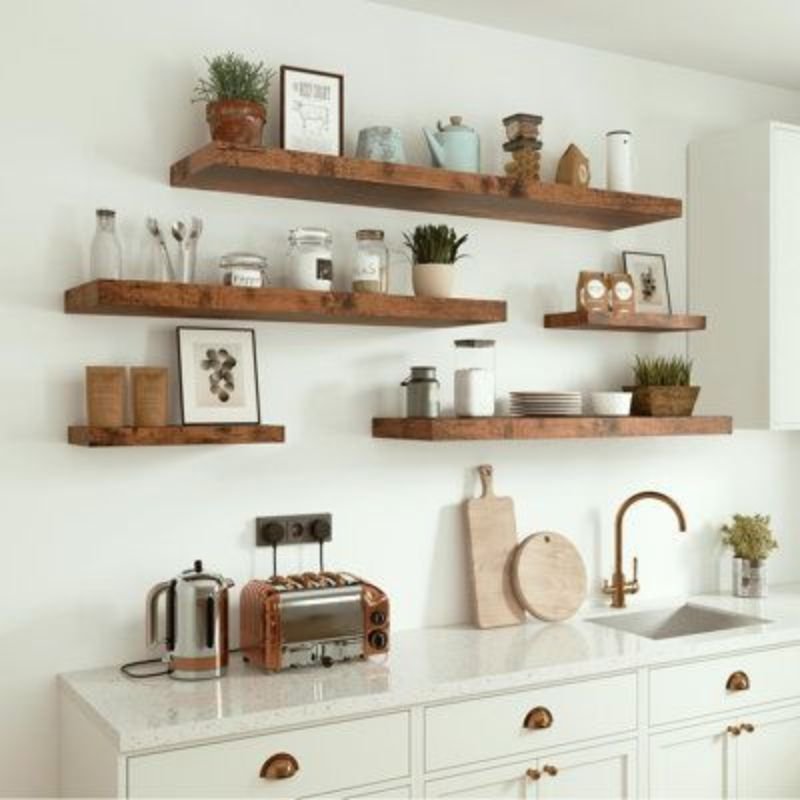
Kitchen walls often need to balance decoration with practicality. Therefore, choose wall elements that are attractive while remaining suitable for the kitchen environment.
If you want more ideas, explore our guide to Kitchen Wall Decor Ideas.
Open Shelves
Open shelves can display attractive dishes, jars, cookbooks, or plants while keeping frequently used items accessible.
However, avoid placing too many items on one shelf. A simple arrangement can look cleaner and remain easier to maintain.
Framed Kitchen Artwork
Food-themed prints, botanical illustrations, or simple typography can add character without taking up counter space.
Similarly, small framed prints can fill narrow sections of wall that might otherwise remain unused.
Functional Wall Storage
Hooks, rails, and wall-mounted organizers can turn unused vertical space into useful storage. As a result, your kitchen can become more organized without adding bulky furniture.
Accent Wall
If your kitchen has a large empty wall, wallpaper or a contrasting paint color can create a visual feature. Before choosing a material, consider moisture, cleaning, and the overall kitchen design.
Dining Room Wall & Decor Ideas
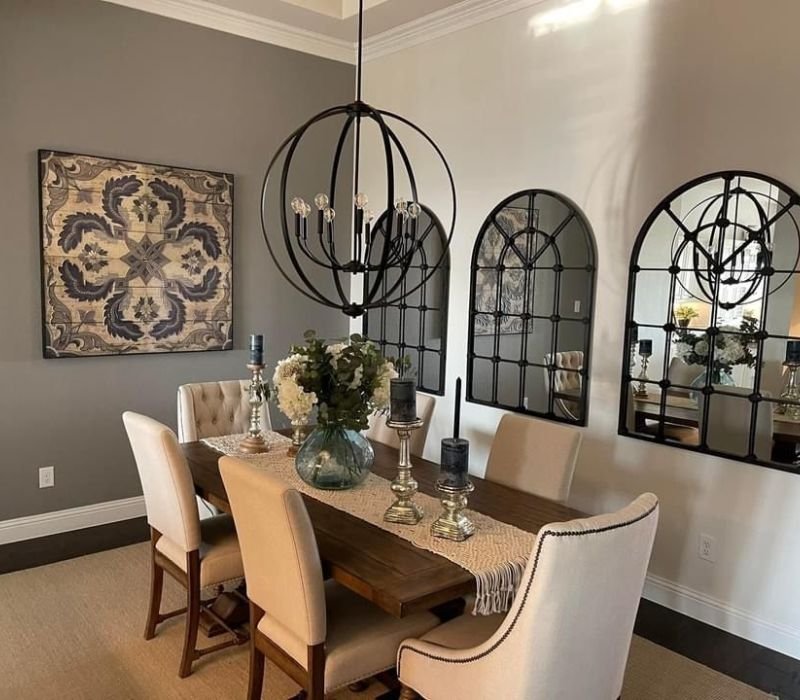
The dining room provides an excellent setting for artwork, mirrors, and statement walls. In addition, the wall decor can help define the dining area in an open-plan home.
For more inspiration, explore our guide to Dining Room Wall Decor.
Large Artwork
One large artwork above a dining table can create a strong focal point without requiring several small decorations.
For example, a wide horizontal artwork can visually relate to the width of the dining table.
Statement Mirror
A decorative mirror can work especially well in a dining room because it can reflect light and add visual depth.
However, think carefully about what the mirror will reflect before choosing its position.
Plate or Dish Display
Decorative plates can create an interesting arrangement when grouped thoughtfully. To keep the display balanced, choose pieces that share a common color or design theme.
Accent Wall
Wallpaper, paint, wood, or textured finishes can make the dining area feel distinct. Therefore, an accent wall can be especially useful when you want to separate the dining area visually.
Hallway Wall & Decor Ideas
Hallways are often overlooked. Nevertheless, they provide valuable wall space for decoration and practical storage.
Photo Displays
A series of family photographs can make a hallway feel personal. In addition, a consistent frame style can give the display a more organized appearance.
Narrow Shelves
A slim floating shelf can hold small artwork and decorative objects without making the walkway feel crowded.
However, make sure the shelf does not interfere with movement through the hallway.
Mirrors
A vertical mirror can reflect light and add visual depth to a narrow hallway. For this reason, mirrors can be particularly useful where natural light is limited.
Artwork Series
Instead of one large piece, consider several small prints arranged in a vertical sequence. This approach can make use of narrow wall sections without overwhelming the space.
Small Room Wall & Decor Ideas
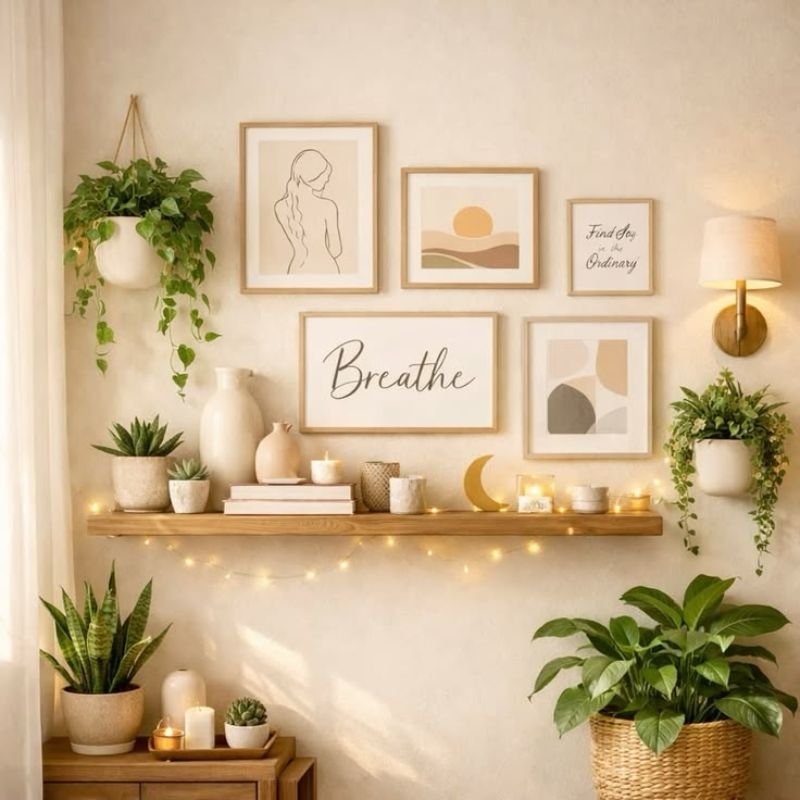
Small rooms benefit from simple, carefully selected decorations. Therefore, focus on a few pieces that provide visual impact without creating clutter.
Consider:
- One large mirror
- Vertical artwork
- Narrow floating shelves
- A small gallery arrangement
- Light-colored wall treatments
- Wall-mounted lighting
- Minimal decorative displays
In particular, large mirrors can reflect light and create greater visual depth, while vertical arrangements can draw the eye upward.
Popular Wall & Decor Ideas
Now that we have covered different rooms, let’s look at some versatile wall & decor ideas. From gallery walls to lighting, each option can be adapted to different interior styles.
Gallery Wall & Decor Ideas
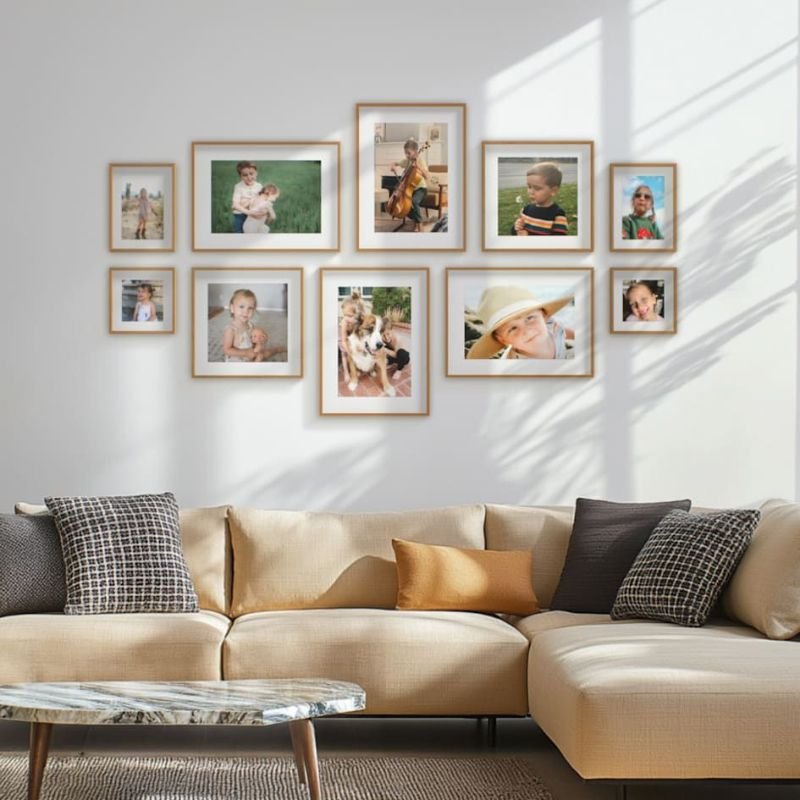
Gallery walls remain a popular way to personalize an empty wall. The key, however, is to create a relationship between the individual pieces.
Choose a Theme
Your gallery can focus on:
- Family memories
- Travel
- Nature
- Abstract art
- Black-and-white photography
- Botanical prints
- Children’s artwork
For example, a travel-themed gallery could combine photographs, maps, and small souvenirs.
Mix Frame Sizes
Different frame sizes can make the arrangement more dynamic. However, connect the frames through a consistent color, material, or design style.
Plan Before Hanging
Place your frames on the floor and experiment with different layouts. Alternatively, use paper templates to test the arrangement on the wall.
Maintain Consistent Spacing
Very large gaps can make a gallery feel disconnected, while extremely tight spacing can make it look crowded. Therefore, aim for visually consistent spacing.
Try Different Layouts
A gallery wall can use a structured grid or a more relaxed organic arrangement. Ultimately, the best choice depends on your room and personal style.
Accent Wall & Decor Ideas
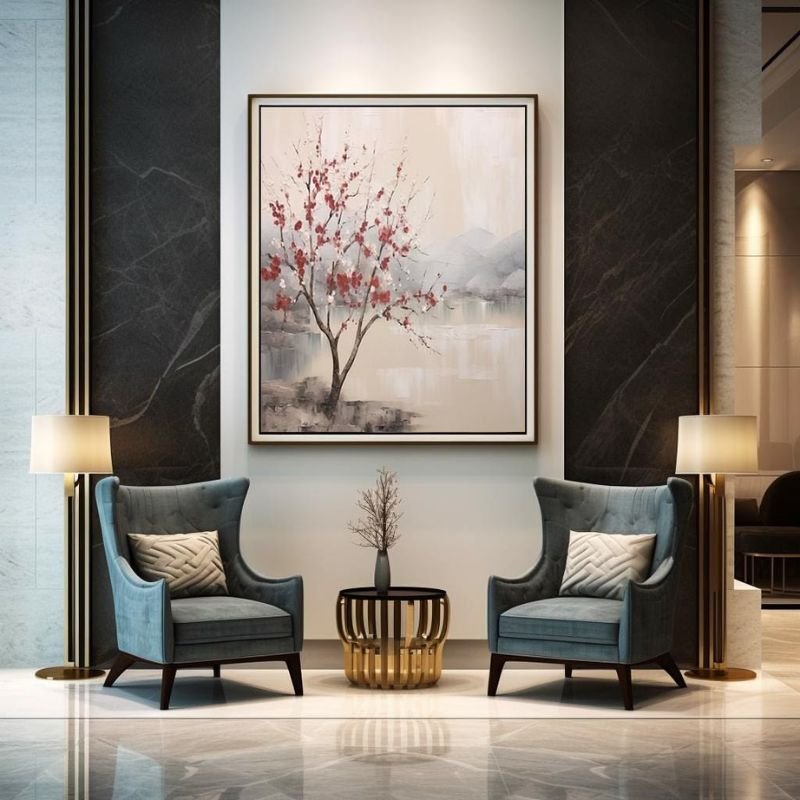
An accent wall uses a different color, material, pattern, or texture to make one wall stand out. As a result, it can become the visual anchor of a room.
Painted Accent Walls
Paint is one of the simplest ways to create an accent wall.
Popular options include:
- Deep green
- Navy
- Terracotta
- Warm beige
- Soft gray
- Earthy brown
When choosing a color, consider your furniture, flooring, natural lighting, and existing wall colors.
Wood Wall Panels
Wood panels can add warmth and texture. For example, they can work particularly well in living rooms, bedrooms, offices, and entertainment areas.
You can also explore our guide to Wood Wall Decor.
Brick and Stone Finishes
Brick or stone-style finishes can create an industrial or rustic character. However, use them selectively so the room does not become visually heavy.
Wallpaper Accent Walls
Wallpaper offers many patterns, from subtle textures to bold botanical designs.
Therefore, a single feature wall can provide visual interest without overwhelming the entire room.
Floating Shelves for Wall & Decor
Floating shelves combine decoration and storage. In addition, they allow you to use vertical space without adding large pieces of furniture.
Use them to display:
- Books
- Small plants
- Photographs
- Candles
- Ceramics
- Small sculptures
- Decorative boxes
The most important rule is to avoid overloading the shelves. Instead, group objects at different heights.
For example, place a taller plant beside a stack of books and a smaller decorative object. This creates visual variation without requiring many items.
Mirror Wall & Decor Ideas
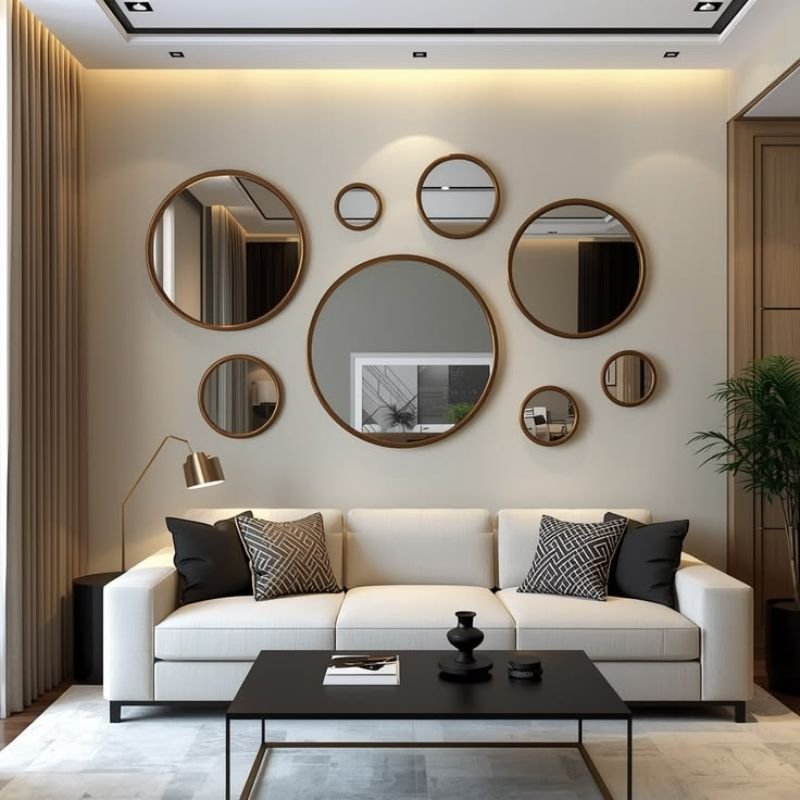
Mirrors are useful for both decoration and visual depth. Furthermore, they can reflect light and create a stronger sense of space.
Large Mirrors
A large mirror can become a statement piece above a console, dresser, or dining area.
Round Mirrors
Round mirrors introduce softer shapes into rooms dominated by straight furniture lines.
Grouped Mirrors
Several small mirrors can create a gallery-style display. However, keep the arrangement connected through similar frames, shapes, or spacing.
Framed Mirrors
Choose a frame that complements your interior style. Wood can create warmth, while metal can create a more contemporary appearance.
Before placing a mirror, consider what it will reflect. A beautiful view or light source can make the placement more effective.
Wall Art & Decor Ideas
Artwork is one of the easiest ways to add personality to a wall. For instance, a single large artwork can create a focal point, while several smaller pieces can form a gallery.
Options include:
- Canvas paintings
- Framed prints
- Photography
- Abstract artwork
- Botanical illustrations
- Textile art
- Metal wall art
- Handmade artwork
For a stronger statement, consider combining different textures. In addition, you can explore our Metal Wall Art guide for additional inspiration.
Choosing the Right Size
Scale matters. For example, a tiny artwork can disappear on a large empty wall, while an oversized piece can dominate a small room.
Therefore, consider the furniture below the artwork and choose a size that visually relates to it.
Wallpaper Wall & Decor Ideas
Wallpaper can dramatically change a wall without requiring structural renovation. Moreover, it provides an easy way to introduce color, pattern, or texture.
Peel-and-Stick Wallpaper
Removable wallpaper can be useful for renters or anyone who wants a temporary design change.
Floral Patterns
Floral designs can add softness and natural character. Similarly, botanical patterns can connect a room with natural colors and textures.
Geometric Patterns
Geometric patterns can work well in modern interiors. However, choose the scale of the pattern carefully in smaller rooms.
Textured Wallpaper
Subtle textures can add depth without introducing an overly busy pattern.
Before installing wallpaper, check the wall condition and follow the manufacturer’s installation instructions.
Wall Lighting & Decor Ideas
Lighting can make wall decor more noticeable while also improving the room’s atmosphere. Therefore, consider lighting as part of the overall wall design rather than an afterthought.
Wall Sconces
Sconces can frame artwork, mirrors, beds, or architectural features.
Picture Lights
A picture light can draw attention to artwork and create a gallery-inspired appearance.
LED Lighting
LED lighting can highlight shelves, mirrors, or textured wall panels. In addition, it can add a subtle layer of illumination.
Decorative Lamps
Wall-mounted decorative lamps can become part of the design themselves.
Ultimately, think about lighting direction, brightness, and the atmosphere you want to create rather than simply adding lights for decoration.
Budget-Friendly Wall & Decor Ideas
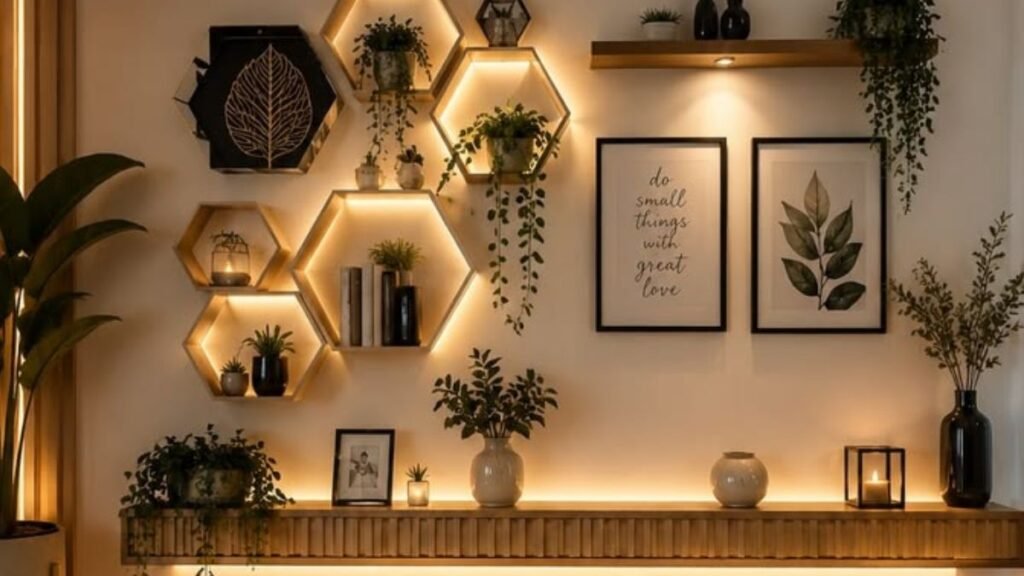
You do not need a large budget to improve an empty wall. In fact, thoughtful planning can often make a bigger difference than expensive accessories.
Create DIY Artwork
Simple abstract paintings, painted shapes, pressed leaves, or handmade designs can provide inexpensive decoration.
Use Family Photographs
Print favorite photographs and display them in affordable frames. For example, you can create a simple family gallery using matching frames.
Reuse Existing Decor
Before buying something new, move artwork or mirrors from another room. As a result, a different arrangement can make familiar pieces feel new.
Try Printable Art
Printable artwork can be an affordable option when paired with inexpensive frames.
Shop for Secondhand Frames
Older frames can sometimes be refreshed with paint or used as part of an eclectic gallery wall.
Add a Simple Floating Shelf
One shelf can provide both decoration and useful storage without requiring a large installation.
Most importantly, focus on layout, scale, and coordination rather than simply buying more decorations.
How to Plan Your Wall & Decor
A little planning can prevent expensive mistakes. Therefore, take time to understand the wall before purchasing decorations.
Step 1: Identify the Wall
Start with one wall instead of trying to decorate the entire home at once.
Ask yourself:
- Is this wall visible from the entrance?
- Is it behind furniture?
- Does it receive natural light?
- Does it need decoration or storage?
Step 2: Measure the Space
Measure the width and height of the wall and consider the furniture underneath it.
As a result, measurements help you choose artwork, shelves, mirrors, and other elements that fit the space.
Step 3: Choose a Style
Decide whether you want:
- Modern
- Minimalist
- Rustic
- Traditional
- Scandinavian
- Industrial
- Eclectic
You can mix styles. However, establish an overall direction before buying multiple pieces.
Step 4: Select a Color Palette
Choose colors that connect with the existing room.
You do not need everything to match. Instead, repeat selected colors throughout the room to create a visual connection.
Step 5: Choose a Focal Point
Decide what should attract attention first.
This might be:
- A large painting
- A mirror
- A gallery wall
- A textured accent wall
- A statement shelf
For example, choose one large artwork as the focal point and use smaller accessories to support it.
Step 6: Create Balance
Balance does not always mean perfect symmetry. Rather, it means the visual weight of the arrangement feels comfortable.
For example, a large artwork on one side can be balanced by several smaller pieces on the other.
Step 7: Test the Arrangement
Lay pieces out before making permanent holes in the wall. Alternatively, use paper templates to visualize the size and placement.
Step 8: Install Carefully
Use appropriate hooks, anchors, and mounting hardware for the wall type and weight of the object.
For heavier items, follow proper installation guidance rather than relying on lightweight adhesive products.
Common Wall & Decor Mistakes to Avoid
Even attractive decorations can look wrong when they are poorly arranged. Fortunately, most common mistakes are easy to prevent.
1. Overcrowding the Wall
Adding more items does not always make a wall more interesting.
Instead, leave some negative space so individual pieces can stand out.
2. Ignoring Scale
Artwork and decorations should relate to the size of the wall and surrounding furniture.
For example, a small picture may look lost above a large sofa.
3. Hanging Artwork Too High
Artwork that sits far above the furniture can appear disconnected. Therefore, consider the relationship between the artwork, eye level, and furniture below it.
4. Using Too Many Colors
Too many unrelated colors can make the wall feel chaotic.
Instead, choose a controlled palette and repeat selected colors.
5. Ignoring Lighting
Even beautiful artwork can lose its impact in a poorly lit area. For this reason, think about natural and artificial lighting before finalizing your arrangement.
6. Mixing Too Many Styles
Combining styles can work. However, there should still be some connection between the pieces through color, material, shape, or another design element.
7. Skipping Layout Planning
Randomly placing frames or shelves often creates uneven spacing. Therefore, plan the arrangement first.
8. Choosing Decoration Without Considering Function
A beautiful shelf may not be practical if it blocks a doorway or creates an obstacle. Always, consider how the room is used.
9. Using the Wrong Mounting Hardware
Heavy mirrors, shelves, and artwork require suitable mounting solutions. Before installation, check the wall material and object weight.
Tips for Long-Lasting Wall & Decor Styling
Good wall & decor should remain attractive and practical over time.
- Choose durable materials.
- Use appropriate wall anchors.
- Keep artwork away from excessive moisture.
- Clean mirrors and frames regularly.
- Dust shelves and decorative objects.
- Avoid overcrowding.
- Check wall-mounted items periodically.
- Replace damaged frames or hardware.
- Refresh small decorative pieces when your style changes.
In addition, you do not need to completely redesign a room every year. Sometimes moving artwork, changing a few photographs, or rearranging shelves can create a fresh appearance.
FAQs
What are the best wall & decor ideas for a living room?
Popular options include large artwork, gallery walls, mirrors, floating shelves, accent walls, and carefully placed lighting. However, the best option depends on the size of the wall, furniture arrangement, and overall interior style.
How can I decorate a large empty wall?
A large wall can accommodate oversized artwork, a gallery wall, multiple shelves, a large mirror, an accent wall, or a combination of several elements. Start by considering the furniture beneath the wall so the arrangement feels proportional.
What wall decor works best in a small room?
Mirrors, vertical artwork, narrow shelves, and simple arrangements can work well in small rooms. However, avoid adding too many objects because visual clutter can make the space feel more crowded.
How do I create a gallery wall?
Start by choosing a theme or color connection. Next, select different frame sizes if desired, arrange everything before hanging it, and maintain consistent visual spacing. Finally, begin with the largest piece and build the arrangement around it.
What are some inexpensive wall & decor ideas?
DIY artwork, family photographs, printable art, secondhand frames, floating shelves, and rearranging existing decorations can all provide affordable options. In addition, using items you already own can reduce unnecessary spending.
Should wall decor match my furniture?
It does not need to match exactly. However, wall decor should complement the room’s colors, materials, proportions, and overall style.
Are mirrors good for small rooms?
Mirrors can reflect light and create greater visual depth, which may help a small room feel brighter and more spacious. Therefore, placement matters, so consider what the mirror will reflect.
How do I choose the right artwork size?
Consider the size of the wall and the furniture underneath it. Ideally, artwork should have enough visual presence to avoid looking lost while still leaving comfortable space around it.
Can I mix different wall decor styles?
Yes. Mixing styles can create a personalized interior. The key is to connect the pieces through color, material, shape, or another repeating design element.
Conclusion
Well-planned wall & decor can transform an ordinary room without requiring a complete renovation. From gallery walls and statement artwork to mirrors, shelves, wallpaper, accent walls, and lighting, there are many ways to turn an empty surface into an intentional part of your home’s design.
The best approach is to start with the room’s existing furniture, colors, lighting, and available wall space. Then, choose a clear focal point, pay attention to scale, and leave enough negative space to keep the arrangement comfortable.
You can also create beautiful results on a budget by using photographs, DIY artwork, secondhand frames, simple shelves, and decorations you already own. Most importantly, choose wall decoration that reflects your own taste and works with the way you actually use the room.
With thoughtful planning, even a simple empty wall can become one of the most attractive features of your home.