
Even a room with the perfect sofa, rug, and lighting can feel incomplete. In fact, the missing element is often art. Abstract wall art possesses the unique ability to turn a space from merely decorated into a place full of personality and emotion. Moreover, it introduces an expressive layer that furniture alone cannot provide.“Abstract art does not dictate what to see; instead, it encourages you to feel and that feeling is what transforms a house into a home.”
Whether you are designing a minimalist gallery wall or highlighting a single striking piece, this guide offers everything from choosing the ideal canvas to hanging it flawlessly. Therefore, after reading this, you’ll know how to make your walls truly impactful. Additionally, wall art can instantly create a sense of completeness, making a room feel intentional and curated. For more ideas, explore our living room styling guide.
Why Abstract Wall Art Makes a Difference
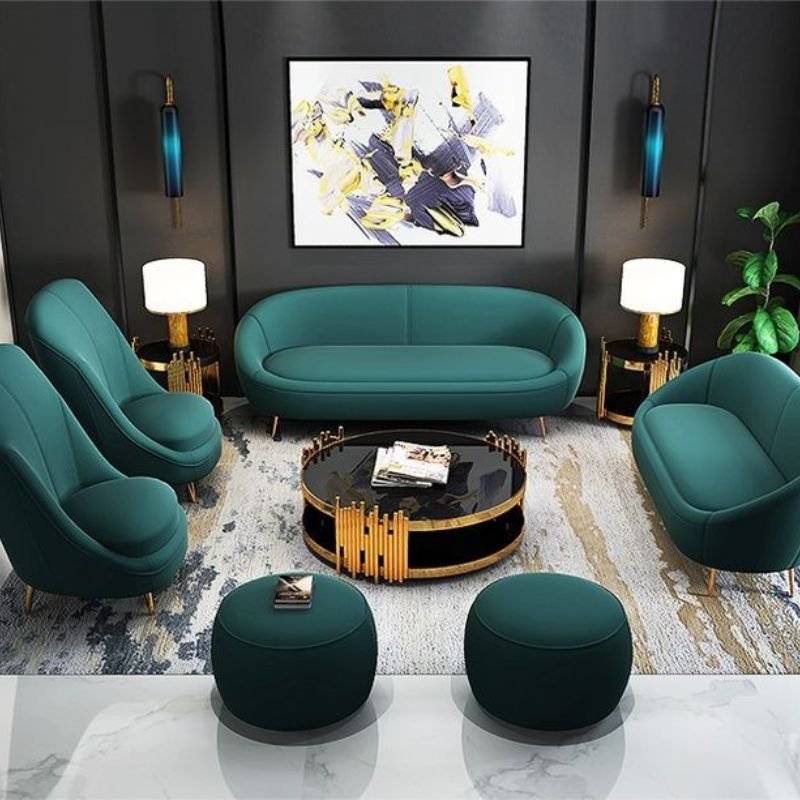
Many homeowners focus on furniture and accessories, overlooking the role of walls. In fact, abstract wall art can serve multiple functions:
- Adds visual harmony fills empty spaces without clutter.
- Reflects personality communicates the homeowner’s taste and style.
- Enhances texture and depth especially with hand painted or layered canvases.
- Directs focus strategic placement can make small rooms feel expansive or large rooms feel cozier.
Additionally, wall art can instantly create a sense of completeness, making a room feel intentional and curated. You can also explore more ideas in our wall & decor guide.
How to Choose the Perfect Piece
Begin With Your Room’s Color Scheme
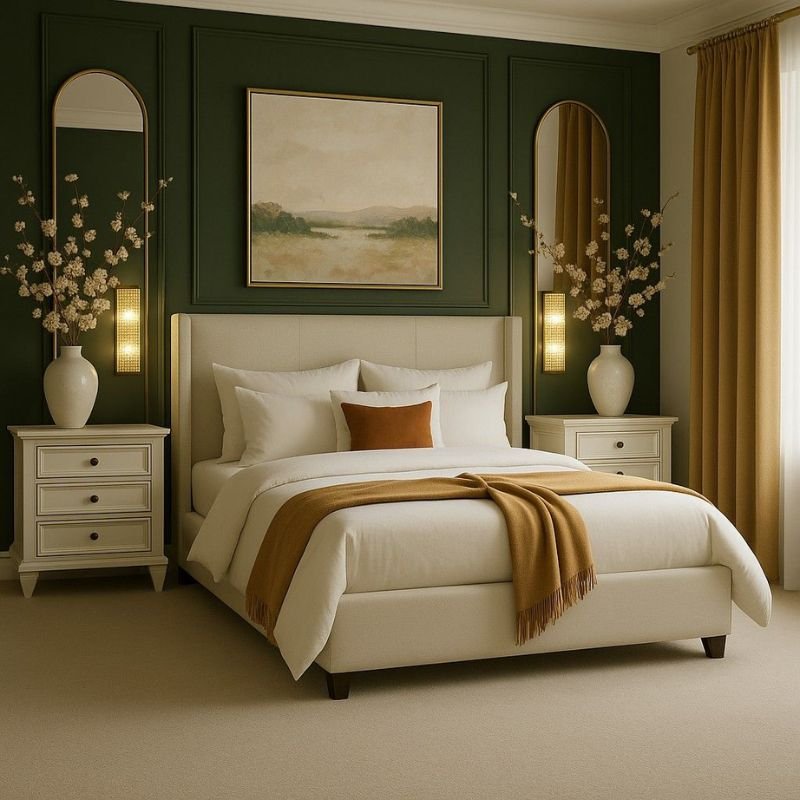
Matching art strictly to furniture can be predictable. Instead, consider the room’s palette as a conversation starter. Selecting art that picks up on one accent color creates harmony without being monotonous.
- For cool toned rooms with whites, greys, or blues, art in silver, navy, or teal adds sophistication.
- Warm interiors with creams, terracotta, or natural woods benefit from ochres, rust, and golden hues. Similarly, accessories like pillows or rugs can tie the look together.
Consider Size and Proportion
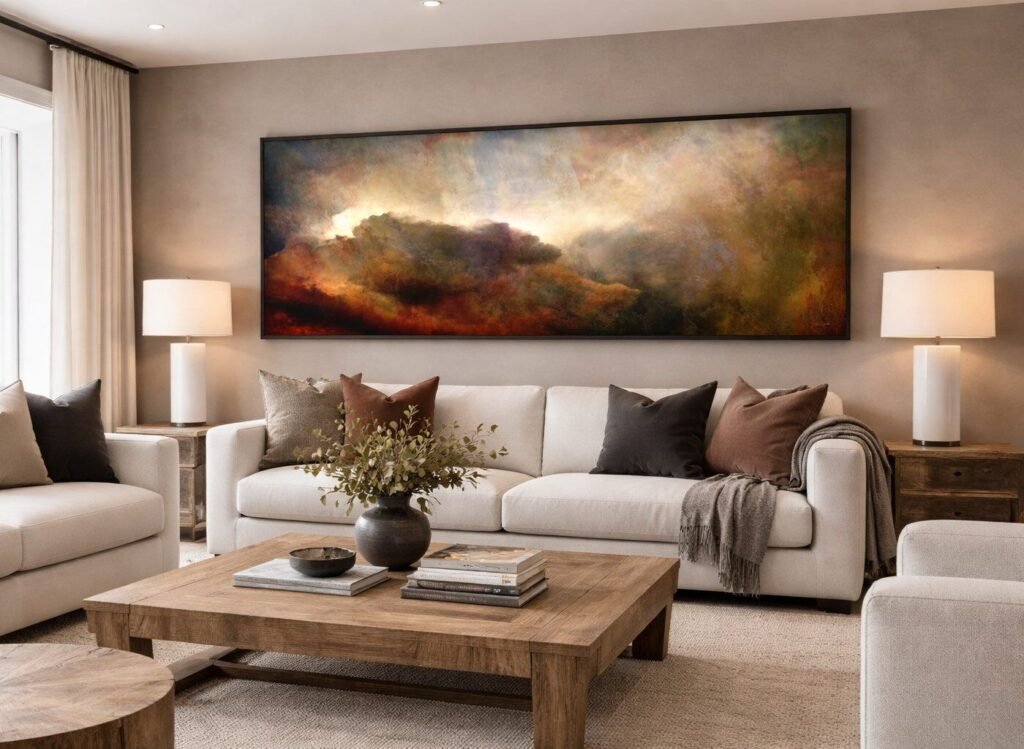
- Large walls may require bold or multiple pieces (diptychs/triptychs).
- Smaller rooms work better with one statement piece.
- For example, using a digital mockup can help visualize the fit before investing in large artwork.
In addition, scale affects balance; oversized or undersized pieces can disrupt the room’s flow.
Quick Guidelines for Selecting Artwork
- Identify 2–3 accent colors before browsing
- Opt for one high contrast piece to serve as the focal point
- Use textured canvases to add dimension to neutral walls
- Avoid exact color matching; subtle contrast keeps interest
- Furthermore, simplify compositions if the furniture has patterns
Proper Placement and Sizing
Eye Level Placement
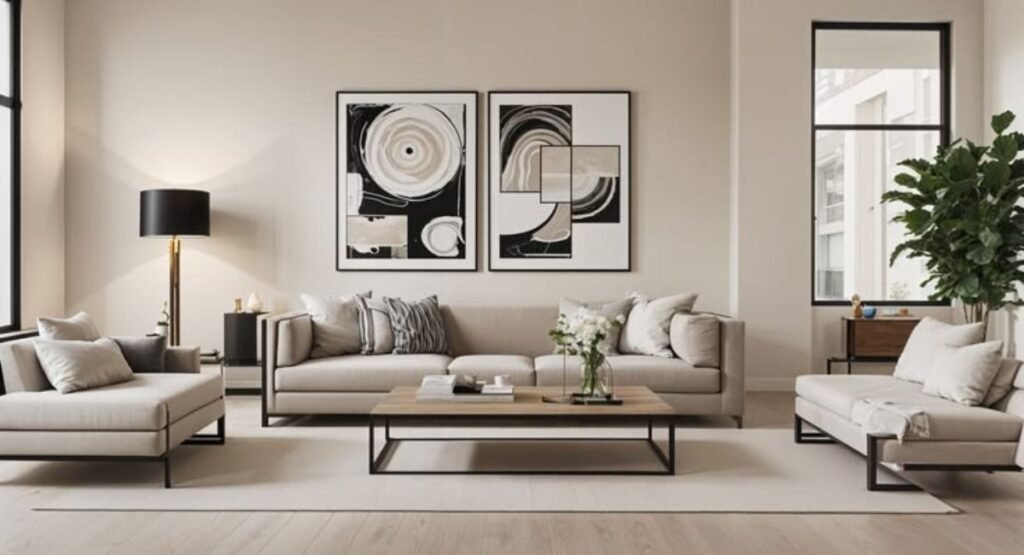
Art should typically be hung so the center is 57–60 inches from the floor. Many people hang it too high, but however, lowering it creates a more intimate and visually appealing arrangement.
The 60/40 Rule
Artwork should cover roughly 60% of the wall width it anchors or 60% of the furniture below. As a result, an 80-inch sofa would look balanced with art around 48–56 inches wide.
Size Recommendations:
- Above a fireplace: 4–6 inches above mantle
- Dining areas: slightly higher placement for seated viewing
- Small rooms: one medium sized piece (24×36″)
- Large walls: diptych or triptych arrangements for balance
Popular Styles of Abstract Wall Art
Minimalist Line Art
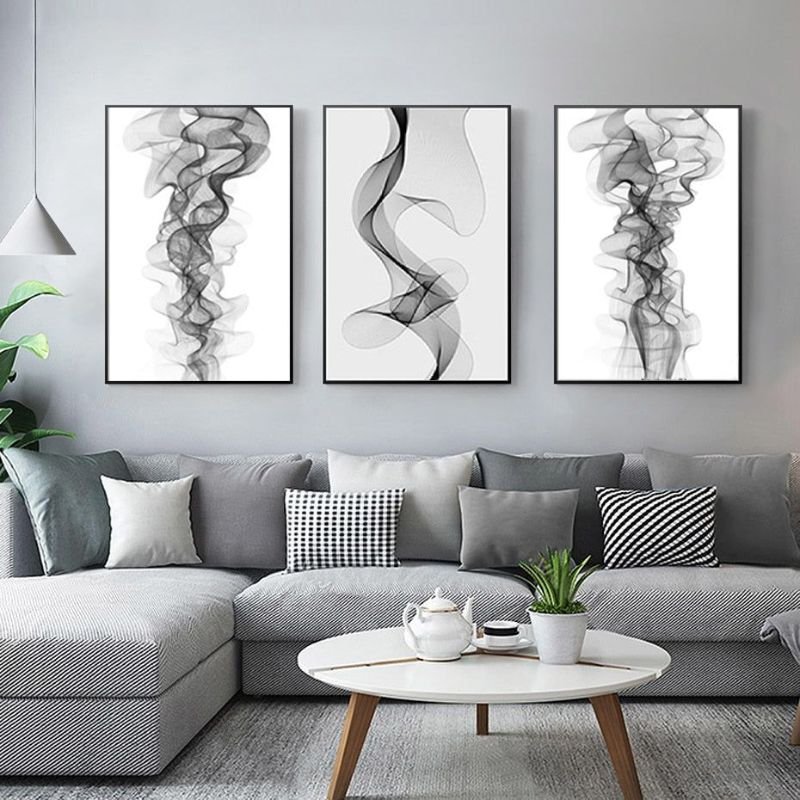
Simple, continuous line drawings on neutral backgrounds. Perfect for Scandinavian or Japandi interiors. Additionally, they offer a personal yet understated statement.
Geometric Abstracts
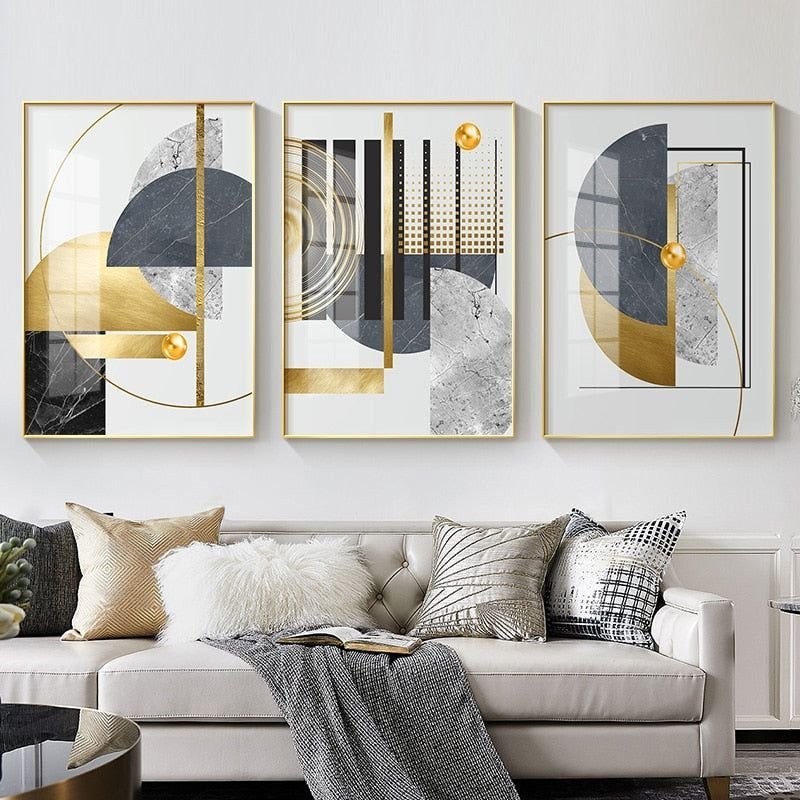
Bold shapes, hard lines, and architectural forms. Ideal for modern or industrial spaces. Moreover, they serve as a strong visual anchor in softer rooms. If you like bold designs, check our metal wall art collection.
Fluid Acrylic Pours
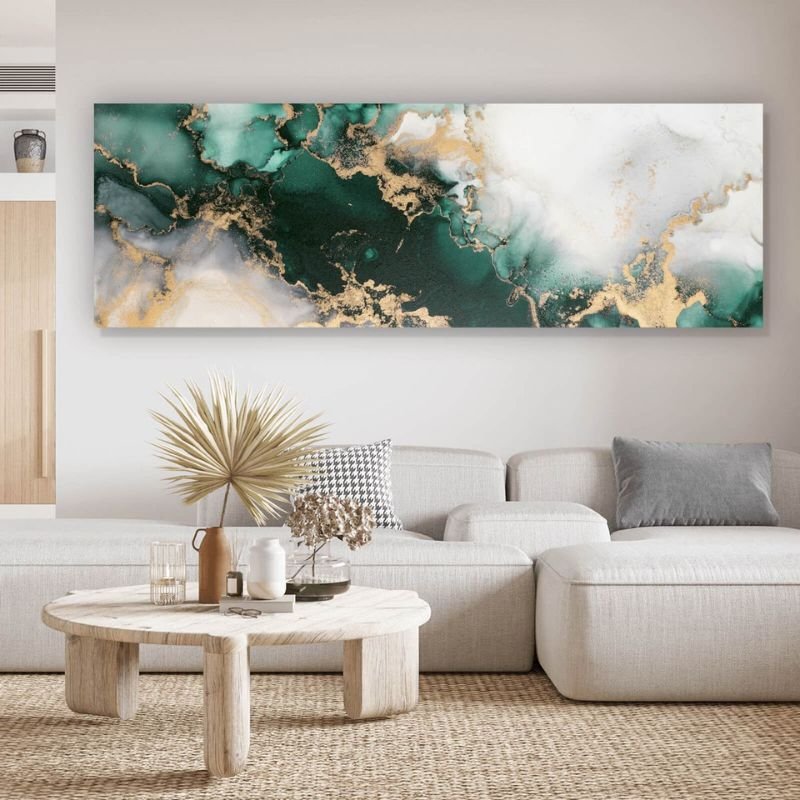
Organic, flowing canvases created by pouring paint directly. Each piece is unique, with depth and texture that reproductions cannot replicate. In fact, these artworks often become conversation starters.
Hand Painted Art vs. Prints
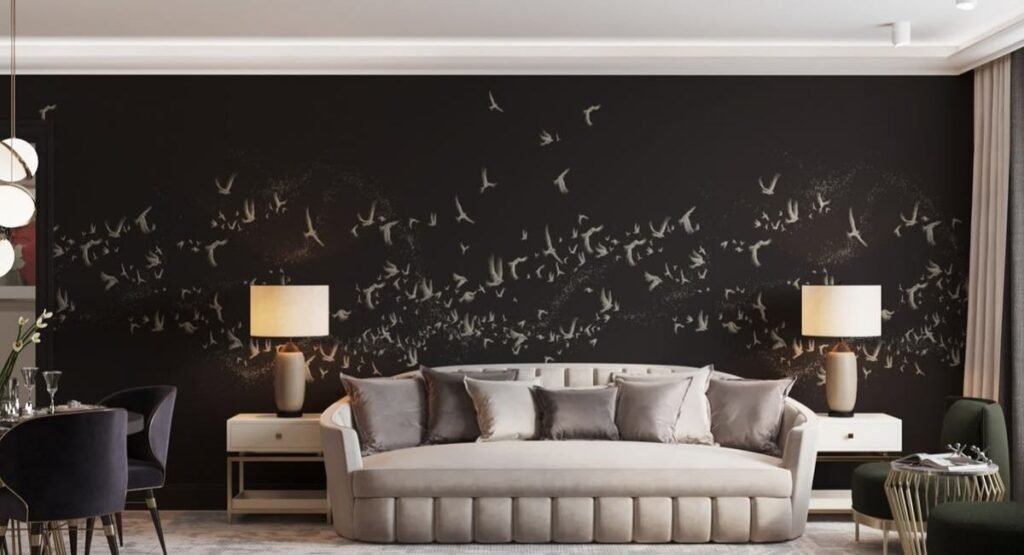
- Hand painted: Offers individuality, visible brushwork, and emotional value; ages gracefully.
- Prints: Affordable, consistent, and easy to reproduce.
Tip: Consider viewing distance. Hand painted works shine up close, while prints are better for larger or more formal spaces.
Building a Minimalist Gallery Wall
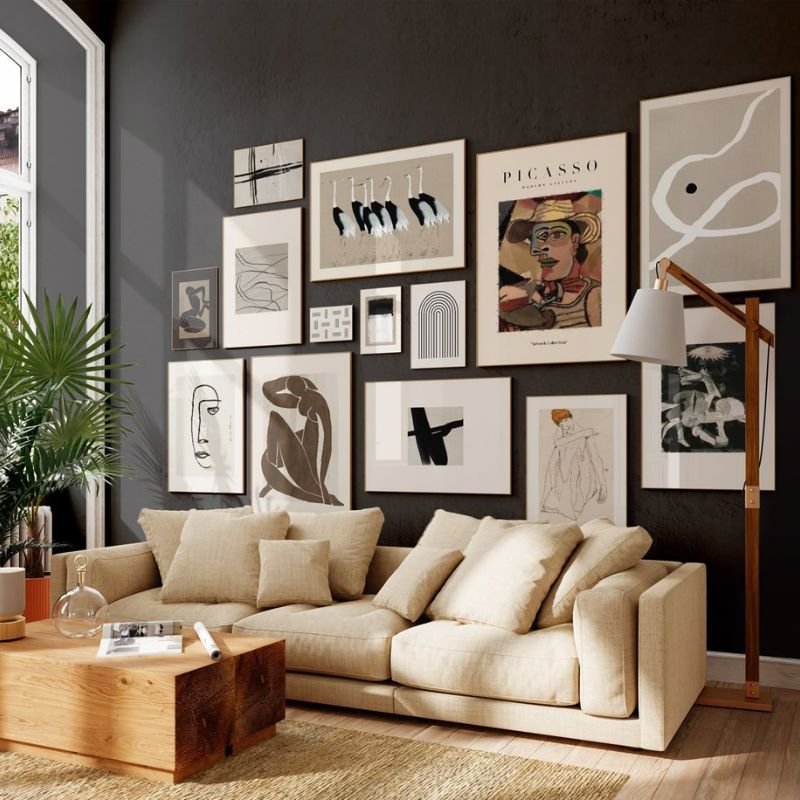
A curated gallery wall emphasizes order, not chaos.
- Use matching frame colors but mix sizes
- Keep 2–3 inches between frames
- Start with the largest piece and expand outward
- Blend one figurative piece with abstracts to add grounding
- Layout on the floor before hanging
Personalizing Your Space With Abstract Art
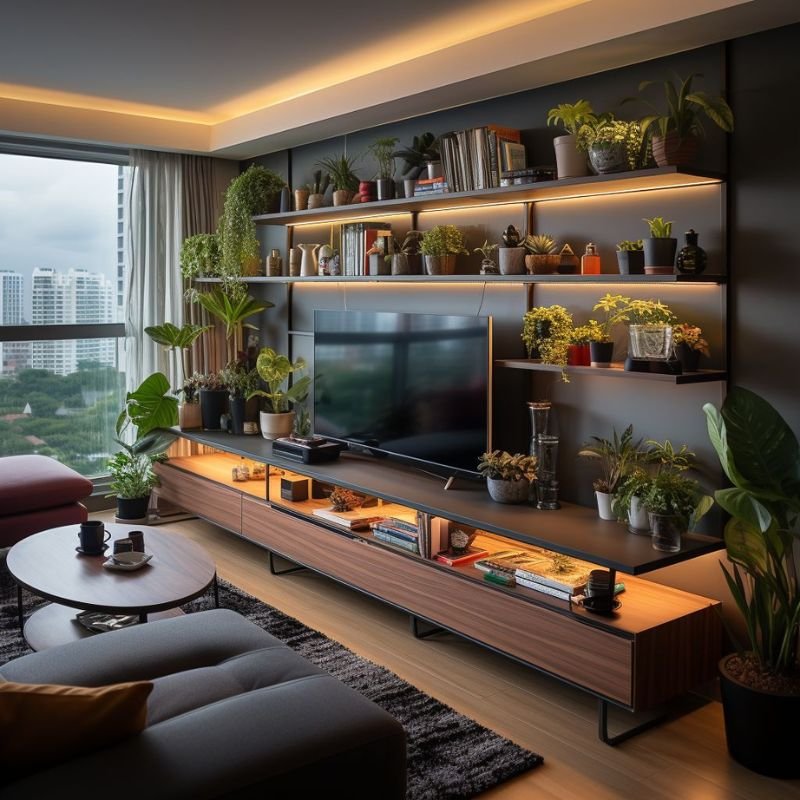
- Choose colors that reflect your personality and mood
- Combine textures (paint, canvas, mixed media)
- Highlight pieces with subtle lighting
- Rotate or swap art seasonally to refresh the room
In addition, pairing artwork with vases, plants, or small sculptures can enrich the room’s aesthetic.
FAQs
What is abstract wall art?
Abstract art uses color, shape, and form to create emotion rather than realistic imagery.
How do I select the right abstract art?
Choose pieces that complement your room’s palette while providing slight contrast. For example, coordinate with cushions or rugs.
What is the proper height for hanging wall art?
Center should be 57–60 inches from the floor. Additionally, consider seated areas for dining spaces.
Are hand painted works better than prints?
Hand painted art provides texture and uniqueness; prints are cost effective and consistent. However, prints are easier to replace or rotate.
Can I combine abstract and figurative pieces on one wall?
Yes, mixing styles creates visual interest and balance. In fact, it adds curated tension to the arrangement.
Conclusion
Abstract wall art is more than decorative it defines a space. Ultimately, when thoughtfully chosen and placed with intention, it introduces balance, personality, and emotion. From minimalist line drawings to bold geometric shapes, the right artwork transforms walls from empty to expressive. In the end, focus on harmony, scale, and emotional impact. Exceptional design is not just seen it is felt.