
Your living room is more than just a place to sit. It is where you relax after a long day, welcome guests, spend time with family, and create everyday memories. Because of that, the right living room decorating ideas can make a noticeable difference in how your home looks and feels.
A beautiful living room does not have to be expensive or oversized. With thoughtful furniture placement, balanced colors, layered lighting, natural textures, and a few carefully chosen accessories, even a small space can feel comfortable and polished.
Whether you are decorating a compact apartment, updating a family room, or starting from scratch, these 10 living room decor ideas will help you create a space that feels welcoming, functional, and personal.
1. Small Living Room Decorating Ideas That Feel Spacious
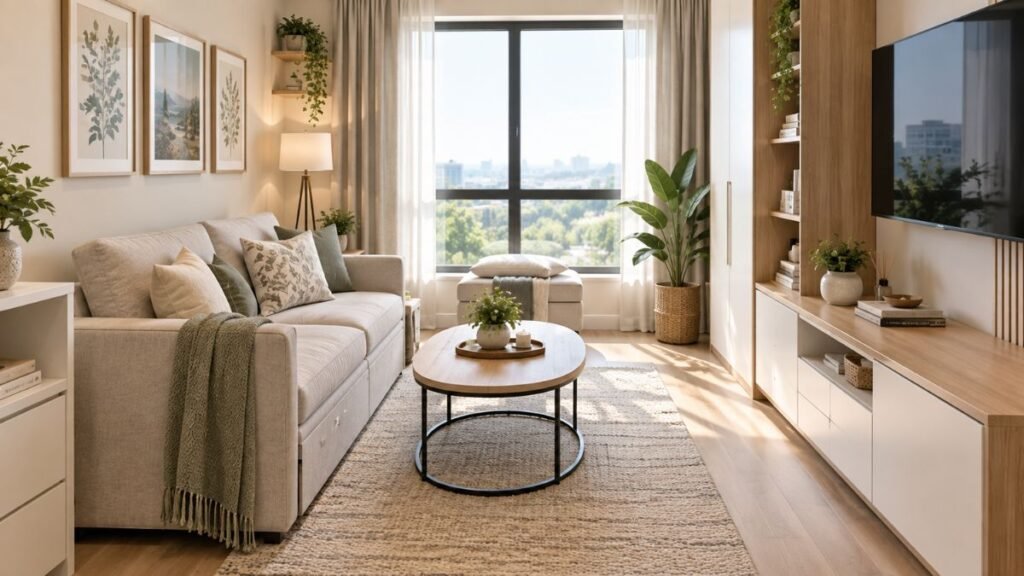
Small living rooms can be challenging, but limited space does not mean you have to sacrifice style. In fact, a smaller room often benefits from a more intentional design because every piece of furniture has a clear purpose.
Start by choosing furniture that fits the scale of the room. A compact sofa, slim coffee table, and furniture with raised legs can make the floor area feel more open.
Avoid filling every corner with decorative objects. Instead, leave enough empty space for comfortable movement.
Better Lighting for a Small Living Room
Lighting is one of the easiest ways to change the atmosphere of a small living room.
Rather than depending on one ceiling fixture, combine different types of lighting:
- Ambient lighting: Provides general illumination throughout the room.
- Task lighting: A floor or table lamp can brighten a reading or working area.
- Accent lighting: Wall lights or small lamps can highlight artwork, shelves, or architectural details.
Warm white bulbs can create a comfortable atmosphere, while sheer window treatments allow more natural light into the room.
If your ceiling is low, avoid oversized hanging fixtures that visually reduce the height of the space.
Use Mirrors to Create Visual Depth
A strategically positioned mirror can make a compact room appear brighter and more spacious.
Place a large mirror where it can reflect natural light or an attractive part of the room. A mirror opposite a window can help distribute daylight throughout the space.
For a more decorative approach, consider a collection of smaller mirrors with similar frames. The arrangement can function as both wall art and a practical light-reflecting feature.
2. Living Room Decorating Ideas for Color and Texture
Color is one of the first things people notice when entering a living room. However, a successful color scheme is not simply about choosing your favorite colors. The goal is to create a combination that feels balanced.
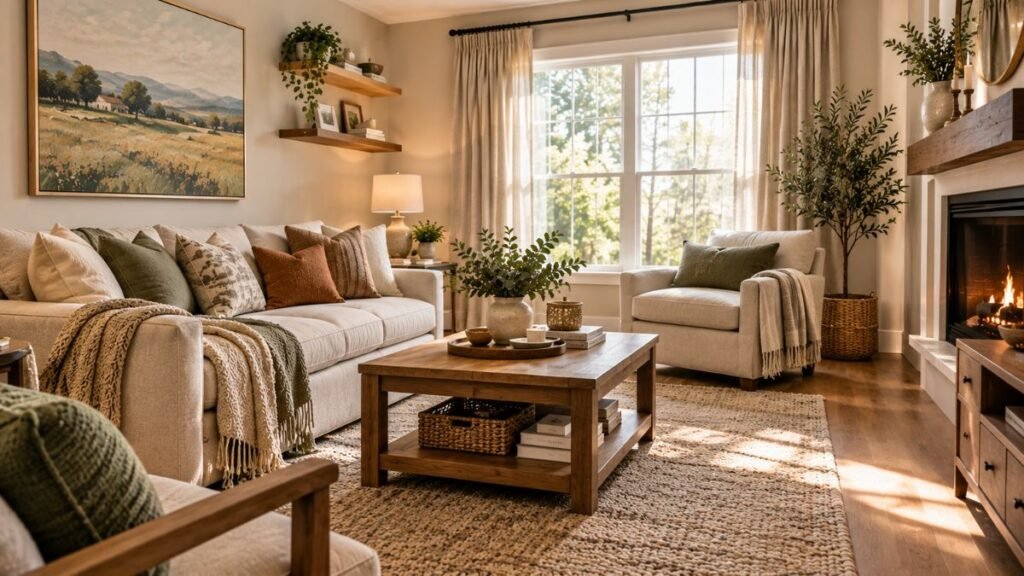
A useful starting point is the 60-30-10 rule:
- 60%: A dominant color, usually a neutral shade on walls and large furniture.
- 30%: A secondary color used through curtains, rugs, chairs, or larger accessories.
- 10%: An accent color introduced through cushions, artwork, or decorative objects.
Warm white, beige, cream, greige, and soft earthy tones can create a calm foundation. You can then introduce deeper shades such as forest green, navy, terracotta, or muted brown through smaller elements.
Add Texture With Different Materials
A room can have a beautiful color palette and still feel flat if every surface has the same texture.
Mix materials such as:
- Linen curtains
- Wool or jute rugs
- Bouclé cushions
- Wooden furniture
- Rattan accessories
- Ceramic vases
- Woven baskets
The contrast between smooth and textured surfaces adds depth without requiring many additional colors.
3. Choose Sustainable Living Room Decor
Good design does not always mean buying new furniture. Some of the most interesting living rooms combine new pieces with vintage, reclaimed, or secondhand finds.
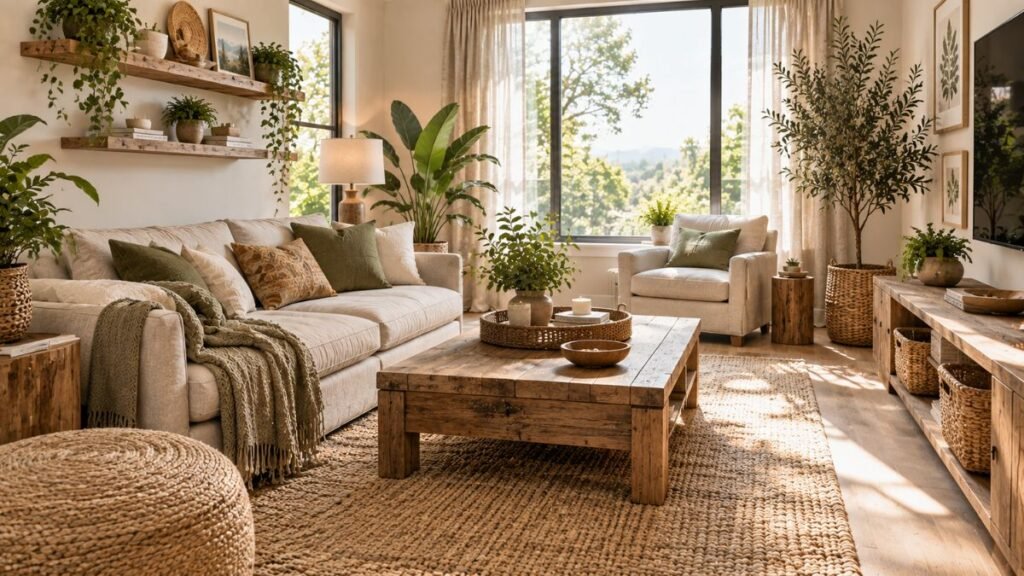
Sustainable decorating can also give your room more character.
Consider:
- Reclaimed wood coffee tables
- Natural-fiber rugs
- Vintage side tables
- Secondhand accent chairs
- Woven baskets
- Long-lasting upholstery
- Decorative objects made from natural materials
Instead of replacing everything at once, think about buying fewer pieces that you genuinely expect to keep.
A vintage chair, for example, can become a focal point when surrounded by simpler contemporary furniture.
This approach can make the room feel collected over time rather than decorated from a single furniture set.
4. Living Room Decorating Ideas for Furniture Arrangement
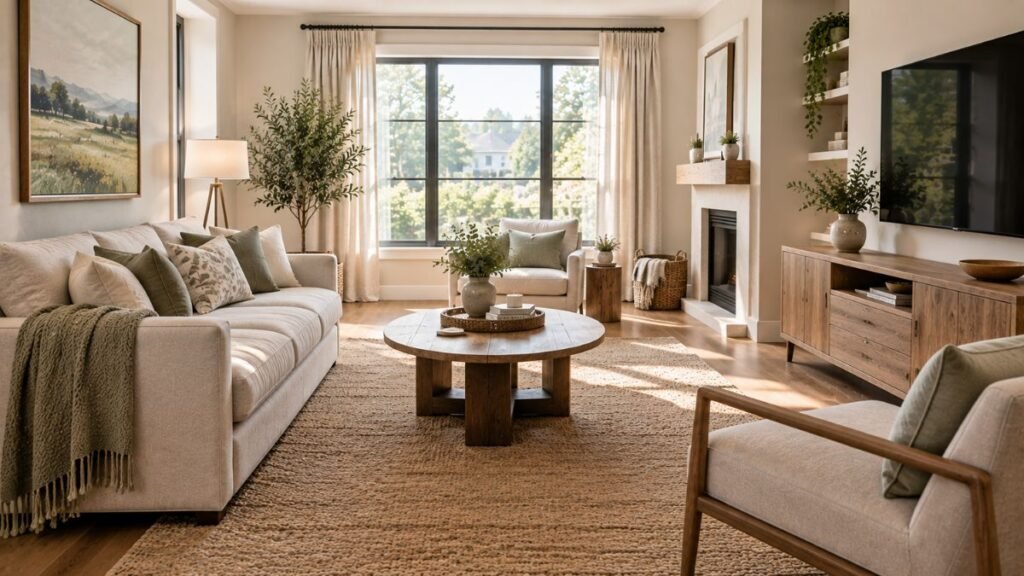
Furniture placement has a major effect on how comfortable and organized a living room feels.
Before buying additional furniture, decide what should be the main focal point. Depending on your home, this could be:
- A fireplace
- A large window
- A television
- A statement sofa
- A piece of artwork
- An architectural feature
Once the focal point is established, arrange the remaining furniture around it.
Choose One Statement Piece
A statement piece gives the room a visual center.
In many living rooms, the sofa naturally becomes that piece. Choose a style and size that suits both the room and your everyday needs.
Avoid creating several competing focal points. If the sofa is visually strong, keep nearby furniture and accessories relatively simple.
Furniture with visible legs can also create a lighter appearance because more of the floor remains visible underneath.
Keep Walking Paths Clear
A stylish room should also be easy to use.
Leave comfortable walking space between furniture wherever possible. Avoid placing coffee tables, chairs, or decorative objects where they interrupt the main path through the room.
Good traffic flow makes a living room feel less crowded and more relaxing.
5. Natural Living Room Decorating Ideas
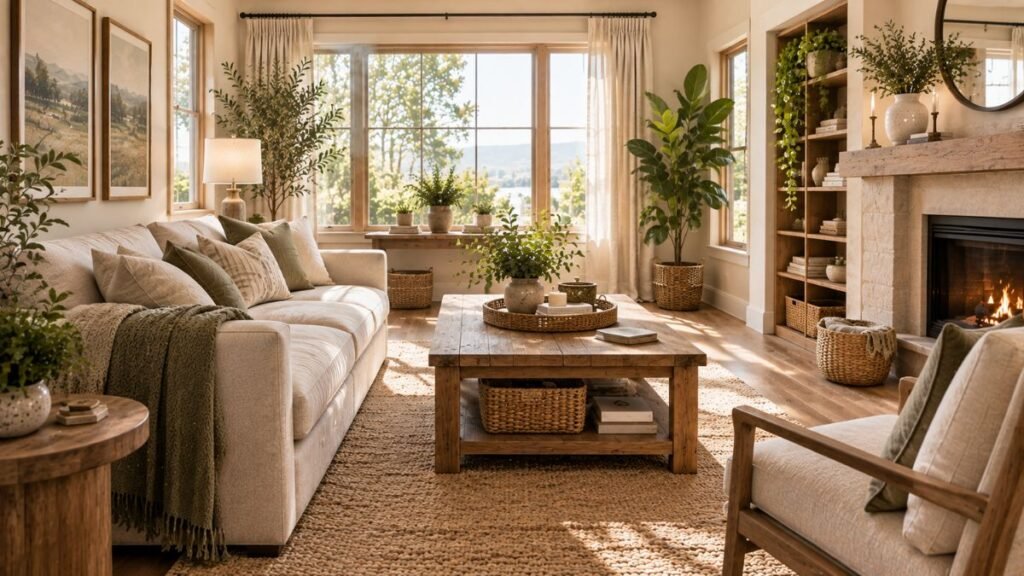
Plants are among the easiest ways to make a living room feel fresh and welcoming.
You do not need dozens of plants. One large plant can create a strong visual impact, while smaller plants can soften bookshelves, side tables, and window areas.
Good options for different areas include:
- Large floor plants for empty corners
- Trailing plants for shelves
- Small plants for side tables
- Low-maintenance varieties for rooms with limited natural light
Choose planters that complement the rest of your decor. Terracotta, ceramic, woven, and simple neutral planters can work with a variety of interior styles.
Use Natural Materials Too
Biophilic decorating goes beyond houseplants.
You can introduce natural elements through:
- Wood grain
- Stone
- Rattan
- Jute
- Linen
- Woven fibers
- Natural ceramic finishes
These materials add warmth and visual interest while helping the room feel connected to nature.
6. Living Room Decorating Ideas for Choosing the Right Rug
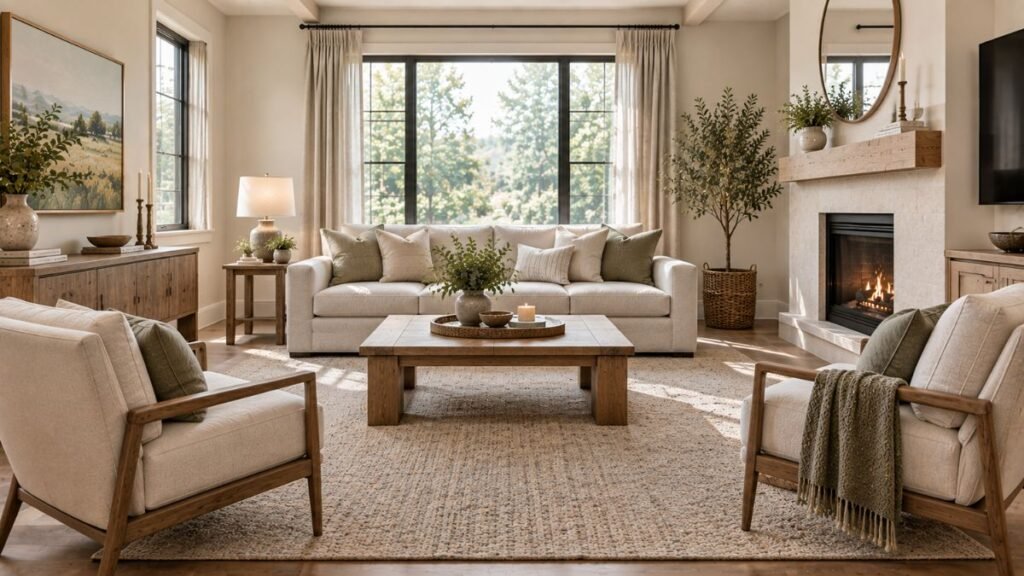
A rug can visually connect the furniture and define the seating area, but the wrong size can make the entire arrangement feel disconnected.
Whenever possible, choose a rug large enough for the main seating furniture to sit partially or fully on it.
For many living rooms, placing the front legs of the sofa and chairs on the rug creates a cohesive arrangement.
Before buying, measure the seating area and use masking tape on the floor to visualize the rug dimensions.
For additional guidance, explore our guide on living room rugs.
Avoid the Tiny-Rug Problem
A very small rug floating in the middle of a large seating arrangement can make the furniture appear disconnected.
If you are choosing between two sizes and your room can accommodate the larger option, the larger rug will often create a more unified appearance.
7. Style Shelves Without Creating Clutter
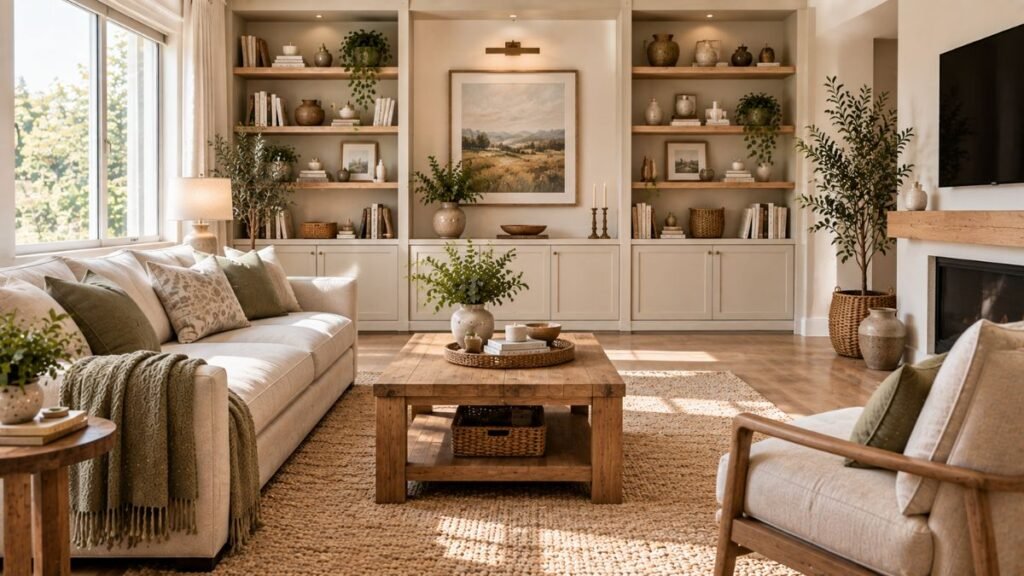
Open shelves provide an excellent opportunity to display books, plants, artwork, and decorative objects.
However, filling every available space can make the room look messy.
Instead, create visual groups.
Try combining:
- Books
- Small ceramic objects
- Framed artwork
- Plants
- Baskets
- Sculptural accessories
Vary the height and size of objects so that everything does not appear on the same visual level.
For more ideas on using vertical space, explore these wall shelves ideas.
Most importantly, leave some empty shelf space. Negative space gives decorative objects room to stand out.
8. Layer Your Window Treatments
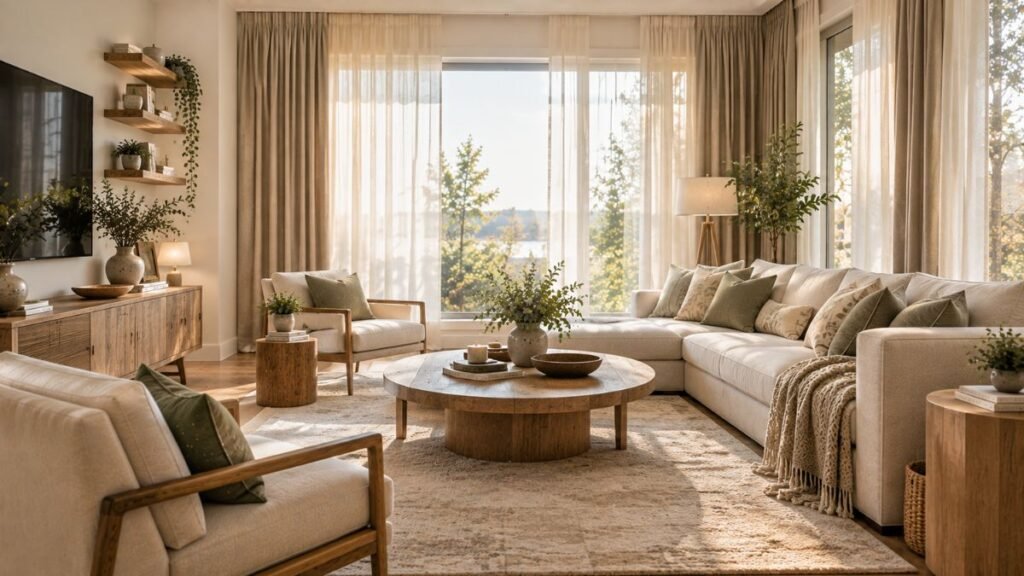
Windows have a significant effect on the atmosphere of a living room.
Instead of using only one type of curtain, consider layering a lightweight sheer curtain with a heavier outer panel.
This combination can provide:
- Daylight control
- Privacy
- Softness
- Visual depth
- A more finished appearance
For additional inspiration, explore these curtain ideas for living rooms.
Hang curtains high enough to create the impression of greater ceiling height, and make sure the panels are long enough to complement the proportions of the room.
If your living room receives plenty of sunlight, choose window treatments that allow you to control brightness throughout the day.
9. Hang Artwork at the Right Height
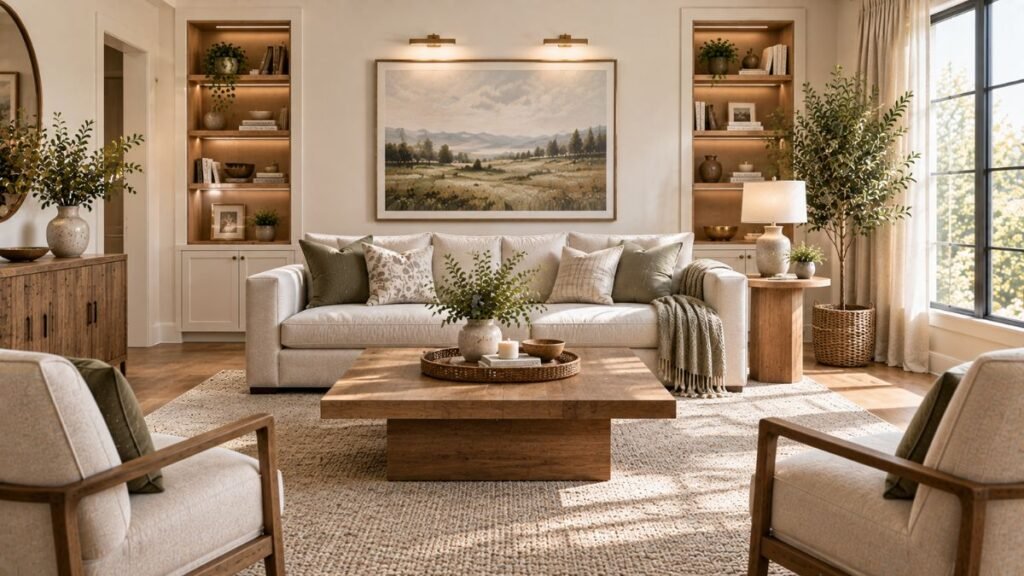
Artwork can transform an empty wall, but even beautiful art can look awkward when it is hung too high or too low.
As a general guideline, position artwork around average eye level rather than placing it close to the ceiling.
When hanging artwork above a sofa or console, consider the furniture and artwork as one visual group rather than treating the wall and furniture separately.
For a gallery wall, maintain a consistent visual relationship between the frames while varying artwork sizes if desired.
Choose Artwork That Complements Your Living Room
Your artwork does not have to match every other object in the room.
Instead, look for one or two colors, materials, or themes that connect the artwork with the surrounding furniture and accessories.
For additional inspiration, explore our guide to wall decor for living rooms.
This creates coordination without making the room feel overly matched.
10. Finish the Room With Small Details
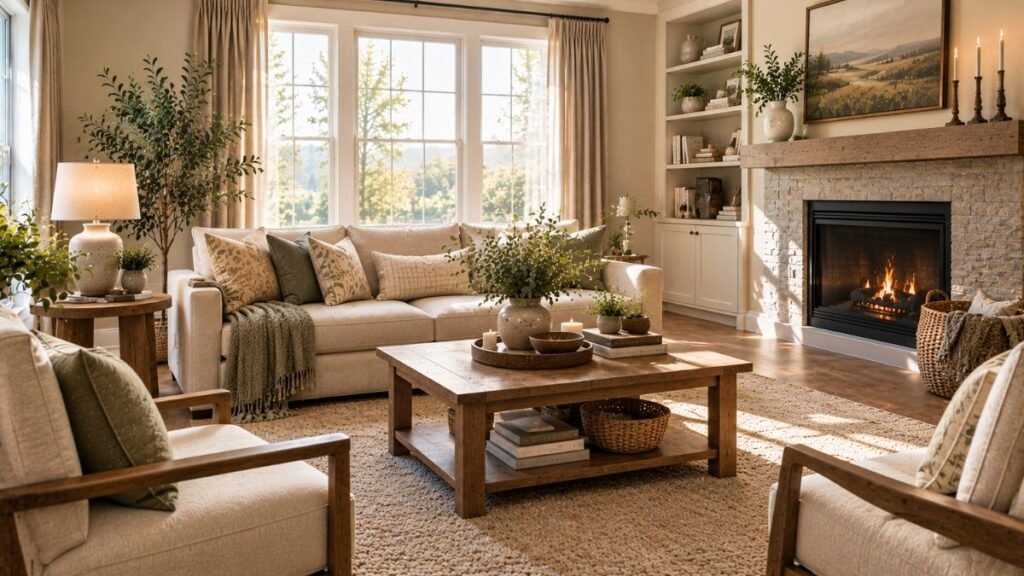
The final stage of decorating is often about the smallest details.
Cushions, throws, books, candles, decorative bowls, vases, and other accessories can add personality without requiring major changes.
The key is intentional layering.
Rather than placing decorations everywhere, choose a few areas to style carefully.
For example, a coffee table might include a tray, a small decorative object, and a book. A nearby side table could have a lamp and a simple vase.
Carefully chosen home accessories can add personality and help complete the overall look of a living room.
These details help the room feel finished without overwhelming it.
Think About the Whole Atmosphere
A living room is experienced through more than appearance.
Lighting, texture, sound, comfort, and even subtle fragrance can influence the atmosphere.
A soft rug underfoot, warm lighting in the evening, comfortable seating, and a few natural materials can make the room feel much more inviting.
How to Combine These Living Room Decorating Ideas
You do not need to use all 10 ideas at once.
Start with the elements that will make the biggest difference in your particular room.
When decorating a small living room, prioritize:
- Appropriate furniture scale
- Mirrors
- Layered lighting
- Light and balanced colors
- Clear walking paths
For a large living room, focus on:
- A strong focal point
- Correctly sized rugs
- Furniture grouping
- Layered textures
- Large-scale artwork and plants
For a budget-friendly makeover, begin with:
- Rearranging existing furniture
- Decluttering
- Changing cushion covers
- Adding plants
- Improving lighting
- Introducing affordable textures
The best living room design is not necessarily the one with the most furniture or the most expensive accessories. It is the one where every major element has a purpose. Whether you are refreshing one corner or redesigning the entire space, these living room decorating ideas can help you create a more comfortable and stylish home.
Frequently Asked Questions
What is the easiest way to improve a living room?
Start by decluttering and rearranging the furniture. Then improve the lighting, add one or two textured accessories, and introduce greenery. These changes can make a noticeable difference without requiring a complete renovation.
How can I make a small living room look bigger?
Use appropriately scaled furniture, keep walking paths clear, maximize natural light, and add a strategically placed mirror. Furniture with visible legs can also make more floor area visible.
What colors work well in a living room?
Warm neutrals such as cream, beige, warm white, and greige create versatile foundations. You can add personality with earthy shades, muted greens, navy, terracotta, or other accent colors.
How do I choose a rug for my living room?
Measure your seating area first. Ideally, the rug should connect the main furniture pieces rather than appearing as a small isolated island in the center of the room. Use tape on the floor to test the size before purchasing.
Can I mix different wood tones in one living room?
Yes. Different wood tones can work together when there is a sense of balance. Repeat each wood tone at least once elsewhere in the room and use other materials, such as textiles or metal, to create visual separation.
Final Thoughts
Creating a beautiful living room does not require a complete renovation. Often, the biggest improvements come from making better decisions about scale, lighting, color, texture, furniture placement, and accessories. Start with one change: move the sofa, remove unnecessary clutter, add a mirror, introduce a plant, or improve the lighting. Then build from there.
The most successful living rooms feel comfortable rather than overly designed. They reflect the people who live in them while remaining functional for everyday life. Use these living room decorating ideas as a starting point, adapt them to your space and budget, and create a room that feels genuinely like home.