
Feng Shui bedroom ideas can help you create a bedroom that feels calm, balanced, and comfortable. From choosing a practical bed position to using relaxing colors, soft lighting, natural textures, and clutter-free furniture arrangements, small changes can make the room feel more peaceful. In this guide, you’ll discover simple Feng Shui bedroom ideas for different room sizes and learn how to create a comfortable space without making the design complicated.
Feng Shui is a traditional Chinese approach to arranging spaces around balance, order, and the movement of Qi, often translated as life energy. Although Feng Shui is not scientifically established as a system for controlling energy or producing specific outcomes, several of its design principles overlap with practical interior-design habits such as reducing clutter, improving movement, and creating a comfortable environment.
In this guide, you’ll discover practical Feng Shui bedroom ideas for bed placement, furniture arrangement, colors, lighting, mirrors, electronics, storage, plants, rugs, and small bedrooms.
Feng Shui Bedroom Layout: Begin With the Bed

The bed is usually the most important piece of furniture in a bedroom, so its position deserves careful attention.
One traditional Feng Shui concept is the command position. This generally means placing the bed where you can see the bedroom entrance while lying down, without having the bed directly aligned with the doorway.
You can also improve the layout by:
- Putting the headboard against a stable wall when possible.
- Leaving enough room to move comfortably around the bed.
- Keeping the entrance and main walking routes unobstructed.
- Checking that wardrobes, drawers, and doors can open properly.
- Avoiding an arrangement that makes the room feel crowded.
There is no need to sacrifice practical comfort just to follow a traditional rule. A good bedroom layout should work for the actual size and shape of your room.
For additional bedroom styling inspiration, explore our bedroom decor ideas.
What If Your Bed Cannot Use the Command Position?
Some bedrooms simply do not provide enough flexibility for an ideal traditional arrangement. Windows, doors, closets, radiators, and room dimensions can all limit your choices.
If moving the bed is not realistic, concentrate on the elements you can control. Keep the sleeping area comfortable, maintain clear floor space, reduce unnecessary objects, and position the bed in a way that makes everyday movement easy.
Feng Shui should be treated as a design framework rather than a reason to create an impractical room.
6 Simple Elements of a Balanced Feng Shui Bedroom
You do not need expensive furniture or a complete renovation to give your bedroom a more balanced appearance. Small improvements can often make the biggest difference.
1. Give the Bed Enough Breathing Room
Avoid pushing too much furniture directly against the bed.
When there is reasonable space around the sleeping area, the room can feel less cramped and easier to navigate. A substantial headboard can also give the bed a stronger visual presence.
2. Protect the Main Walking Routes
Look at the paths you use every day.
Can you walk from the doorway to the bed without bumping into furniture? Next, check whether you can reach the wardrobe easily. Also, make sure drawers can open without hitting another object.
These practical questions are more useful than trying to follow a rigid layout in every bedroom.
3. Create Visual Balance
Furniture around the bed does not have to be identical.
Two matching nightstands create traditional symmetry, but different pieces can also work when their size, shape, material, or visual weight feels balanced.
4. Keep Surfaces Under Control
Bedside tables can quickly become crowded with phones, chargers, books, bottles, and miscellaneous items.
Keep only the things you regularly need within reach. Store everything else in an appropriate drawer, basket, cabinet, or closet.
5. Choose Furniture That Fits the Room
Large furniture can overwhelm a small bedroom, while undersized pieces can make a large room feel unfinished.
Measure your available floor space before purchasing new furniture, especially when choosing a bed, wardrobe, dresser, or bedside table.
6. Make Relaxation the Main Priority
Your bedroom should visually communicate rest.
If the room contains too many work materials, storage boxes, decorative objects, or unfinished projects, consider moving some of them elsewhere.
Feng Shui Bedroom Color Ideas for a Relaxing Atmosphere

Color can change the visual character of a bedroom without requiring structural changes.
For a softer Feng Shui bedroom, consider shades that create a warm and understated backdrop, including:
- Warm beige
- Cream
- Soft taupe
- Muted sage
- Natural brown
- Dusty rose
- Soft terracotta
- Gentle peach
- Warm gray
You do not have to use only neutral colors. Deeper shades can work well when introduced through smaller elements such as cushions, artwork, throws, curtains, or accent furniture.
The best bedroom palette is one that works with the room’s natural light and makes the space feel comfortable rather than visually overwhelming.
For another warm neutral approach, see these warm tan bedroom ideas.
Layer the Lighting in Your Bedroom

Lighting is one of the easiest ways to change the mood of a bedroom.
A single strong ceiling fixture can provide general illumination, but combining different light sources gives you more control.
Try using:
- Bedside lamps for reading
- Warm-colored bulbs during the evening
- Adjustable lighting where available
- Small accent lights
- Natural daylight during daytime
- Focused task lighting when necessary
A softer lighting arrangement can make the room feel more inviting at night. It also allows you to reduce the need for one bright light source.
For additional ideas, read our guide to floor lamps for home lighting.
Use Symmetry Without Making Everything Identical
Symmetry can make a bedroom appear organized and intentional.
The easiest approach is to place similar bedside tables and lamps on opposite sides of the bed. However, you can achieve the same visual balance without purchasing matching furniture.
For example, try:
- Similar-height bedside tables
- Complementary lamps
- Balanced wall artwork
- Coordinated bedding
- Similar materials on opposite sides
- Accessories with comparable visual weight
In a compact bedroom, floating shelves or wall-mounted lights can provide some of this balance while preserving floor space.
Things to Avoid in a Feng Shui Bedroom
There is no need to turn your bedroom into a checklist of strict Feng Shui rules.
Instead, look for anything that makes the room feel crowded, difficult to use, or visually distracting.
Consider reducing:
- Furniture that you rarely use
- Objects covering the floor
- Tangled charging cables
- Excessive decorative accessories
- Unorganized storage
- Work equipment around the bed
- Furniture that blocks doors or windows
A bedroom becomes easier to relax in when the surroundings require less attention.
Should a Mirror Face the Bed?
Mirror placement is one of the most frequently discussed Feng Shui bedroom topics.
Traditional Feng Shui commonly discourages positioning a mirror so that it directly reflects the bed. However, there is no scientific evidence that this arrangement creates harmful energy.
There can still be practical reasons to move a mirror. For example, a reflection may catch your attention at night, reflect outdoor headlights, or make the room feel visually busy.
If that happens, move the mirror to another wall or choose a position where its reflection is less distracting.
Keep Electronics and Work Equipment Organized
Bedrooms often double as charging stations, study areas, and workspaces.
Phones, tablets, laptops, chargers, cables, and paperwork can quickly take over the room. Rather than leaving everything around the bed, create a simple storage system.
You can:
- Gather charging cables together.
- Put paperwork into a drawer or organizer.
- Store laptops when they are not needed.
- Keep your bedside table mostly clear.
- Separate work materials from sleeping areas where possible.
These are practical organization habits whether or not you follow Feng Shui.
Keep the Space Beneath the Bed Organized
Traditional Feng Shui often favors keeping the area beneath the bed open.
From a practical design perspective, an uncluttered space underneath the bed can also make cleaning easier and prevent storage from spreading throughout the room.
If under-bed storage is necessary, use it selectively. Containers for spare bedding, blankets, or seasonal soft items are usually easier to organize than a collection of unrelated belongings.
Bring Nature Into the Bedroom Carefully
Indoor plants can introduce greenery, texture, and a natural element into bedroom decor.
If you want plants in your room, select varieties that match the available light and the amount of care you can provide. A few thoughtfully positioned plants can add character without overwhelming the space.
Avoid turning every shelf, table, and corner into a plant display. Too many objects can work against the uncluttered appearance you are trying to achieve.
For more plant inspiration, explore our guide to large indoor plants.
Feng Shui Bedroom Ideas for Small Rooms
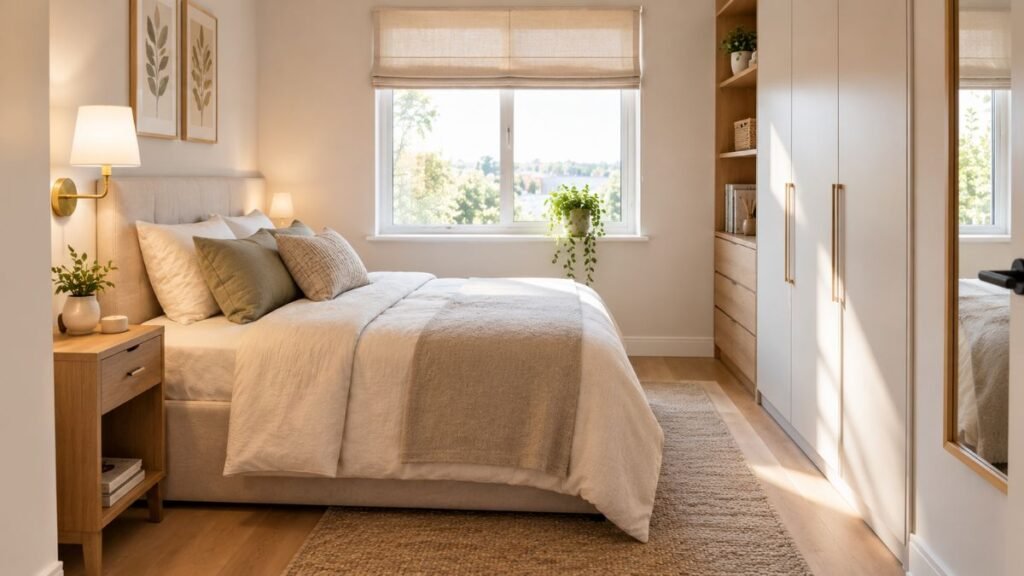
Small bedrooms require more attention to proportion and movement.
The goal is not to fit as much furniture as possible. Instead, choose pieces that provide useful functions while leaving enough open space around the sleeping area.
Try these ideas:
- Select furniture that matches the room’s scale.
- Keep major walking routes open.
- Use vertical storage where appropriate.
- Choose lighter or muted colors.
- Limit unnecessary decorative items.
- Consider wall-mounted lighting.
- Keep bedside surfaces organized.
- Avoid furniture that blocks windows or doors.
Before buying anything new, measure the room and think about how much clearance you need around each piece.
Our guide to standard bedroom sizes and layouts can also help you evaluate the space available.
Add a Rug for Warmth and Definition
A bedroom rug can make the sleeping area feel more comfortable and visually connected.
When selecting a rug, consider the bed’s dimensions and the furniture surrounding it. A properly sized rug can extend beyond the bed and help define the sleeping zone without making the floor look overcrowded.
For sizing and placement ideas, read our bedroom rug guide.
An Easy 8-Step Feng Shui Bedroom Refresh
You can make meaningful changes without replacing your entire bedroom.
Step 1: Remove What You No Longer Need
Begin with objects that have no useful purpose in the room.
Donate, relocate, recycle, or store items that are taking up unnecessary space.
Step 2: Open Up the Walking Areas
Walk through the bedroom as you normally would.
Move anything that creates an awkward route between the entrance, bed, wardrobe, and other frequently used areas.
Step 3: Reconsider the Bed Position
Stand near the bedroom entrance and look toward the bed.
Ask whether the bed feels visually grounded and whether you can comfortably move around it.
Step 4: Soften the Evening Lighting
Replace unnecessarily harsh evening illumination with lamps or other adjustable sources where possible.
Step 5: Simplify the Color Scheme
Look at the room as a whole.
If several strong colors compete for attention, consider using a calmer base and introducing stronger shades through smaller accents.
Step 6: Tidy the Storage Areas
Check the space beneath the bed, bedside tables, shelves, and other storage areas.
Keep frequently used items accessible while relocating things that do not belong in the bedroom.
Step 7: Separate Work From Rest
If your bedroom also functions as a study or workspace, create a clear boundary between work items and the sleeping area.
Even a small storage box or dedicated shelf can help keep paperwork and equipment under control.
Step 8: Finish With Natural Textures
Wood, woven materials, soft fabrics, ceramics, and carefully selected greenery can add warmth without requiring major changes.
Choose only a few pieces that complement the existing room.
Frequently Asked Questions About Feng Shui Bedrooms
What is the best direction for a Feng Shui bed?
There is no single direction that applies to every Feng Shui approach or every bedroom. Different traditions can recommend different methods. For a practical layout, focus on stability, comfortable movement, a supportive headboard, and a position that works well with the room.
Can I put a mirror in my bedroom?
Yes. Mirrors can be used as part of bedroom decor. Traditional Feng Shui often suggests avoiding a mirror that directly reflects the bed, but there is no scientific evidence that doing so creates harmful energy. If the reflection feels distracting, simply reposition the mirror.
Are plants suitable for a Feng Shui bedroom?
Plants can add color and natural texture to a bedroom. Choose varieties that are appropriate for the room’s light conditions and that you can maintain properly. Keep the number of plants proportional to the size of the room.
What type of headboard works well?
A sturdy wood or upholstered headboard can give the bed a visually grounded appearance. Choose one that fits the room’s proportions, style, and comfort requirements.
How can I improve Feng Shui in a small bedroom?
Start with the basics: reduce clutter, maintain clear walking routes, select appropriately sized furniture, use a comfortable color palette, and improve the lighting. Avoid adding furniture simply to fill empty areas.
Is it bad if the bed is directly opposite the door?
Traditional Feng Shui generally discourages placing the bed directly in line with the bedroom entrance. If your room does not allow another arrangement, prioritize practical movement, comfort, privacy, and the overall usability of the space.
Is Feng Shui scientifically proven?
Feng Shui is a traditional practice rather than a scientifically established method for controlling energy or predicting specific outcomes. Some practical design principles associated with it, such as organization, clear pathways, comfortable lighting, and reduced clutter, can still be useful approaches to bedroom design.
Which colors work well in a Feng Shui bedroom?
Warm neutrals and muted natural shades such as beige, cream, taupe, sage, warm brown, and soft terracotta can create a calm visual foundation. The final choice should also complement your furniture, natural light, and personal decorating preferences.
Conclusion
Creating a balanced Feng Shui bedroom does not require an expensive makeover or strict adherence to every traditional rule.
Start with the features that make the room easier to live in: position the bed thoughtfully, keep pathways open, reduce visual clutter, organize electronics and storage, choose comfortable colors, and use layered lighting.
Whether you are interested in traditional Feng Shui or simply want a calmer bedroom, these practical ideas can help you create a space that feels more organized, comfortable, and welcoming.